Shell's Profits Double to $6.9 Billion as Middle East Conflict Drives Up Global Oil Prices
London, Friday, 8 May 2026.
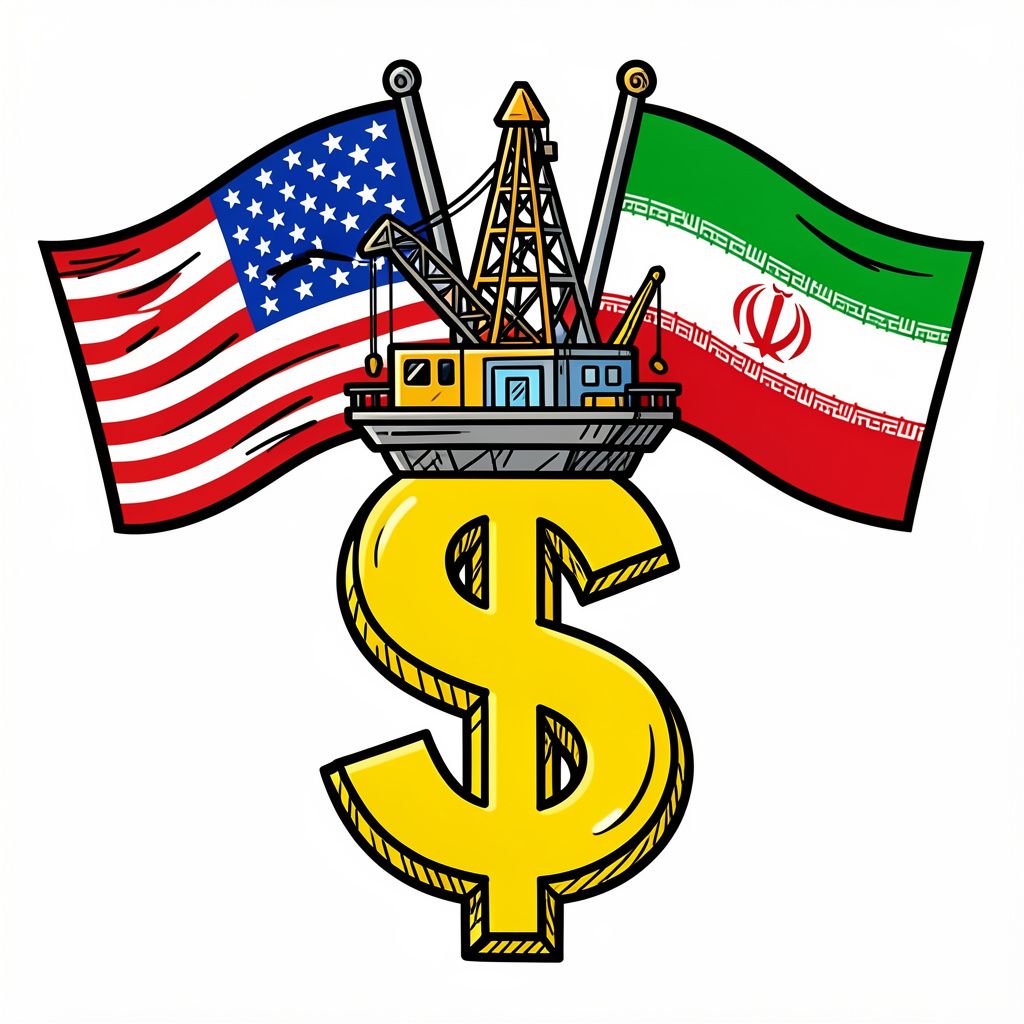
Shell’s first-quarter profits for 2026 more than doubled to $6.9 billion. This massive financial windfall was driven by surging global oil prices triggered by the ongoing U.S.-Iran conflict.
Earnings Surge Amid Geopolitical Turmoil
On Thursday, May 7, 2026, Shell plc (SHEL) reported adjusted earnings of $6.92 billion for the first quarter of the year, significantly outpacing both the company’s own forecast of $6.36 billion and the LSEG analyst consensus of $6.1 billion [3]. This figure represents a robust 24.014% increase from the $5.58 billion recorded in the same period in 2025 [3], and more than double the $3.256 billion reported in the final quarter of 2025 [2]. The London-based company also posted a total quarterly revenue of $70.13 billion [6]. The primary catalyst for this financial windfall has been the severe volatility in global energy markets following the outbreak of the U.S. and Israeli-led war with Iran on February 28, 2026 [1][3]. Oil prices soared in response to the conflict, with Brent crude briefly surpassing $126 a barrel on May 2, 2026, before settling just below $100 a barrel by May 7—a 37% increase since hostilities commenced [1]. Shell’s Chief Executive Officer, Wael Sawan, noted that the strong results were enabled by a focus on operational performance during a quarter characterized by unprecedented disruption in global energy markets [2][3].
Strategic Moves and Shareholder Returns
Capitalizing on the volatile environment, Shell’s trading and chemical divisions performed exceptionally well. The chemicals and products unit alone generated $1.93 billion in profit, vastly exceeding the expected $1.24 billion and demonstrating a staggering 328.889% surge from the $450 million earned in the first quarter of 2025 [4]. This marks the products business’s strongest quarter since 2022, a period similarly defined by oil market volatility following Russia’s invasion of Ukraine [4]. Emboldened by these robust cash flows, Shell announced a 5% increase to its quarterly dividend, bringing the payout to $0.3906 per share [2][3]. However, the company simultaneously opted to scale back its share repurchase program, reducing its quarterly buyback pace to $3.0 billion for the upcoming three months, down from the previous $3.5 billion rate [3][4]. Chief Financial Officer Sinead Gorman emphasized that these distribution strategies reflect the company’s confidence in its long-term cash flows [4].
Middle East Disruptions and Q2 Outlook
Despite the broader financial success, the ongoing conflict has presented distinct operational challenges, particularly in the Middle East, which accounts for approximately 20% of Shell’s total oil and gas production [5]. Shell’s overall oil and gas output declined by 4% compared to the previous quarter [1][4]. This contraction was heavily influenced by regional instability; on March 2, 2026, QatarEnergy shut in production across all its liquefied natural gas (LNG) facilities and declared force majeure [5]. Further compounding the issue, missile strikes on March 19, 2026, damaged Train Two of the Pearl gas-to-liquids (GTL) plant in Qatar—a facility entirely owned by Shell [4][5]. Repairs to the damaged infrastructure are projected to take approximately one year [4][5]. Looking ahead to the second quarter of 2026, Shell anticipates continued operational impacts from these disruptions. The company’s Integrated Gas outlook forecasts that production will drop to between 580,000 and 640,000 barrels of oil equivalent per day (kboe/d), down from 909,000 kboe/d in the first quarter [5], reflecting a potential decline of up to 36% [4]. Similarly, LNG liquefaction volumes are expected to fall by up to 14%, from 7.9 million tonnes in the first quarter to a projected range of 6.8 to 7.4 million tonnes [4][5].
Financial Health and Market Reaction
To secure future production capacity amidst these regional uncertainties, Shell announced a major acquisition in late April 2026, agreeing to purchase ARC Resources for $16.4 billion, a figure that includes net debt and leases [3]. The acquisition targets the Montney shale basin in British Columbia and Alberta, Canada, and is expected to add 370,000 kboe/d to Shell’s portfolio [2][3]. Out of Shell’s projected $24 billion to $26 billion cash capital expenditure for 2026, approximately $4 billion is earmarked for this acquisition [2]. While profitability remains high, the extreme price swings and supply chain disruptions have heavily impacted Shell’s balance sheet. Working capital outflows reached $11.2 billion in the first quarter due to massive swings in inventory values, pushing the company’s net debt up to $52.6 billion, a 15.098% increase from the $45.7 billion recorded at the end of 2025 [2][3][4]. Consequently, Shell’s gearing—a key measure of financial leverage—rose from 20.7% at the close of 2025 to 23.2% [4]. Investors appeared cautious regarding these underlying debt metrics and the recent cooling of oil prices; on the day of the earnings release, Shell’s shares dropped 3.2% by 1504 GMT, trading in line with broader energy sector trends [4].