Legal Obstacles Threaten to Collapse Trump's Venezuelan Oil Agreement
Caracas, Saturday, 26 September 2026.
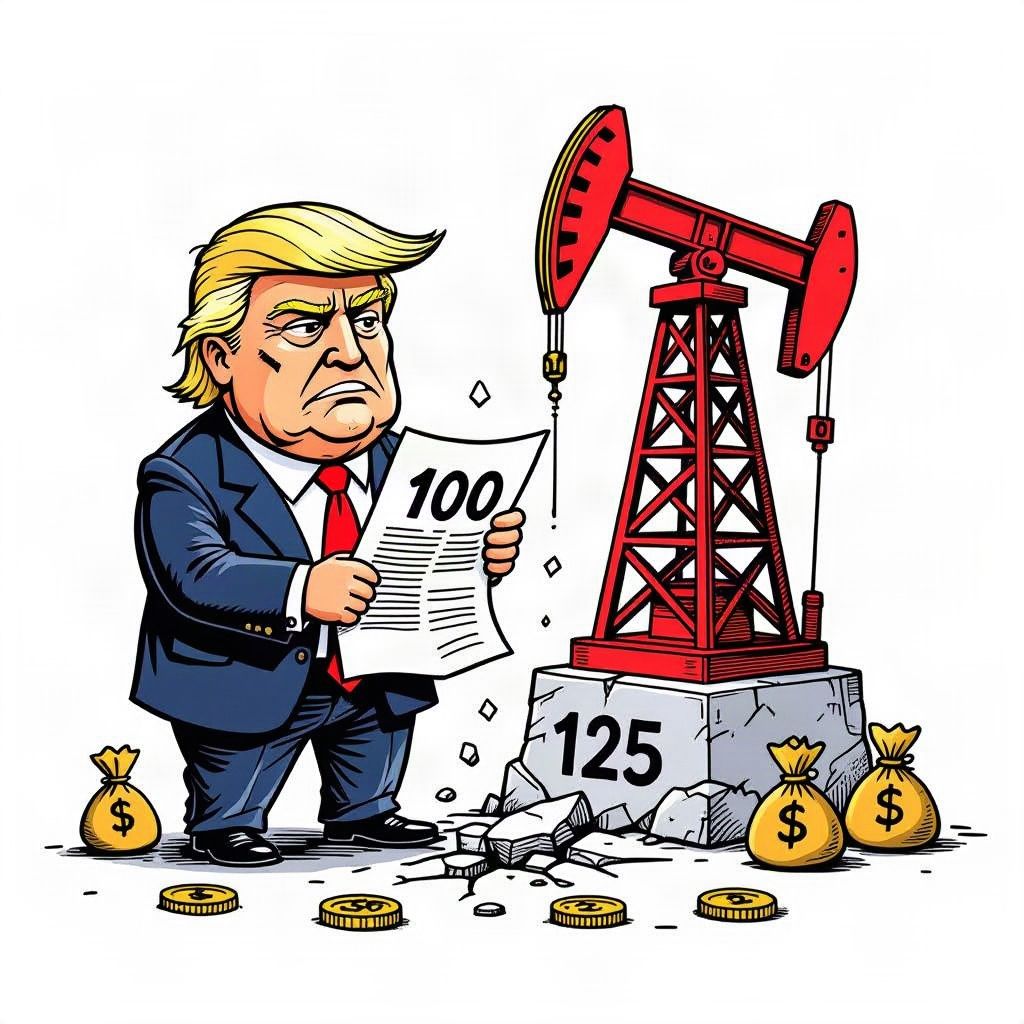
President Trump’s oil deal with Venezuela faces severe legal barriers: Venezuelan law limits concessions to 25 years, directly contradicting the administration’s claims of a 100-year development agreement.
Legal Obstacles Threaten to Collapse Trump’s Venezuelan Oil Agreement
President Trump’s oil deal with Venezuela faces severe legal barriers: Venezuelan law limits concessions to 25 years, directly contradicting the administration’s claims of a 100-year development agreement [1][2]. Industry analysts and legal experts point to lingering sanctions frameworks, deep infrastructure decay within state oil firm PDVSA, and complex jurisdictional disputes as primary roadblocks preventing immediate implementation [1]. For global energy markets and U.S. refiners seeking heavy crude supplies, the uncertainty highlights ongoing political risk and operational delays surrounding potential foreign investment strategies in the region [1][5].
Statutory Conflicts and Pentagon Authority
The core of the legal contention lies in the discrepancy between the announced 100-year concession and Venezuelan statutory limits. Legal experts state that Venezuelan law limits oil development deals to a maximum of 25 years, not the 100 years claimed by the administration [1]. Furthermore, the Pentagon’s Office of Strategic Capital (OSC) lacks the legal authorization to own shares in private companies under current U.S. law, despite claims that the office would hold a 35% stake in North American Blue Energy Partners (Nabep) [1][2]. Ashley Deeks, vice dean of the University of Virginia law school, noted that Congress clearly does not believe it has given the power to OSC to make equity investments [1]. The administration is reportedly utilizing the 1950s Defense Production Act to enable the OSC to function as an investment fund, though the ownership stake is being held by the Industrial Base Analysis and Sustainment office [1].
Operational Risks and Key Figures
Questions surrounding the integrity of the deal’s partners have intensified following recent events. Alejandro Betancourt López, the owner of Nabep and a key partner in the US government-backed deal, disappeared from his estate in Spain on 15 September 2026, the day police arrived to arrest him [1][alert! ‘Status of current location or arrest remains unconfirmed in the provided text’]. Betancourt has faced extensive legal scrutiny in the past, including a 2018 $1.2 billion money laundering case in Miami where he was identified as an unnamed co-conspirator, though he has never been charged with a crime in the U.S. [1]. While Secretary of State Marco Rubio stated in early September 2026 that Betancourt has a track record of producing oil, experts warn the deal is logistically flawed [1]. Darren Woods, CEO of ExxonMobil, described the venture as uninvestable, citing the dilapidated infrastructure within Venezuela’s oil sector [1][2].
Market Impact and Strategic Reserves
The agreement was partially justified by the need to refill the U.S. Strategic Petroleum Reserve (SPR), which fell below 300 million barrels in early August 2026 [2]. This represents a decline of over 100 million barrels since 1 January 2026 [2]. However, experts assert the oil will not be available in the near future to assist in refilling the reserve [1]. Meanwhile, U.S. consumers face higher prices at the pump; as of 18 September 2026, the average U.S. gas price was $4.09 per gallon, compared to $3.21 one year prior [2]. This represents a year-over-year increase of 27.414 percent [2]. The administration claims the State Department will have the right to purchase 20% of all oil produced by Nabep at cost, though it is unclear how the U.S. government intends to facilitate this crude oil acquisition or process the logistical chain [1].
Public Sentiment and Diplomatic Fallout
Public reaction to the agreement has been largely negative, particularly among Latino voters. Between 28 August 2026 and 22 September 2026, the Digital Democracy Institute of the Americas analyzed 819 public comments on X and Instagram, finding that 67% of Spanish-language responses criticized the Trump administration’s Venezuela policy or the oil deal [3]. Only 20% of Spanish-language comments supported the deal [3]. Diplomatic experts argue the agreement marks a dramatic departure from decades of public diplomacy on both sides, with both nations abandoning long-standing positions regarding sovereignty and democratic governance [4]. Paul Webster Hare, a former British ambassador to Cuba, noted that both states are now projecting totally different world views, risking the consistency and credibility of diplomatic relations [4].
Infrastructure and Implementation Challenges
Beyond legal and political hurdles, the physical reality of Venezuela’s oil infrastructure presents a significant barrier. Venezuela holds an estimated 303 billion barrels of crude oil, yet currently produces only 1% of global output due to dilapidated infrastructure [2]. The agreement involves developing 17 oil fields with 65 billion barrels of proven potential, aiming for $100 billion in investment [2]. However, experts indicate the deal is likely to collapse due to these logistical barriers and the fact that the current deal structure fails to provide necessary capital to Venezuela’s oil sector [1]. As of 26 September 2026, the status of implementation remains unverified, with experts claiming the oil will not assist in near-term refilling of strategic reserves [1][2].