Driscoll's Faces Lawsuit Over Alleged Chemical Berry Exports to Canada
Watsonville, Saturday, 26 September 2026.
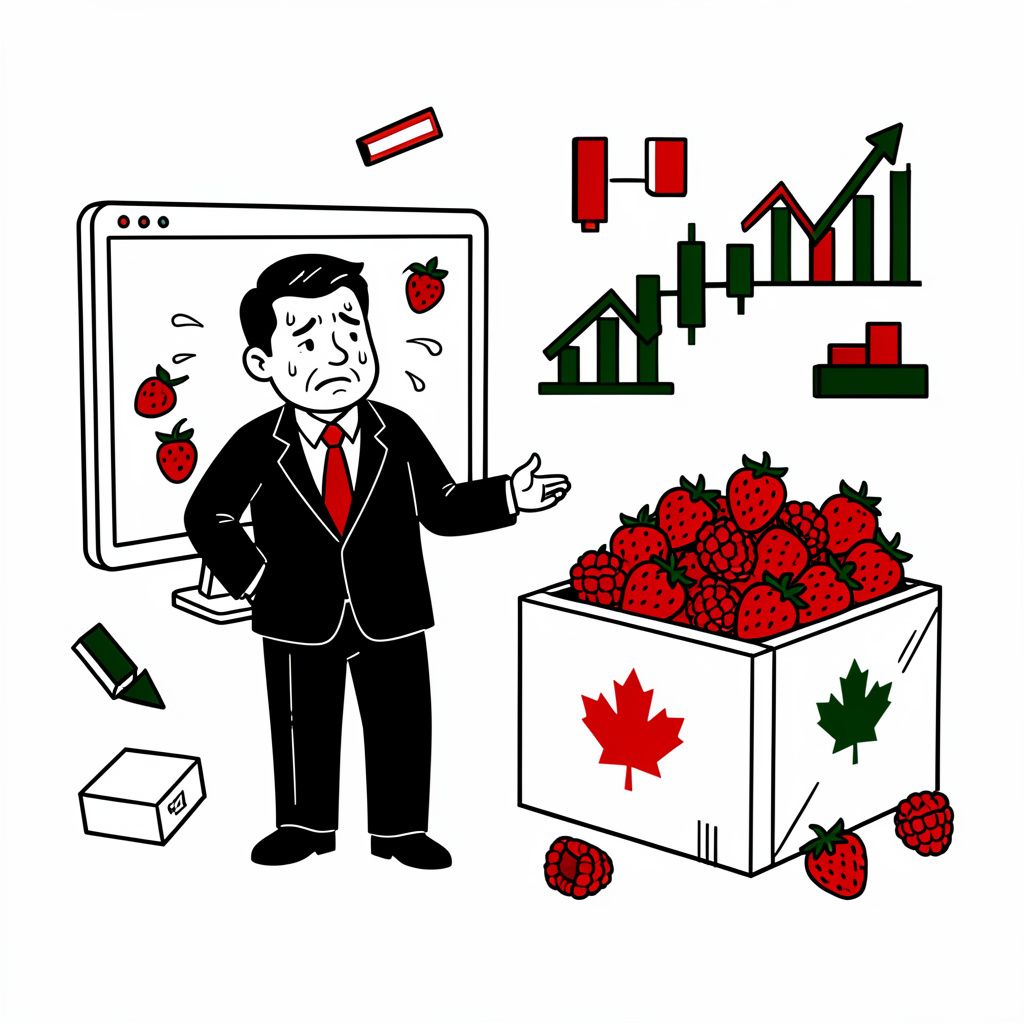
A whistleblower lawsuit alleges produce giant Driscoll’s intentionally disabled safety tracking, exporting millions of pounds of pesticide-laden berries to Canada between 2022 and 2024 despite manager warnings.
Whistleblower Claims and Regulatory Findings
The legal action centers on accusations made by David Harada, the former manager of food safety and regulatory compliance for the U.S. and Canada [1]. Harada alleges that starting in 2022, he reported pesticide over-application concerns to upper management but was subsequently positioned as a scapegoat [1]. The lawsuit claims that approximately 50 percent of shipments to Canada during the period from 2022 to 2024 contained fruit exceeding Canadian safety levels [1]. This alleged period of non-compliance spans 2 years, during which internal tracking systems were reportedly modified to increase sales volume [1]. Inspections conducted by the Canadian Food Inspection Agency (CFIA) on berries sold across Canada identified chemical residues that exceeded legal limits [1]. Specific chemicals cited in the findings include bifenthrin, iprodione, and captan [1]. Despite these findings, the CFIA confirmed that no recalls were issued during the inspection period between 2022 and 2024 [1]. Toxicologist Daniel Green noted that to experience an effect from the residues, one would have to consume 19 kilograms of the fruit [1].
Corporate Response and Litigation Status
Driscoll’s has released a statement denying the allegations, including the claim that it removed its safety tracking system [1]. The company stated it remains confident that the factual record will demonstrate it responded correctly to concerns raised by Harada [1]. Reports indicate the allegations were publicly reported via CBC News on August 31, 2026 [2]. A preliminary hearing for the whistleblower lawsuit was scheduled for September 15, 2026, which precedes the current date of September 26, 2026 [2][GPT]. The case highlights expanding cross-border supply chain liabilities and potential regulatory enforcement actions from both U.S. and Canadian food safety authorities [1].