The Hidden Financial Risks Behind Government Fuel Subsidies
Santa Barbara, Friday, 25 September 2026.
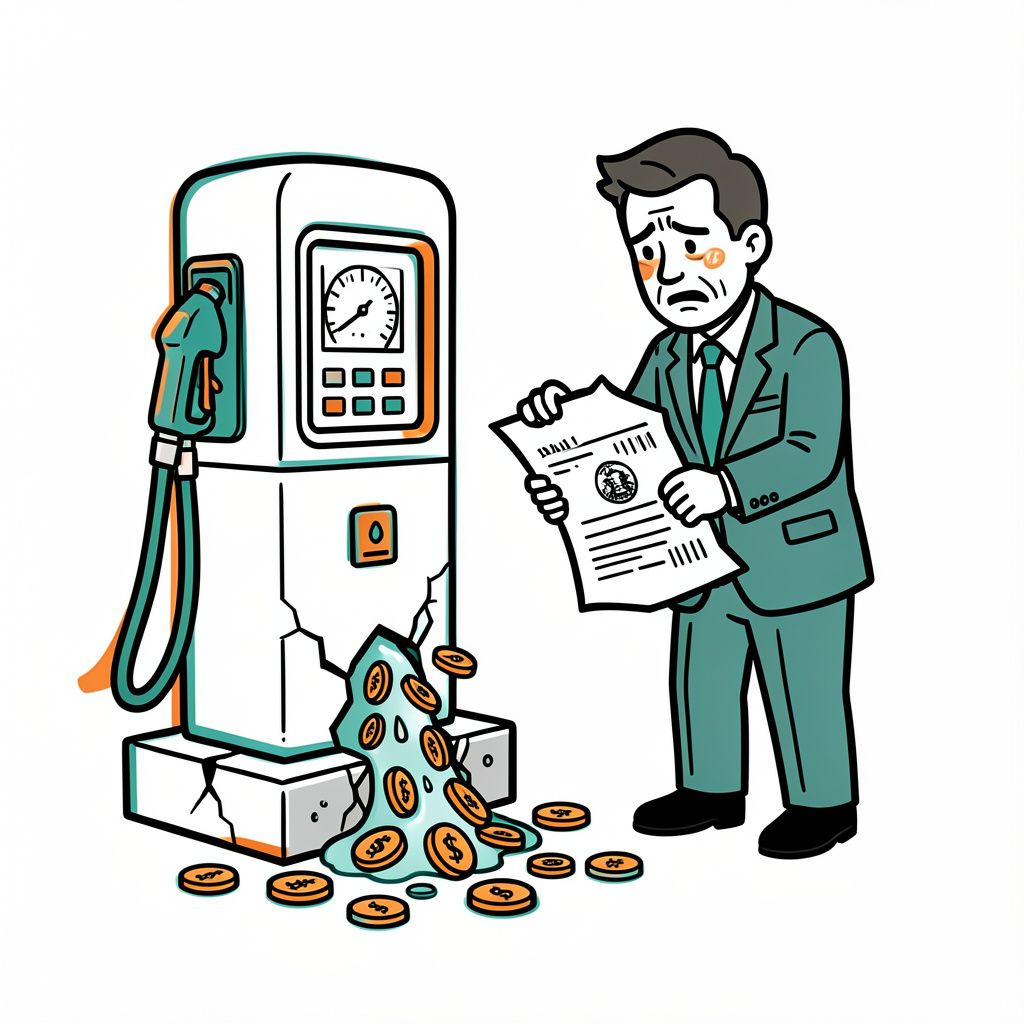
Experts warn that government fuel subsidies strain public finances and disrupt markets, revealing that over 90 percent of attempts to remove these subsidies fail within three years.
Editorial Warning on Energy Policy
On September 25, 2026, energy policy experts Paasha Mahdavi of UC Santa Barbara and Michael Ross of UCLA published an editorial in the journal Science arguing that consumer fossil fuel subsidies represent the single worst energy policy choice available [1]. While these subsidies are often introduced by governments to counter rising inflation and provide short-term household relief, the researchers highlight that they distort energy markets and strain public finances [1]. Data analysis by Mahdavi and Ross indicates that between 2016 and 2023, of roughly 130 subsidy reforms attempted in the 21 largest subsidizing nations, 70% failed within one year [1]. Furthermore, over 90% of these reforms were gone within three years, illustrating the difficulty of reversing such measures once implemented [1].
Fiscal Pressures and Market Stability
The economic ramifications extend beyond immediate budget allocations, as interventions are set to compound pressure on government finances while global bond markets sink [2]. US government borrowing costs reached their highest levels since 2007 last week as inflation surges and central banks lift interest rates, creating a precarious environment for sustained subsidy spending [2]. Mahdavi, director of the energy governance and political economy lab at the University of California, Santa Barbara, noted that once governments adopt these measures, it is like ripping off a Band-Aid that is very hard to put back on [2]. This sentiment underscores the risk of long-term fiscal entrapment driven by short-term political incentives [2].
Inefficiency of Blanket Subsidies
Jonas Kuehl, an energy researcher at the International Institute for Sustainable Development, argues that blanket fuel subsidies such as price caps and fuel tax cuts are among the least effective ways for governments to spend public money [1]. These measures disproportionately benefit businesses and people who consume the most fuel, rarely aiding the poorest households while weakening incentives to conserve energy or switch to cleaner alternatives [1]. Instead of broad subsidies, alternative policy measures are being implemented by some governments, including Indonesia’s adoption of work-from-home Fridays for civil servants and initiatives in the Netherlands [1]. Targeted, time-limited subsidies for low-income households or essential transport remain justifiable, but broad price caps are increasingly viewed as inefficient [1].
Long-Term Investment Risks
Beyond fiscal strain, these subsidies severely delay critical corporate investments into clean energy transition infrastructure globally [1]. By artificially suppressing fossil fuel prices, governments reduce the economic signal for consumers and corporations to invest in renewable energy sources [1]. The researchers warn that expanding fossil fuel consumer subsidies threatens market stability, as noted in the September 2026 report [1]. Ultimately, the consensus among experts is that avoiding these subsidies is crucial for maintaining economic stability and ensuring a viable transition to sustainable energy systems [1][2].