President Trump Signals Near End to Iran War as Energy Markets Await Relief
Washington, Thursday, 17 September 2026.
President Trump signaled a near end to the seven-month U.S.-Iran war, offering potential relief to volatile energy markets after crude oil prices spiked past $100 per barrel.
Diplomatic Signals Shift Amidst Ongoing Conflict
President Donald Trump announced on Wednesday, 16 September 2026, that the United States may be nearing the conclusion of its military conflict with Iran, stating that direct communications have occurred and Tehran is eager for a diplomatic settlement [1][2]. This potential de-escalation marks a shift from previous indications that the U.S. might retain control of Iranian oil reserves, a strategy discussed earlier in the conflict [5]. The conflict, which began on 28 February 2026, has now persisted for nearly seven months, exceeding initial timelines provided by administration officials [1][2]. While the President claimed contact with Tehran, conflicting reports suggest that meaningful negotiations remain stalled, with Iranian officials demanding conditions be met before talks can proceed [alert! ‘conflicting reports on direct communication’][4][8]. The administration maintains that the war is ‘hopefully’ coming to an end in the near term, though specific terms of any potential agreement have not been disclosed [1][2].
Energy Markets React to Geopolitical Developments
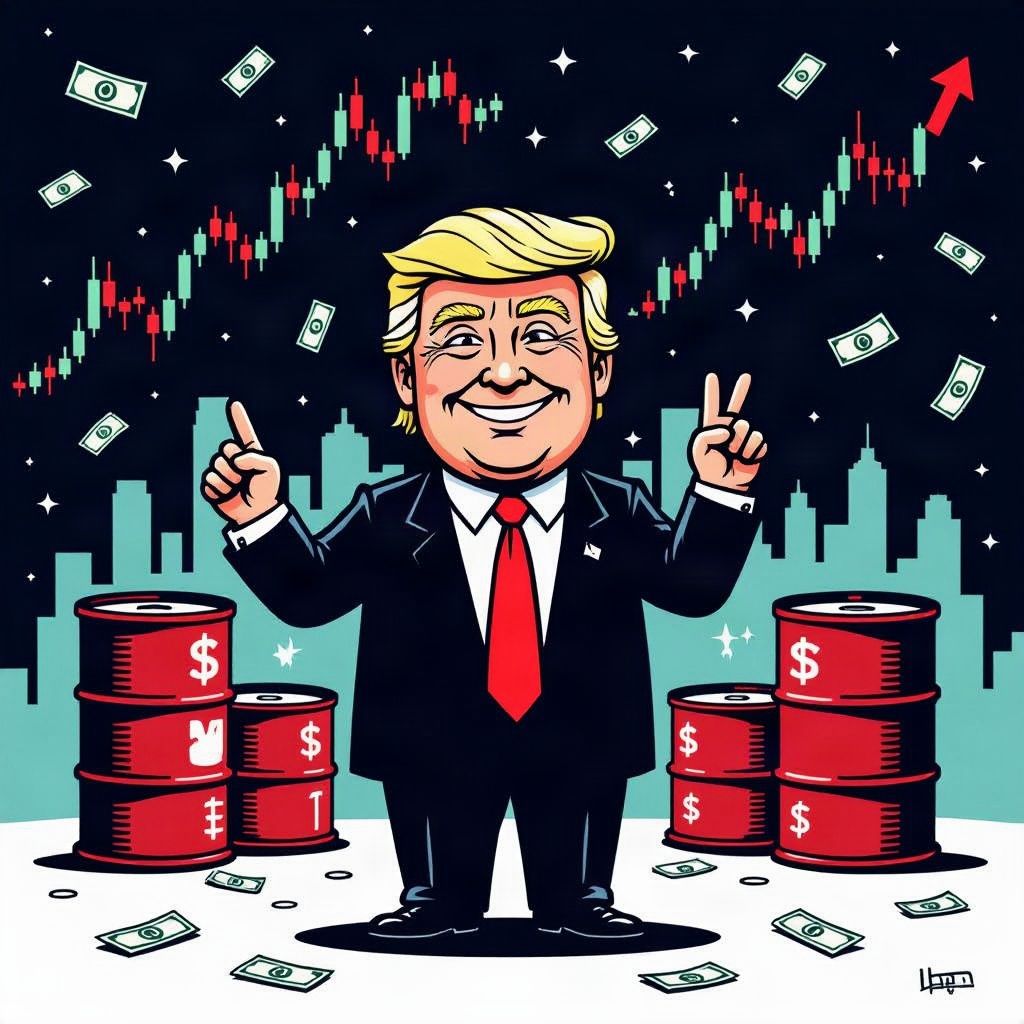
Global energy markets responded swiftly to the news, with Brent crude futures falling 1.5% to $104.28 per barrel and WTI futures dropping 1.1% to $101.30 per barrel on 17 September 2026 [2]. This decrease follows a period of volatility where oil prices exceeded $100 per barrel for the first time since July 2026 due to hostilities in the Strait of Hormuz [4][8]. In the United States, the average price for a gallon of regular gasoline rose 1.606 percent overnight on 16 September 2026, increasing from $4.36 to $4.43 [1]. Supply chain disruptions continue to influence prices, evidenced by Saudi Arabia shutting down its East-West pipeline on 13 September 2026 following damage from a drone attack [2]. However, prices softened slightly after the kingdom reportedly arranged alternative shipments via Oman’s Sohar port to mitigate supply gaps caused by the conflict [2].
Legislative and Defense Industrial Responses
Concurrent with diplomatic signals, the U.S. government has strengthened its legislative and defense posture. On 16 September 2026, the U.S. House passed the ‘Lindsey O. Graham Sanctioning Russia and Iran Act,’ which authorizes 100% tariffs on imports from countries ranking among the top five importers of Russian energy [1]. Additionally, the Department of War announced a framework agreement with Lockheed Martin on 17 September 2026, to increase production of the AIM-260 Joint Advanced Tactical Missile [1]. This agreement supports the ‘Arsenal of Freedom’ initiative, led by War Secretary Pete Hegseth, aimed at rebuilding the U.S. defense industrial base [1]. Vice President JD Vance warned at the All-In Summit that a premature U.S. withdrawal from the Middle East could cause a ‘worldwide energy crisis’ due to potential Iranian targeting of commercial shipping [1].
Future Strategic Planning and Regional Stability
Looking ahead, President Trump is scheduled to meet with leaders from the six Gulf Cooperation Council states on 22 September 2026, at the United Nations General Assembly in New York to discuss postwar strategy [2]. Despite these plans, a final ‘day-after plan’ for the region is not expected until after the U.S. midterm elections in November 2026 [2]. Regional stability remains fragile, with Yemen’s Houthi rebels capturing the strategic Perim Island in the Bab el-Mandeb Strait between 9 and 15 September 2026, breaking a four-year informal cease-fire [4][8]. While the administration expresses optimism, experts note that Iran may be willing to negotiate only after the midterms, or the conflict could extend until late 2028 if conditions are not met [2][8].