Strait of Hormuz Reclosure Threatens Global Oil Supply After Brief Reopening
Tehran, Friday, 19 June 2026.
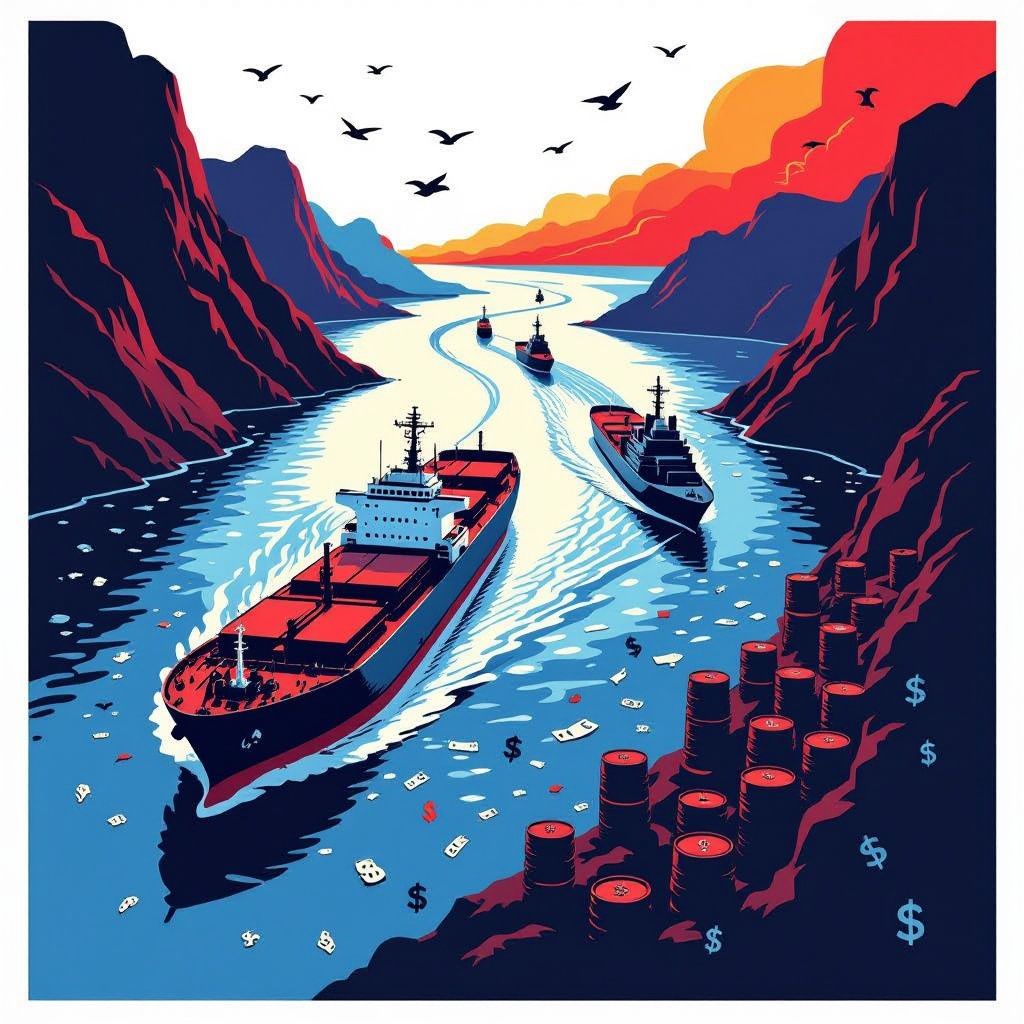
Just hours after the U.S. lifted its naval blockade, Iran abruptly reclosed the Strait of Hormuz, a vital chokepoint for 20% of the world’s oil. The sudden reversal, triggered by Israel’s refusal to withdraw from Lebanon, disrupts a fragile agreement and risks escalating shipping costs, insurance premiums, and oil prices. Analysts warn of long-term economic fallout if the closure persists, with Iraq’s oil-dependent economy already facing a financial catastrophe. Iran’s hardline stance underscores the volatility of regional geopolitics and the precarious balance of global energy security.
From Hope to Hostility: The 48-Hour Reversal That Shook Oil Markets
The brief window of stability in the Strait of Hormuz slammed shut within 48 hours of its reopening, as Iran abruptly reinstated its closure on Friday, 19 June 2026, just hours after the United States lifted its naval blockade [2][3]. The reversal came despite a memorandum of understanding (MOU) signed on 17 June between U.S. President Donald Trump and Iranian President Masoud Pezeshkian, which had promised toll-free passage through the critical waterway for 60 days [1][4]. Iran’s Islamic Revolutionary Guard Corps (IRGC) cited Israel’s refusal to withdraw forces from southern Lebanon and the continued presence of U.S. military assets in the Persian Gulf as justification for the reclosure, issuing a stark warning to maritime traffic: “All ships are requested, for the sake of their security and safety, not to approach the Strait of Hormuz. Any vessel that defies this directive will be targeted” [2]. The IRGC’s statement underscores the fragility of the agreement, which had been hailed as a breakthrough in ending years of conflict and reopening a chokepoint responsible for approximately 20% of the world’s oil supply [GPT].
The Lebanon Factor: A Ceasefire That Failed to Hold
The timing of Iran’s reclosure is inextricably linked to the escalating tensions in Lebanon, where Israel and Hezbollah had agreed to a ceasefire on 18 June 2026—just one day before the Strait’s reclosure [2][3]. Despite the ceasefire, Israeli Prime Minister Benjamin Netanyahu declared that Israeli forces would maintain a security zone in southern Lebanon, encompassing over 600 square kilometers and extending more than 6 miles across the Lebanese border, including areas north of the Litani River [3][5]. Netanyahu’s stance directly contradicts Iran’s demands for a complete Israeli withdrawal, one of three conditions set by the IRGC for reopening the Strait of Hormuz. The other conditions include the lifting of Lebanon’s naval blockade and the withdrawal of U.S. forces from the Persian Gulf and the broader region [2]. The IRGC’s hardline position reflects a broader strategy of leveraging control over the Strait to pressure Israel and its allies, particularly as Iran seeks to assert its influence in the post-war regional order [6].
Economic Fallout: Iraq’s Oil-Dependent Economy on the Brink
The Strait of Hormuz’s reclosure has sent shockwaves through global energy markets, with Iraq bearing the brunt of the economic fallout. The war between the U.S., Israel, and Iran, which began in early March 2026, had already crippled Iraq’s oil exports, which previously accounted for 95% of the country’s export revenue and 90% of government income [7]. Iraq’s oil production plummeted from approximately 4.9 million barrels per day (bpd) pre-war to a fluctuating range of 1.3 to 1.9 million bpd between March and early June 2026, as the Strait’s closure halted nearly all maritime exports [7]. The Iraqi government managed to meet public expenditures for March, April, and May 2026 through a combination of oil revenues (IQD 26.1 trillion) and domestic borrowing (IQD 17.4 trillion in Treasury Bills by the end of May), but the deficit ballooned to IQD 6.7 trillion, with revenues totaling IQD 31.2 trillion against expenditures of IQD 37.8 trillion [7]. Iraq’s foreign minister warned of a “financial catastrophe” if the war—and the Strait’s closure—persists, highlighting the country’s precarious fiscal position [7].
The IRGC’s Calculus: Theocracy Over Economics
Iran’s decision to reclose the Strait of Hormuz defies conventional economic logic, as the country’s own oil-dependent economy stands to suffer from prolonged disruptions. However, analysts suggest that the IRGC’s hardline factions prioritize theocratic survival and regional influence over civilian welfare, viewing the Strait as a strategic lever to extract concessions from Israel and the U.S. [6]. The IRGC’s control over 31 autonomous subgroups under Iran’s “Mosaic” defense strategy means that any single faction can independently disrupt maritime traffic, complicating efforts to stabilize the waterway [6]. An unidentified IRGC official or analyst quoted in online forums stated, “If the world wants the Strait of Hormuz to be free, then the IRGC needs to be rooted out from existence regardless of what it takes… When religion is involved, especially a theocracy, it’s all or nothing” [6]. This uncompromising stance is echoed by the Supreme National Security Council (SNSC), which vowed “absolutely no compromise” in executing the directives of Mojtaba Khamenei, the son of Iran’s Supreme Leader, regarding the preservation of Iran’s rights and those of its regional allies [8]. The SNSC also announced it would monitor the negotiation process and the implementation of the U.S.-Iran agreement with “complete distrust” toward Washington, warning of “reciprocal action” in the event of any perceived violations [8].
Regional Ripple Effects: Iraq’s Search for Alternatives
Iraq’s vulnerability to the Strait of Hormuz’s closure has exposed the fragility of its oil-dependent economy and the lack of alternative export routes. Prior to the war, Iraq exported an average of 3.3 million bpd via the Strait, with an additional 200,000 bpd from the Kurdistan Region of Iraq (KRI) flowing through Turkey’s Ceyhan port [7]. However, KRI oil production was shut down in June 2026 due to attacks by sub-state actors, halting exports and depriving the federal treasury of critical revenues [7]. The federal Ministry of Oil sought to divert 250,000 bpd via the Iraq-Türkiye Pipeline (ITP), but disputes with the KRI over non-oil revenue sharing scuttled the plan, leaving Iraq with limited options for exporting its crude [7]. The ITP’s theoretical capacity of 1.6 million bpd remains underutilized due to chronic underinvestment, with actual exports averaging just under 200,000 bpd in recent months [7]. Iraq’s efforts to resume exports via Turkey’s Ceyhan port and through tanker shipments via the Strait of Hormuz have been repeatedly disrupted by the conflict, leaving the country’s oil revenues far below pre-war levels [7]. The government has projected that it will need to issue domestic debt for an additional 5-6 months to cover expenditures, with negotiations underway for an International Monetary Fund (IMF) program by the end of 2026 to alleviate fiscal pressures [7].
The Path Forward: A Fragile Agreement on Life Support
The U.S.-Iran MOU, signed on 17 June 2026, now hangs by a thread, with both sides accusing the other of violating its terms. The agreement had been hailed as a landmark deal to end years of conflict and reopen the Strait of Hormuz, but its implementation has been marred by mutual distrust and competing regional interests [1][2][3]. U.S. Vice President JD Vance reaffirmed the U.S. position that “international waterways should be free of tolls,” while emphasizing that keeping the Strait open remains a priority [1]. However, Iran’s chief negotiator, Mohammad Bagher Ghalibaf, has stated that the Strait requires “management,” implying restrictions on maritime traffic despite the MOU’s provisions [4]. Saudi Arabia’s Foreign Minister, Prince Faisal bin Farhan Al Saud, rejected Iran’s plans to manage the Strait, stating, “The management of the strait was working fine before the conflict… Ships were navigating freely… That worked fine, and that should be the end of it” [4]. The UAE has also signaled its intent to deepen defense ties with Israel under the Abraham Accords, further complicating efforts to stabilize the region [4]. With the Strait’s status in limbo and no clear resolution in sight, analysts warn that prolonged disruptions could have far-reaching consequences for global energy markets, supply chains, and economic growth [1][2][3][6].
Sources
- www.lloydslist.com
- nypost.com
- www.nbcnews.com
- www.theguardian.com
- apnews.com
- www.reddit.com
- www.arab-reform.net
- iranwire.com