Bill Gates Faces Pressure Over Multi-Billion-Dollar Holding in Polluting Landfill Operator
Phoenix, Tuesday, 10 November 2026.
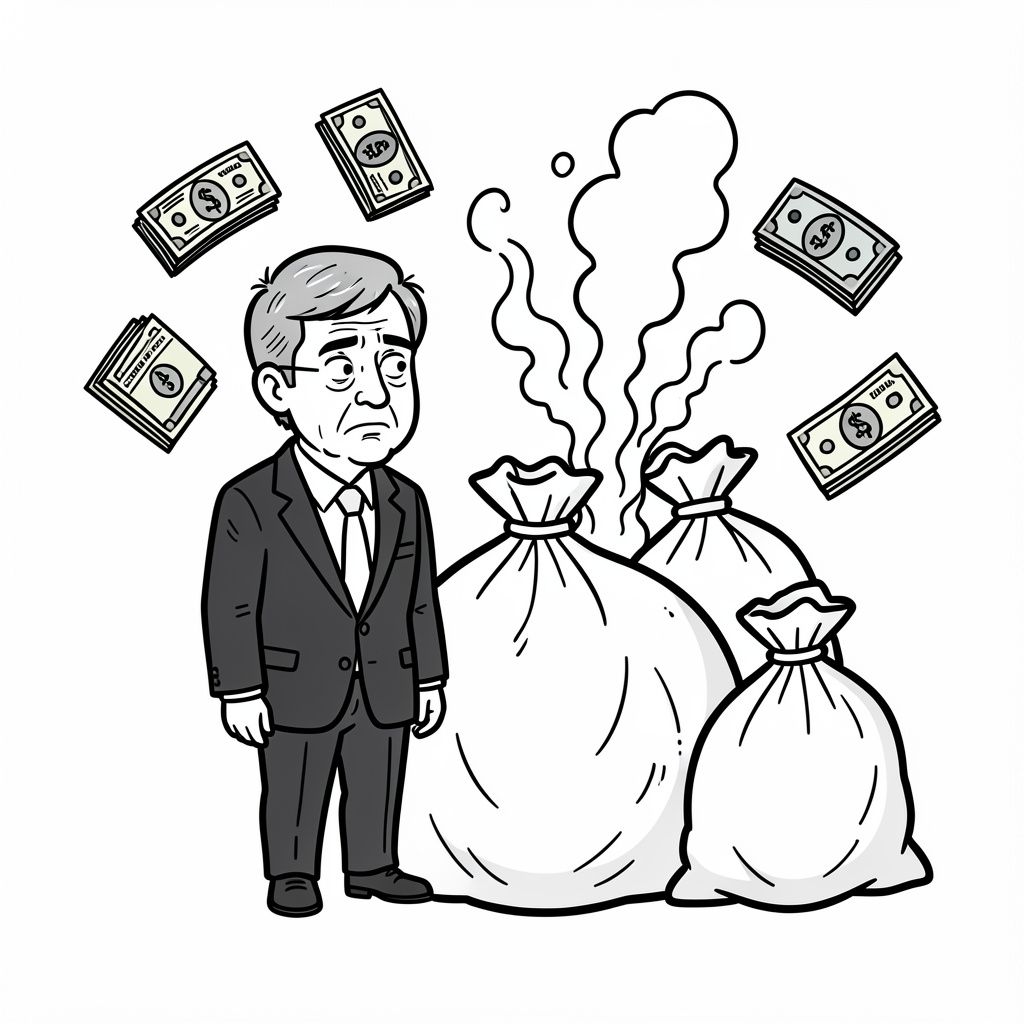
Despite his vocal climate advocacy, Bill Gates holds a $29 billion stake in Republic Services, a major landfill operator cited by federal inspectors for over 1,400 excessive methane leaks.
A Contradiction in Climate Advocacy and Investment
Bill Gates, whose climate advocacy has positioned him as a leading voice in global discussions on reducing greenhouse gas emissions, faces renewed scrutiny over a $29 billion financial stake in Republic Services (NYSE: RSG), the second-largest landfill operator in the United States [1]. This investment, which constitutes over a fifth of Gates’ net worth, starkly contrasts with his public calls for corporate climate accountability and his 2015 pledge to invest at least $2 billion in clean-energy technologies [1]. Landfills, including those operated by Republic Services, are significant contributors to methane emissions—a greenhouse gas 28 to 36 times more potent than carbon dioxide over a 100-year period [GPT]. Despite Gates’ influence, Republic Services has been repeatedly cited by the Environmental Protection Agency (EPA) for methane leaks exceeding federal limits, with inspections since 2020 documenting over 1,400 problem areas across at least 39 of its landfills [5].
Regulatory Failures and Corporate Resistance
The EPA’s enforcement actions highlight systemic issues within Republic Services’ operations. In September 2024, the agency issued an enforcement alert targeting landfills violating monitoring and maintenance requirements, with approximately 20% of the facilities flagged belonging to Republic Services [1]. One of its most notorious sites, the McCarty Road Landfill in Houston, has faced repeated violations for failing to detect methane exceedances for years [1]. These issues are exacerbated by Republic’s reliance on extrapolation rather than direct measurements for reporting emissions, a practice criticized by researchers from Harvard, NASA, and Carbon Mapper. A 2025 study revealed that Indiana’s National Serv-All Landfill, operated by Republic Services, emitted 13 times the amount of methane reported to the EPA [1]. Despite these findings, Republic Services has resisted adopting stricter climate targets, including those aligned with the Science Based Targets Initiative (SBTi), which aims for a 35% reduction in greenhouse gas emissions by 2030 [1].
Gates’ Influence and Corporate Governance
Bill Gates’ longstanding financial ties to Republic Services trace back to 1999, when his investment office, Cascade Asset Management, began accumulating a 5% stake in the company [1]. By November 2015, Gates’ stake had grown to 38%, valued at $29 billion, making it one of his largest financial holdings [1]. Gates’ investment office, managed by Michael Larson, has maintained significant influence over Republic Services, with Larson joining the company’s board in 2009 [1]. This influence extends to corporate governance, as Gates’ board representation gives him effective control over outcomes despite his stated commitment to climate action [1]. Legal scholar Ann Lipton of the University of Colorado, Boulder, notes that Gates likely possesses the power to influence Republic Services’ behavior toward greater climate accountability, even at the expense of profitability [1][6]. However, Gates has remained largely silent on Republic’s environmental practices, with Larson stating that Gates may not be fully aware of Cascade’s investments [1].
Industry Pushback and the Path Forward
Republic Services’ resistance to stricter regulations reflects broader industry trends. The company has lobbied against federal policies aimed at diverting organic waste from landfills and has opposed measures to enhance methane monitoring [1]. In 2024, the landfill industry, including Republic Services, pushed back against a proposed EPA policy to reduce organic waste disposal [1]. Critics argue that the industry’s reliance on landfilling, which generates methane, undermines broader climate goals. For example, Germany’s 1993 phase-out of biodegradable waste disposal resulted in a 90% reduction in methane emissions, while U.S. emissions declined by only 40% over a similar period [1]. Experts, including Riley Duren, a former NASA engineer and founder of Carbon Mapper, emphasize that reducing food waste and diverting organic waste from landfills are critical steps to curb emissions [1]. As Republic Services faces mounting pressure to align with climate goals, the company’s failure to meet its SBTi commitments by the 2026 deadline raises questions about the feasibility of such targets [1].
Conclusion: A Test of Climate Commitments
The juxtaposition of Bill Gates’ climate advocacy and his financial stake in Republic Services underscores a critical tension in corporate accountability. While Gates has divested from fossil fuel companies and championed technological solutions to climate change, his continued investment in a high-emission landfill operator challenges the coherence of his climate agenda [1][2]. As federal scrutiny intensifies and public awareness grows, the onus lies on Gates and other major shareholders to leverage their influence for meaningful change. The case of Republic Services serves as a microcosm of the broader struggle to reconcile profit-driven industries with the urgent need for climate action. Whether Gates will act to align his investment portfolio with his stated principles remains an open question, but the pressure is mounting.