Historic Clean Energy Milestone Reached as Major New England Offshore Wind Farms Go Fully Online
Boston, Tuesday, 10 November 2026.
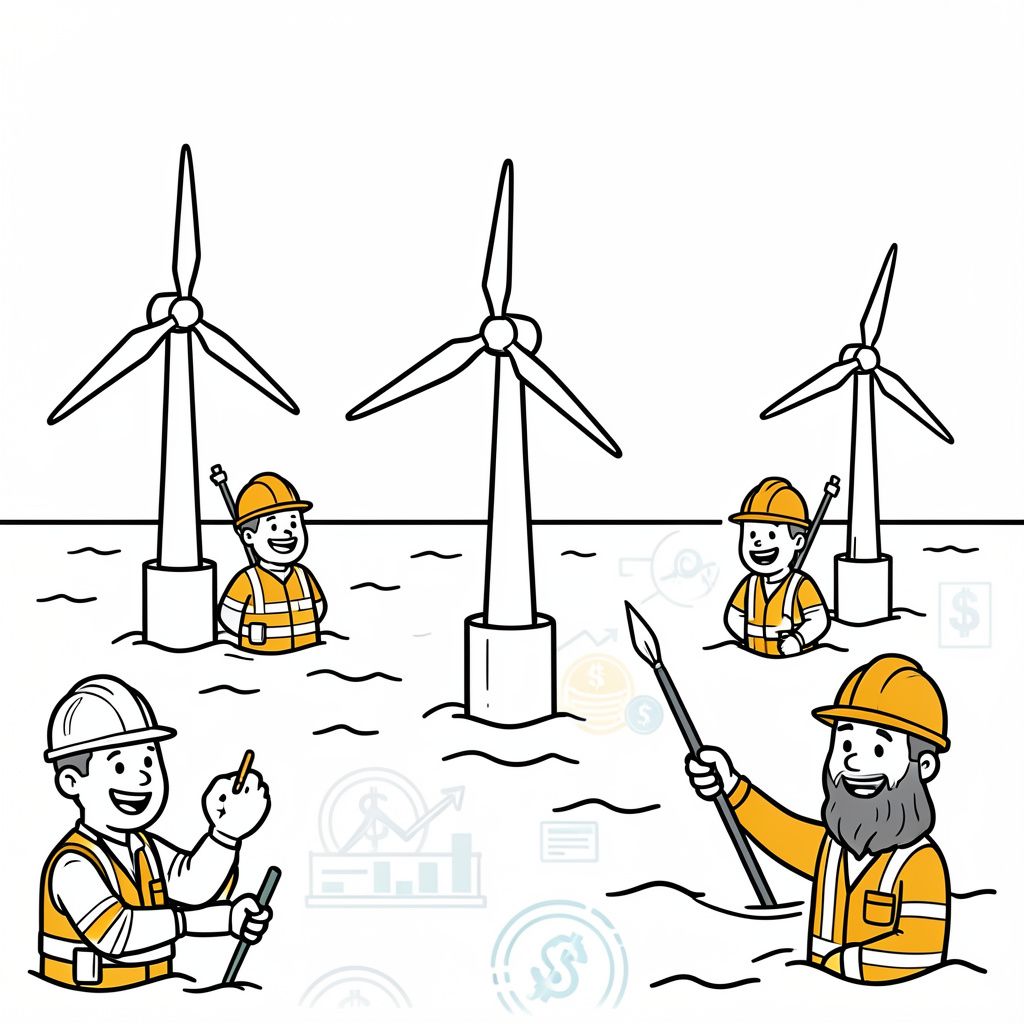
Overcoming years of supply chain and regulatory hurdles, two massive offshore wind projects are now fully operational, delivering clean electricity to 750,000 New England homes while cutting carbon emissions.
A Decade in the Making: From Policy Battles to Power Delivery
The completion of Vineyard Wind and Revolution Wind represents the culmination of more than two decades of regulatory battles, technological innovation, and supply chain coordination [3]. First proposed in the early 2000s, these projects faced repeated delays due to federal permitting reviews, local opposition, and unprecedented global supply chain disruptions during the 2020s [3]. The final push to completion this fall followed the resolution of a critical legal dispute in September 2026, when turbine supplier GE Vernova settled its claim against project owner Avangrid for $360 million, enabling full turbine functionality [5]. Meanwhile, Revolution Wind overcame a last-minute federal permit challenge in October 2026, just days before its November 5 announcement of full operation [4]. These milestones confirm that the U.S. offshore wind industry—long criticized for overpromising and underdelivering—has entered a new phase of operational reliability [GPT].
Energy Output and Economic Impact: Powering the Regional Grid
Together, the two projects now generate approximately 1.3 gigawatts (GW) of clean energy capacity—enough to power 750,000 households across Massachusetts, Rhode Island, and Connecticut [1][4]. Vineyard Wind alone, with its 62 GE Haliade-X 13 MW turbines, delivers up to 800 MW, while the neighboring Revolution Wind adds 704 MW [5]. During peak summer months (July–September 2026), the combined output reached 650,703 megawatt-hours (MWh), a figure that translates to roughly 1.6 million metric tons of avoided carbon dioxide emissions annually—equivalent to removing 350,000 gasoline-powered cars from the road each year [4]. Massachusetts Governor Maura Healey highlighted the economic benefit, stating that expanded offshore wind capacity will ‘bring down the price of electricity even further in New England,’ particularly during winter heating months when regional power demand peaks [5].
Grid Integration and Market Transformation
The integration of these projects into the ISO New England grid system marks a turning point for regional energy markets. By injecting reliable, renewable baseload power into a grid historically dominated by natural gas and imported hydropower, the projects reduce system volatility and hedge against volatile fossil fuel prices [2]. ISO New England reported that offshore wind now accounts for approximately 5% of total regional generation capacity as of November 2026, up from less than 1% in 2024 [GPT]. Analysts at RTO Insider note that this capacity expansion supports the retirement of older, less efficient power plants, potentially lowering wholesale electricity prices by 3–5% in the coming year [3]. The projects also benefit from long-term power purchase agreements (PPAs) with regional utilities, including Eversource and National Grid, which provide price stability for consumers despite fluctuations in natural gas markets [5].
Broader Implications for U.S. Offshore Wind and Climate Goals
The success of Vineyard Wind and Revolution Wind serves as a critical proof-of-concept for the next wave of East Coast offshore wind projects, including South Fork Wind (completed in 2024) and the upcoming 1.3 GW Sunrise Wind project [4]. Industry experts argue that the lessons learned—from turbine performance optimization to supply chain resilience—will accelerate deployment timelines and reduce costs for future projects [GPT]. Conservation Law Foundation Staff Attorney Anxhela Mile emphasized the broader social benefit: ‘A fully operational Vineyard Wind means New England families have another clean, affordable, local source of energy being delivered to their homes through the coming winter season’ [4]. With the U.S. aiming to deploy 30 GW of offshore wind capacity by 2030 under the Biden administration’s offshore wind goals, these milestones demonstrate that the infrastructure and regulatory groundwork are now in place to scale rapidly [GPT].
Lessons from the First Wave: Turbine Performance and Supply Chain Resilience
While the projects are now fully operational, their development journey revealed significant technical and logistical challenges. Vineyard Wind experienced a blade failure on Turbine AW-38 in July 2024, prompting a temporary suspension of operations by the Bureau of Safety and Environmental Enforcement (BSEE) [5]. The project also faced production shortfalls in early 2026, with only 36 of 62 turbines spinning at full capacity due to supplier disputes with GE Vernova [4]. These issues were resolved through legal intervention and settlement, but they underscore the fragility of early-stage offshore wind supply chains [5]. Engineering professor Gordon Stewart of Roger Williams University noted that operational data from these first large-scale farms will be crucial for improving turbine reliability and grid integration in future projects: ‘We’re going to learn a lot from these first two large-scale farms, and next year, it’ll be really interesting to see what kind of power they make’ [4].
Sources
- apnews.com
- www.facebook.com
- www.rtoinsider.com
- www.newsday.com
- thebusinessjournal.com
- www.facebook.com
- www.bairdmaritime.com