Elektros Targets Rapid Six-Minute Electric Vehicle Charging With New Prototype Effort
Sunny Isles Beach, Sunday, 8 November 2026.
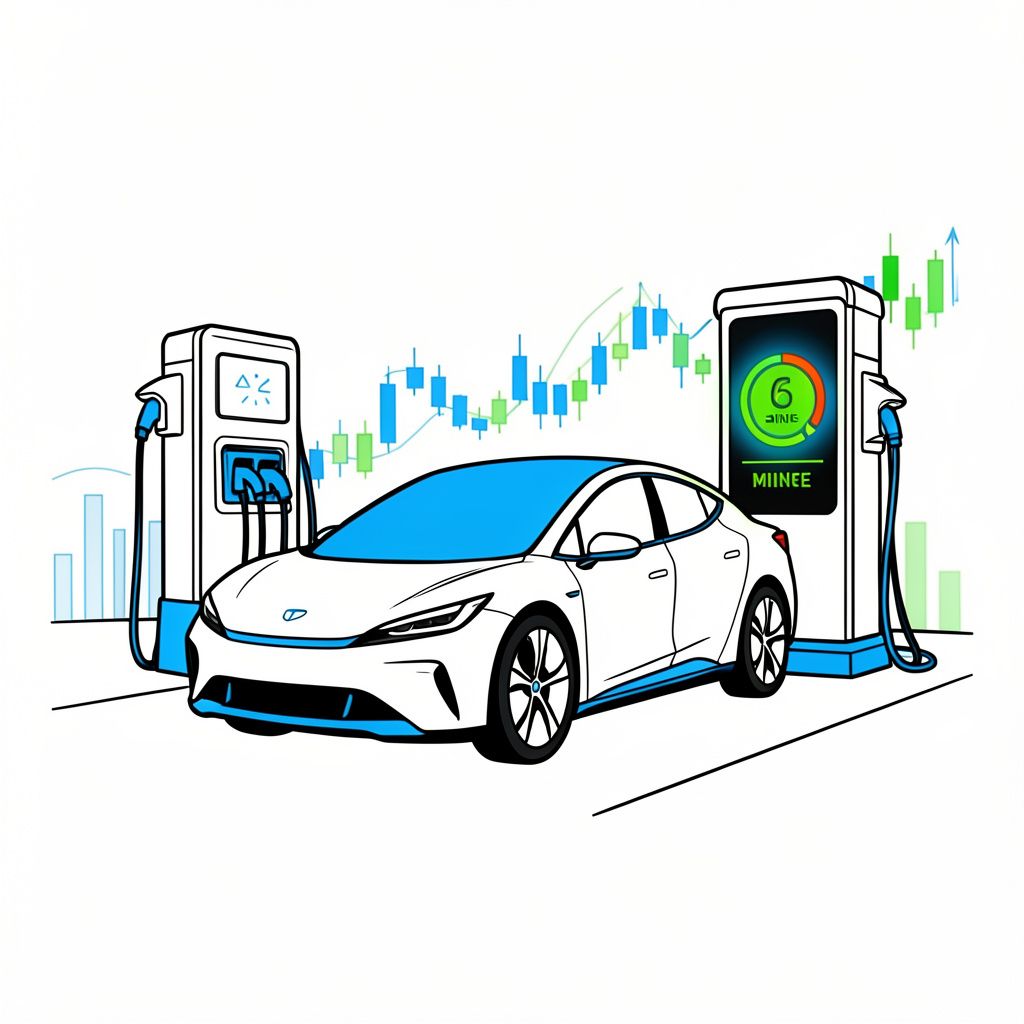
Elektros is advancing hardware development for its multi-port charging system, pursuing an ambitious design target to fully recharge electric vehicles in roughly six minutes instead of conventional hour-long stops.
Elektros’ Patented Multi-Port Charging Architecture Takes Center Stage
Elektros Inc. (OTC PINK: ELEK) is intensifying development of its patented multi-port electric vehicle (EV) charging technology, a system designed to dramatically reduce charging times for commercial fleets and public infrastructure. The company’s proprietary architecture, covered under U.S. Patent No. 12,522,100 B1, utilizes multiple independent power inputs controlled by an electronic system to deliver electricity through a single vehicle interface [1][2][3][4][5]. This approach aims to enhance charging throughput and efficiency, addressing a critical bottleneck in EV adoption for high-utilization scenarios such as delivery services and ride-sharing operations. Elektros’ CEO Shlomo Bleier emphasized the system’s potential to transform charging experiences, stating that ‘time is of the essence’ in moving toward refueling speeds measured in minutes rather than hours [1].
Six-Minute Charging Target: Ambitious or Achievable?
The company has set an aspirational target of recharging an EV battery from empty to full in approximately six to seven minutes, a significant leap from current conventional fast-charging stops that typically require 55 minutes or longer [1][2][3][4][5]. While this objective underscores Elektros’ innovation ambitions, it remains unverified as of November 8, 2026, with no working prototype, independently confirmed charging results, or commercial deployment announced [1][2][3][4][5]. Industry experts note that achieving such rapid charging would require overcoming substantial technical hurdles, including thermal management, battery chemistry compatibility, and grid power delivery capabilities [alert! ‘No independent verification of claims exists as of the article date’]. Current industry benchmarks suggest that most Level 3 DC fast chargers deliver approximately 50–350 kW, with the fastest commercial systems capable of adding roughly 180–240 km of range in 15 minutes [GPT]. Extrapolating these rates to a full charge would typically require significantly longer durations, particularly for larger battery packs found in commercial vehicles.
Commercialization Roadmap: Prototypes and Partnerships
Elektros has shifted its development focus toward hardware prototype fabrication in November 2026, marking a critical phase in translating patented technology into tangible systems [1][2][3][4][5]. Concurrently, the company is engaged in active discussions with commercial partners across the broader EV ecosystem to explore potential licensing and deployment agreements [1][2][3][4][5]. These negotiations represent a pivotal step toward commercialization, though no binding agreements, customer contracts, or prototype demonstrations have been publicly disclosed as of the current date [1][2][3][4][5]. The company’s strategy appears to prioritize controlled, small-scale deployments before scaling to broader infrastructure applications, a prudent approach given the unproven nature of the six-minute charging claim [alert! ‘All development milestones remain aspirational as of November 2026’].
Strategic Diversification: Lithium Exploration in Northern New York
Beyond its charging technology, Elektros is evaluating a preliminary hard-rock lithium opportunity in northern New York near the Canadian border, a move reflecting broader industry trends toward securing domestic battery material supply chains [2][3][4][5][6]. The company’s assessment of this property, announced on November 6, 2026, aligns with projections from Benchmark Mineral Intelligence indicating that global lithium demand could more than triple by 2050, necessitating 134 additional mines and over $100 billion in investment [2][3][4][5][6][7]. While this initiative underscores Elektros’ ambition to diversify into critical mineral supply, the northern New York property remains in the exploratory phase, with no acquisition completed, mineral resource established, or feasibility study published [2][3][4][5][6][7]. Industry analysts caution that hard-rock lithium projects typically require 7–10 years from discovery to production, underscoring the long-term nature of this endeavor [GPT].
Sources
- www.newswire.com
- www.newswire.com
- www.theglobeandmail.com
- www.tradingview.com
- www.theglobeandmail.com
- www.bignewsnetwork.com
- www.morningstar.com