Drone Shot Down Near South Korea’s World Cup Camp—Why Security Fears Are Rising
Guadalajara, Friday, 19 June 2026.
A drone was intercepted near South Korea’s training base just days before their World Cup clash with Mexico, exposing a growing threat to global sports events. With multiple drones neutralized in host cities, authorities are scrambling to tighten airspace security—could this be the start of a new era of high-tech risks?
The Incident: A Drone Over South Korea’s Training Camp
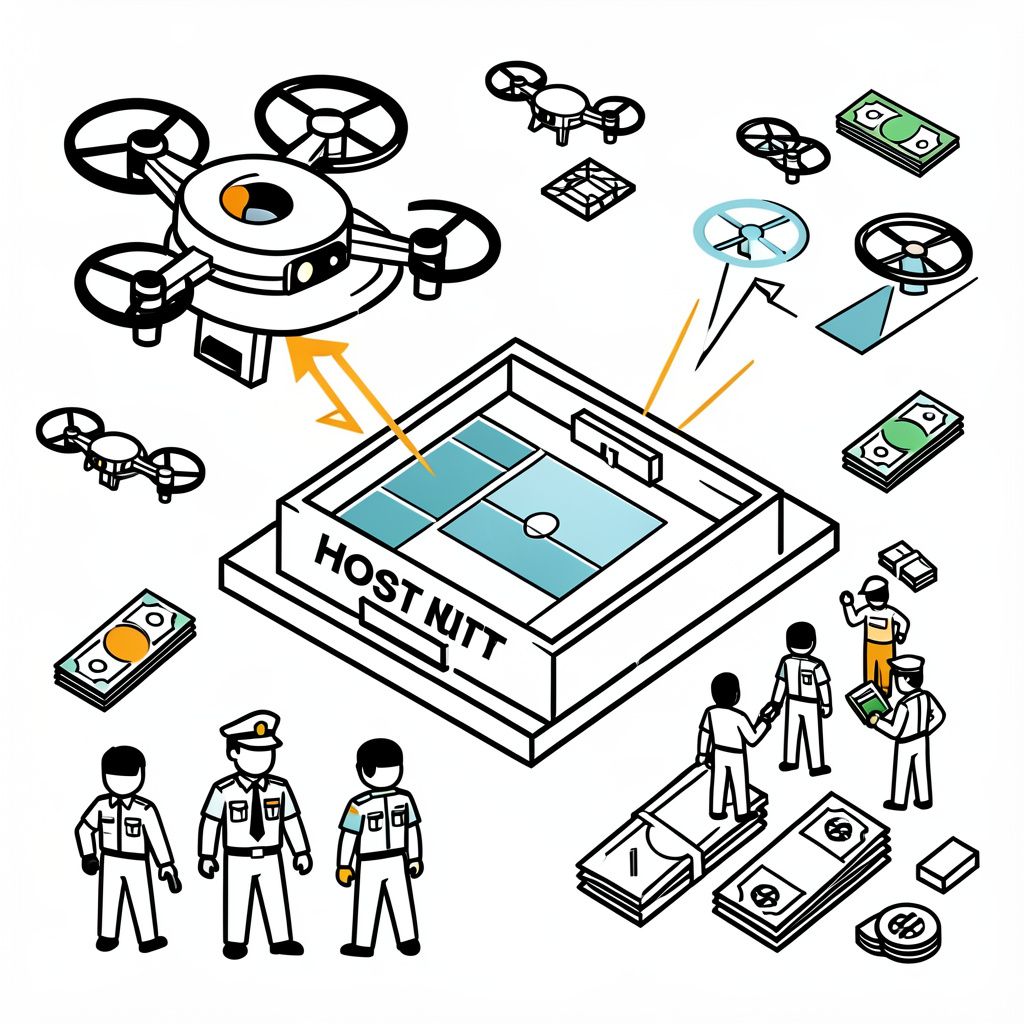
On 18 June 2026, Mexican military forces intercepted and neutralised an unregistered drone hovering near South Korea’s training camp in Guadalajara, just days before their critical Group A match against Mexico in the 2026 FIFA World Cup [1]. The drone was detected and brought down using specialised counter-drone equipment, though Mexican authorities did not disclose the exact method or timing of the interception [1]. South Korea’s head coach, Hong Myung-bo, confirmed the incident, stating that the drone appeared ‘during our training’ but fortunately did not disrupt tactical preparations [1]. While no group has claimed responsibility, the event has raised immediate concerns about the vulnerability of high-profile sporting events to aerial surveillance and potential threats [1][7].
A Pattern of Drone Intrusions in Mexico’s Host Cities
The incident near South Korea’s camp is not an isolated case. Mexican authorities have reported multiple drone intrusions across the country’s three World Cup host cities—Mexico City, Guadalajara, and Monterrey—since the tournament began on 11 June 2026 [1]. These neutralised drones attempted to breach security zones around stadiums, team base camps, and fan festivals, prompting federal agents to describe the situation as a ‘coordinated effort’ to test airspace defences [1]. In response, Mexico’s ‘Plan Kukulkán,’ a security operation involving 100,000 personnel, has been activated to safeguard the tournament [1]. The plan includes early warning systems, enhanced stadium security, and protection protocols for teams, officials, and fans [1]. Despite these measures, the frequency of drone intrusions suggests that existing counter-drone technologies may be struggling to keep pace with evolving threats [1][8].
Global Counter-Drone Measures: How Host Nations Are Responding
The 2026 FIFA World Cup is the first to be co-hosted by three nations—Mexico, the United States, and Canada—each implementing distinct counter-drone strategies to mitigate risks [1][7]. In the United States, all 78 matches and fan festivals are protected by advanced counter-drone systems, deployed in response to an alleged plot targeting the 2020 UFC 250 event at the White House [7]. Andrew Giuliani, head of the White House World Cup Task Force, confirmed that these systems will remain active throughout the tournament, covering every venue and fan zone [7]. Meanwhile, Canada has imposed strict no-fly zones over stadiums and training sites in Vancouver and Toronto, with restrictions in place until 7 July 2026, the date of the last scheduled match in the country [1]. Mexico, however, has taken a more proactive approach by deploying high-tech surveillance drones of its own. The Mexico City police force has introduced advanced aerial monitoring systems to bolster security, particularly in high-traffic areas such as fan zones and stadium perimeters [8].
The Spying Scandal That Shook Women’s Football
The current drone threats echo a high-profile scandal from the 2024 Paris Olympics, where Canada’s women’s football team was accused of using a drone to spy on New Zealand’s training session ahead of their opening match [1]. The incident led to the suspension of two coaching staff members and the dismissal of head coach Bev Priestman [1]. Canada Soccer later determined that the spying was not an isolated incident but part of a broader pattern of insufficient oversight within the national teams [1]. The scandal resulted in a six-point deduction for Canada in the Olympic group standings, tarnishing their reputation as reigning Olympic champions from Tokyo 2020 [1]. The fallout from the Paris incident has since prompted sporting organisations worldwide to reassess their security protocols, particularly in relation to aerial surveillance [1][7].
What’s Next for World Cup Security?
The drone incident in Guadalajara may force FIFA and local authorities to implement stricter airspace restrictions during the remainder of the tournament [1]. Potential measures could include expanded no-fly zones, increased use of jamming technologies, and real-time drone detection systems integrated with law enforcement databases [1][8]. However, these solutions come with their own challenges, such as the risk of interfering with legitimate air traffic or violating privacy laws [GPT]. For now, teams like South Korea—led by star player Son Heung-min—are operating under heightened security protocols, with additional surveillance and restricted access to training facilities [1]. As the World Cup progresses, the balance between security and operational efficiency will remain a critical concern for organisers, particularly in host nations with less experience managing large-scale international events [1][7].
Sources
- www.theguardian.com
- www.theguardian.com
- www.theguardian.com
- www.theguardian.com
- www.theguardian.com
- www.theguardian.com
- www.business-standard.com
- www.instagram.com