UK By-Election Could Trigger Leadership Showdown for Prime Minister Starmer
London, Friday, 19 June 2026.
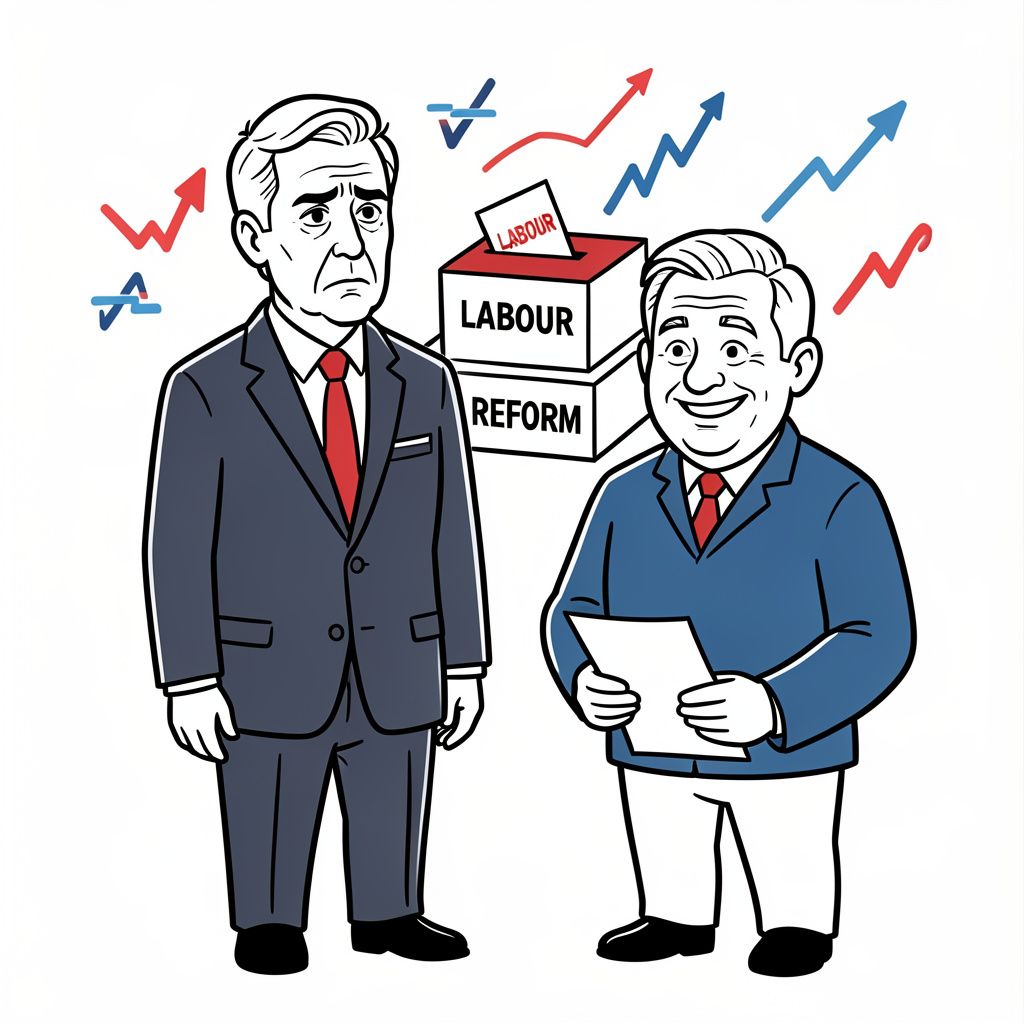
A single parliamentary seat in Makerfield, England, is set to decide the future of UK Prime Minister Keir Starmer. Andy Burnham, the popular Mayor of Greater Manchester, is contesting the by-election with a bold aim: to challenge Starmer for Labour Party leadership. Polls show Burnham leading narrowly, but Reform UK’s surge threatens to split the vote. With Starmer’s approval ratings at historic lows and Labour losing ground to far-right parties, this local contest has become a national referendum on his leadership. The outcome could reshape UK politics, influence post-Brexit trade deals, and send ripples through global markets.
A By-Election with National Stakes
The Makerfield by-election, held on 18 June 2026, is not merely a contest for a single parliamentary seat in Greater Manchester. It has evolved into a high-stakes leadership challenge for UK Prime Minister Keir Starmer, who faces an internal rebellion within the Labour Party. The resignation of Labour MP Josh Simons on 14 May 2026 triggered the by-election, creating an opportunity for Andy Burnham, the Mayor of Greater Manchester, to re-enter Parliament and potentially launch a leadership bid against Starmer [1][2]. Makerfield, a constituency Labour has held since its creation in 1983, has become the epicentre of a political earthquake with implications far beyond its 105,000 residents [3][4].
Burnham’s Calculated Gamble
Andy Burnham’s decision to contest the Makerfield by-election is a strategic move with profound implications. Burnham, who has served as Mayor of Greater Manchester since 2017, previously held cabinet positions under Prime Ministers Tony Blair and Gordon Brown. His leadership during the COVID-19 pandemic and his advocacy for justice in the Hillsborough disaster have cemented his reputation as a formidable political figure [3]. By securing a seat in Parliament, Burnham would gain a platform to challenge Starmer directly, leveraging his popularity in the northwest of England. Burnham’s campaign has focused on local issues such as garbage collection, potholes, and school funding, but his ultimate goal is to reshape Labour’s national agenda [1]. If successful, his victory could signal a shift in Labour’s policy direction, particularly on devolution, public sector investment, and foreign relations [2].
Starmer’s Precarious Position
Keir Starmer’s leadership has been under intense scrutiny following a series of setbacks. Labour suffered heavy losses in the May 2026 local elections, losing nearly 1,500 council seats while Reform UK surged from 100 to approximately 1,450 seats [5][6]. Starmer’s approval ratings have plummeted to the lowest levels recorded for any UK Prime Minister since Ipsos began polling in 1977, with dissatisfaction driven by his stance on welfare cuts, immigration, and Labour’s internal divisions over the UK’s position on Israel [3]. The resignations of Defence Secretary John Healey and Armed Forces Minister Al Carns on 14 June 2026, over disputes regarding the UK’s defence budget, have further weakened Starmer’s position [3]. Senior Labour MP Louise Haigh, speaking from the Makerfield count on 18 June, expressed cautious optimism about Labour’s chances, stating, “I am quietly confident that we have won the Makerfield by-election… I expect the result will be clear in around an hour” [2]. However, the outcome remains uncertain, with Reform UK’s Robert Kenyon polling competitively and threatening to split the vote [3].
The Reform UK Factor
The rise of Reform UK has added a layer of complexity to the Makerfield by-election. Reform UK, which came second in Makerfield during the last general election, is polling at 41% among likely voters, just five percentage points behind Burnham’s Labour [7]. The party’s candidate, Robert Kenyon, has faced controversy over alleged sexist and misogynistic social media posts, which have overshadowed his campaign [7]. Despite this, Reform UK’s surge in support, particularly among blue-collar workers and older voters, poses a significant threat to Labour’s dominance in the constituency [6]. A far-right breakaway party, Restore Britain, is also contesting the by-election, polling at 7% and further fragmenting the vote [7]. Restore Britain, founded by former Reform UK MP Rupert Lowe in March 2025, has rapidly gained traction, claiming over 96,000 members and 13 councillors in less than four months [7]. Political commentator Aaron Bastani noted, “A lot of those voters now see [Nigel] Farage as part of the establishment,” suggesting that Restore Britain could outperform expectations and split the far-right vote, potentially benefiting Burnham [7].
Global Implications of a Leadership Shift
The outcome of the Makerfield by-election could have far-reaching consequences for the UK’s economic and geopolitical standing. A victory for Burnham would embolden his leadership challenge, potentially leading to a shift in Labour’s policy priorities. Business leaders and international investors are closely monitoring the situation, as any change in UK leadership could impact post-Brexit trade agreements, regulatory frameworks, and economic stability [1]. The UK’s role in international geopolitics, particularly its relationships with the European Union and the United States, could also be affected. Burnham has been vocal about his support for greater devolution and public sector investment, which could alter the UK’s economic trajectory [2]. Meanwhile, Starmer’s government has emphasized fiscal stability amid rising public debt and costs, a stance reiterated by Chancellor of the Exchequer Rachel Reeves [5]. The by-election result, expected in the early hours of 19 June 2026, will serve as a barometer for Labour’s internal cohesion and its ability to counter the rising influence of far-right parties [2][3].
The Broader Political Landscape
The Makerfield by-election is occurring against a backdrop of broader political upheaval in the UK. In Scotland, the Conservative Party secured a significant victory in the Aberdeen South by-election on 18 June, defeating the Scottish National Party (SNP) with a majority of over 6,000 votes [2]. The SNP’s loss in Aberdeen South, a seat it had previously held, underscores the party’s declining fortunes and the growing influence of the Conservatives in Scotland [2]. Meanwhile, Labour’s internal divisions have been exacerbated by Starmer’s handling of key issues, including his stance on Israel and immigration, which has alienated segments of the party’s traditional voter base [3]. The party’s polling collapse is evident, with Labour’s support dropping below 20% in recent surveys, the lowest for a governing party since the 1940s [6]. The Greens and Reform UK have gained ground, particularly among younger and older voters, respectively, while Labour’s support among white-collar and blue-collar workers has eroded [6]. As the UK navigates these political shifts, the Makerfield by-election serves as a critical test for Starmer’s leadership and Labour’s ability to maintain its grip on power [1][3].
Sources
- www.nytimes.com
- www.bbc.com
- www.aljazeera.com
- www.bbc.com
- www.nytimes.com
- www.economist.com
- www.washingtonpost.com