California's 2026 Lawn Ban Triggers a $2.1 Billion Boom in Water-Efficient Landscaping
Sacramento, Wednesday, 15 April 2026.
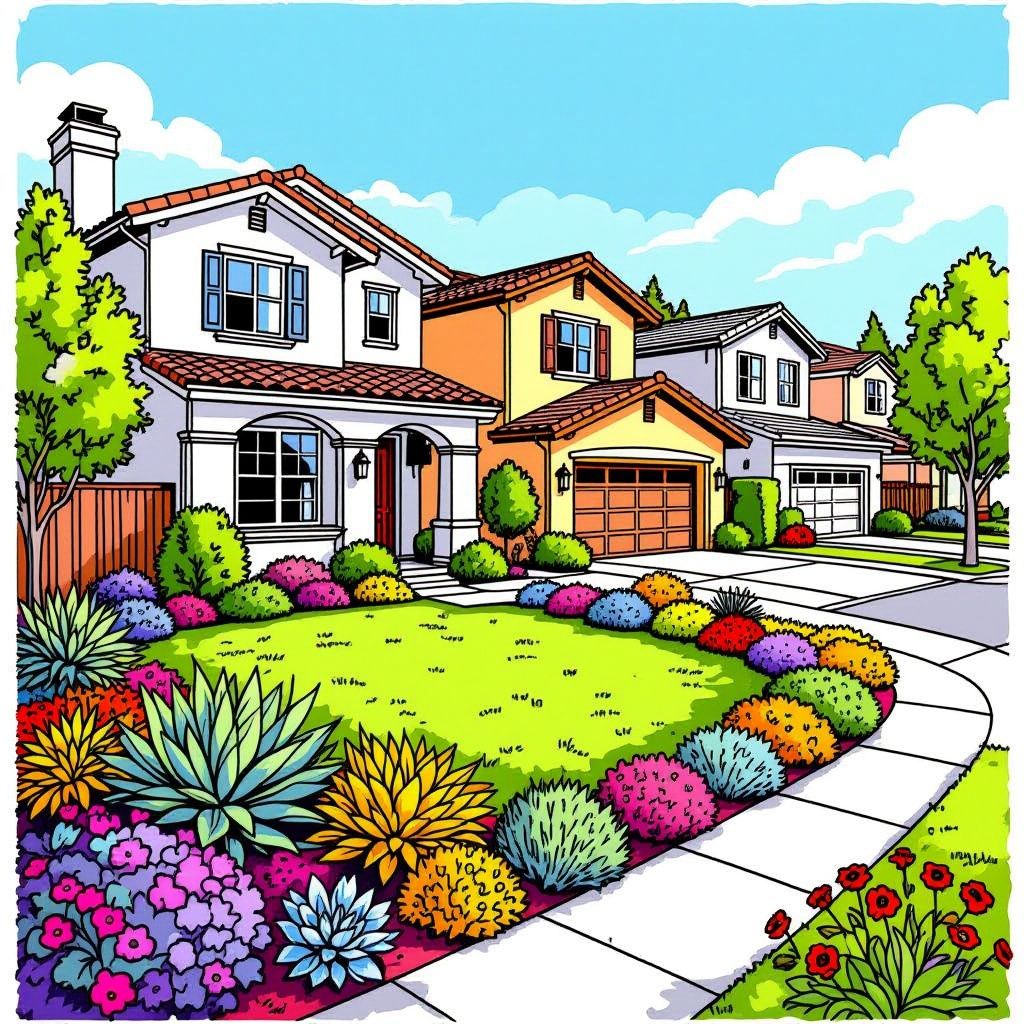
California’s 2026 water rules have effectively ended the traditional lawn, sparking a massive $2.1 billion economic shift as property owners rush to install drought-resistant, permeable outdoor spaces.
The Economics of the “Post-Lawn” Era
California’s transition into the “post-lawn” residential landscape era is being driven by permanent bans on “non-functional turf” and the state’s 2026 updates to the Model Water Efficient Landscape Ordinance (MWELO) [1]. With outdoor irrigation historically accounting for approximately 50% of residential water use statewide, according to the California Department of Water Resources, traditional grass is rapidly being reclassified from an aesthetic asset to a significant financial and regulatory liability [1]. Industry analysts project that this mandated turf removal and the subsequent installation of water-efficient infrastructure will generate a $2.1 billion shift in California’s landscaping economy by 2027 [1].
Climate Realities Redefining Water Storage
The urgency behind these landscape transformations is underscored by severe climatic shifts. The winter of 2025–2026 was exceptionally warm, culminating in March 2026 being recorded as the warmest in history across much of the western United States [3][5]. Historically, California relied on its April snowpack to supply roughly one-third of its water needs [5]. However, as noted by the Delta Independent Science Board during their March 19, 2026 meeting, the state can no longer depend on this natural storage system due to warming temperatures that shift precipitation from snow to rain and intensify the power of atmospheric river storms [5].
Federal Funding and Legislative Mandates
Beyond residential landscaping, massive capital is flowing into systemic water infrastructure. On March 10, 2026, the Trump administration announced a $540 million spending package for California water projects [7]. This includes $235 million to rehabilitate the land-subsidence-damaged Delta-Mendota Canal, representing a 15.196% increase from the $204 million allocated for its repair by the Biden administration in 2024 [7]. An additional $200 million is earmarked to continue repairs on the Friant-Kern Canal, alongside $40 million to begin planning a 5.64-meter (18.5-foot) height increase for the Shasta Dam [7]. The dam project, however, faces fierce opposition from the Winnemem Wintu Tribe due to threats to sacred sites and an estimated total cost that could reach between $3 billion and $5 billion [7].
Ecological Preservation in a Drier West
The economic drive to conserve water is intricately linked to the preservation of California’s broader ecological networks. On April 13, 2026, American Rivers released its annual report, highlighting the severe threats facing the nation’s 7.08 million kilometers of rivers [8]. Locally, the San Joaquin River is currently endangered by a proposed gravel mine that threatens both the Fresno region’s drinking water and ongoing salmon restoration efforts [8]. At the Water in the West 2026 Research Conference hosted by Stanford University on March 17, 2026, experts highlighted that current Groundwater Sustainability Agency boundaries in the San Joaquin Valley fail to reflect actual underground water movement, pointing to critical governance failures [3].
Sources
- www.einpresswire.com
- thelandscapeexpo.com
- woods.stanford.edu
- calwep.org
- mavensnotebook.com
- www.kosu.org
- www.aol.com
- www.americanrivers.org