Trump Urges Ukraine to Stop Refinery Attacks to Prevent Global Fuel Shortages
Washington, Sunday, 13 September 2026.
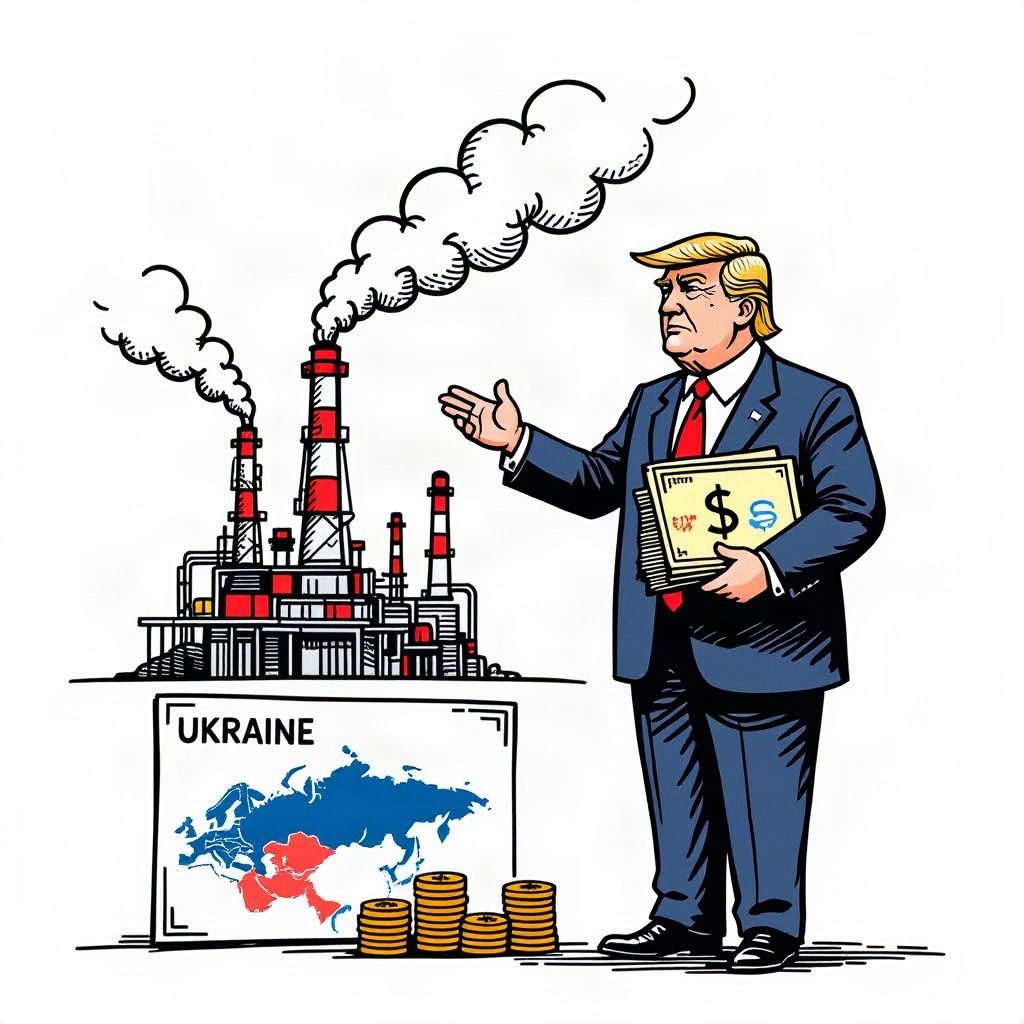
President Donald Trump called on Ukraine to cease strikes on Russian refineries, warning that ongoing attacks are driving global diesel prices to record levels and straining supply chains.
Presidential Intervention on Energy Stability
On Sunday, 13 September 2026, U.S. President Donald Trump publicly urged Ukrainian President Volodymyr Zelenskyy to cease military strikes against Russian diesel infrastructure, citing worsening global fuel shortages [1][4]. Speaking on the sidelines of the Amgen Irish Open at his golf course in Doonbeg, Ireland, President Trump emphasized the need to protect diesel production to prevent further supply chain strain [4]. This statement marks a significant intervention by the U.S. executive branch regarding specific tactical targets in the ongoing conflict, highlighting the intersection of geopolitical strategy and global energy market stability [1].
Operational Context and Recent Escalations
The President’s comments follow a night of intense aerial exchanges, with Russia’s defense ministry claiming to have shot down 389 Ukrainian drones overnight into 13 September 2026 [1]. Conversely, Ukraine’s air force reported downing or suppressing 409 of 453 Russian drones launched during the same period, indicating a high volume of aerial warfare impacting the region [1]. Concurrently, Ukraine’s Defense Intelligence agency reported a drone strike on an oil refinery in Slavyansk-on-Kuban, causing a blaze and injuring three people, which aligns with the type of infrastructure targeted by the President’s request [1].
Energy Market Implications
President Trump warned that continued attacks on Russian refineries are driving global diesel prices to record levels, directly impacting international supply chains [4]. The disruption to Russian refined product exports threatens to push global diesel margins higher and exacerbate inflationary pressures across various sectors [1]. By requesting a halt to strikes on diesel facilities specifically, the administration aims to mitigate immediate economic fallout while allowing other military targets to remain in scope [4].
Humanitarian and Regional Impact
Beyond economic concerns, the conflict continues to exact a human toll, with a drone strike in Nizhnekamsk, Tatarstan, resulting in 2 civilian deaths and 14 injuries near a major petrochemical hub on 13 September 2026 [1]. In Ukraine, Russian attacks on Odesa injured at least nine people, while a separate strike near the Yahodyn-Dorohusk border crossing with Poland ignited a petrol station [1]. These incidents underscore the volatile security environment surrounding energy infrastructure in the region [1].
Diplomatic Responses and Future Talks
In response to the escalating situation, Kremlin spokesman Dmitry Peskov stated on 13 September 2026 that Russia is open to restarting peace talks with Ukraine and the U.S. in October 2026 [1]. Peskov noted, “We are not ruling out that possibility. We are specifically talking about the foreseeable future. That is, October cannot be ruled out” [1]. This potential diplomatic opening contrasts with Ukrainian Foreign Minister Andrii Sybiha’s assertion that Russian actions represent terror “knocking directly on the doors of the EU and NATO” [1].
Strategic Outlook and Policy Intent
While President Trump’s statement represents a clear public position, it remains an urge rather than a formalized policy change as of 13 September 2026 [1][4]. The Russian-Ukrainian conflict has lasted more than four years, with Ukraine conducting a long-range drone campaign targeting the Russian oil and gas industry for several months [1]. Stakeholders will be monitoring whether this public pressure translates into shifts in military aid or diplomatic strategy leading into the proposed October talks [1].
Sources
- abc7chicago.com
- www.facebook.com
- www.instagram.com
- www.bloomberg.com
- www.facebook.com
- www.facebook.com