Iranian Missile Strike Damages U.S. Military Aircraft at Base in Jordan
Amman, Thursday, 10 September 2026.
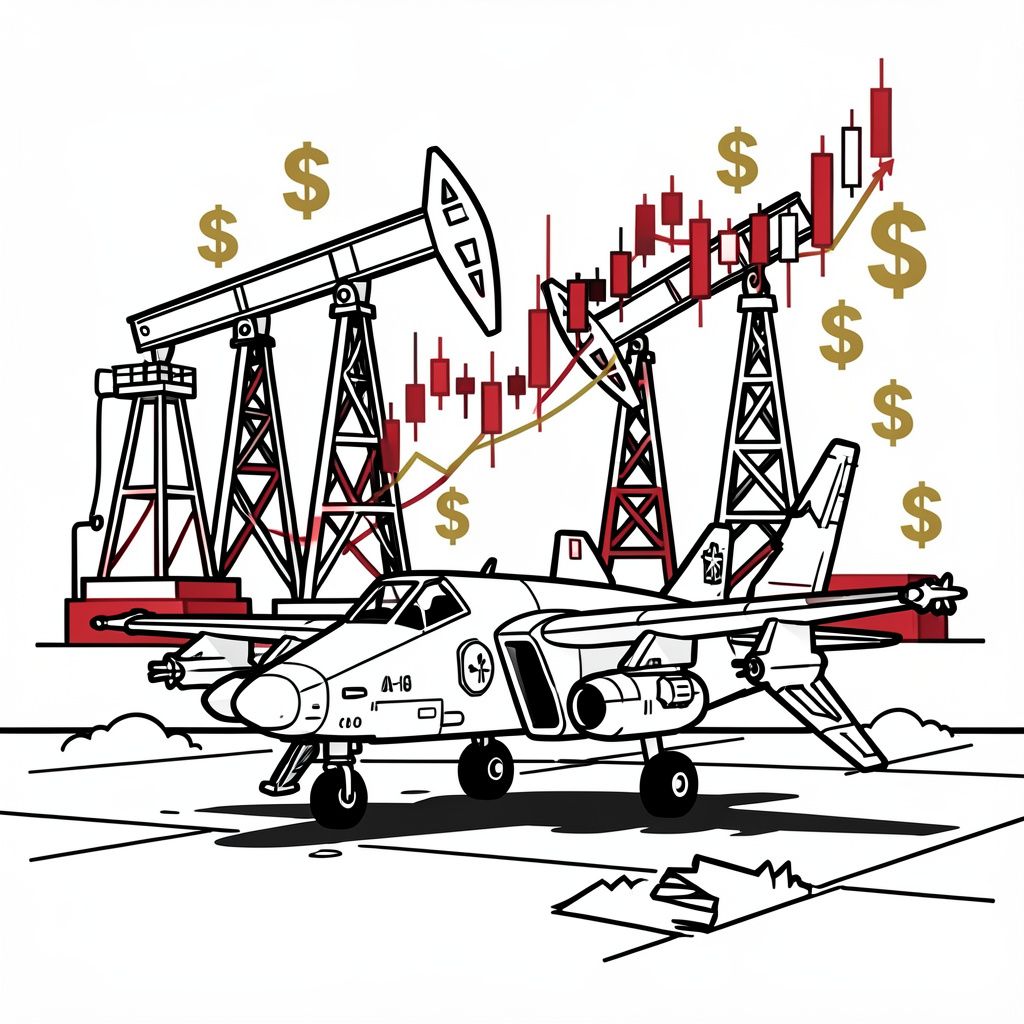
An Iranian missile strike damaged several U.S. warplanes in Jordan, including an A-10 that lost a wing, threatening regional stability and pushing crude oil prices past $100 per barrel.
Operational Damage Assessment
Multiple American military aircraft were damaged during overnight Iranian strikes on Muwaffaq Salti Air Base in Jordan, occurring from Tuesday into Wednesday local time [1]. One A-10 Thunderbolt attack aircraft, commonly known as the Warthog, was struck and lost a wing during the incident [1]. Additionally, roughly eight F-15E Strike Eagle fighters sustained light damage but were subsequently returned to service [2]. People familiar with the damage spoke under the condition of anonymity as they were not authorized to speak publicly [1]. The attack confirms earlier reports that Iran targeted the facility, known as MSAB, with ballistic missiles [2].
Defense Systems and Casualty Reports
U.S. forces in Jordan launched more than 30 Patriot missiles to defend against the Iranian strikes [1]. Despite the intensity of the attack, no U.S. deaths have been reported in the strikes on Jordan [1]. U.S. Central Command confirmed that no American personnel were harmed during the incident [4]. Jordanian Armed Forces confirmed intercepting 18 of 20 incoming ballistic missiles during the engagement [4]. The ability to return damaged aircraft to service quickly suggests resilient maintenance protocols at the base [2].
Escalation and Retaliation Cycle
The overnight damage came after the U.S. announced Tuesday it attacked five Iranian tankers in retaliation for Iran targeting a U.S. Navy warship [1]. Iran’s Islamic Revolutionary Guard Corps claimed it launched attacks at eight tankers and two warships, including the base in Jordan [1]. CENTCOM destroyed five Iranian oil tankers, including the M/T Riesco which was sunk in the Gulf of Oman [4]. Iran’s Foreign Ministry stated that armed forces acted in accordance with their inherent right of legitimate defence against aggressive actions [4]. This exchange marks a significant deepening of regional military tensions in the Middle East [GPT].
Energy Market Reactions
Oil prices surged above $100 per barrel in early trading on Wednesday following the escalation of hostilities in the Gulf [4]. The strikes signal direct risks to defense logistics and energy market volatility that macroeconomic analysts must closely monitor [GPT]. The conflict has been characterized by Iran closing the Strait of Hormuz and the U.S. enforcing a naval blockade on Iranian ports since February 2026 [4]. Such disruptions typically correlate with increased crude premiums due to supply chain uncertainty [GPT]. Enterprise leadership is advised to monitor these developments for potential supply chain impacts [GPT].
Political and Strategic Outlook
President Trump stated on Wednesday that Iran is desperate to affect the midterm elections and suggested the war would end shortly afterward [1]. He noted that negotiations are not currently being sought before the midterms, stating, We’re so far down the line, they have very little country left right now [1]. UK Prime Minister Keir Starmer pledged to keep the UK out of offensive actions against Iran [1]. The situation remains fluid as defense logistics and regional stability continue to evolve [GPT]. Analysts will watch for further depletion of U.S. stockpiles of precision munitions like Patriot missiles [1].