Elon Musk Weighs Landmark Merger Between SpaceX and Tesla
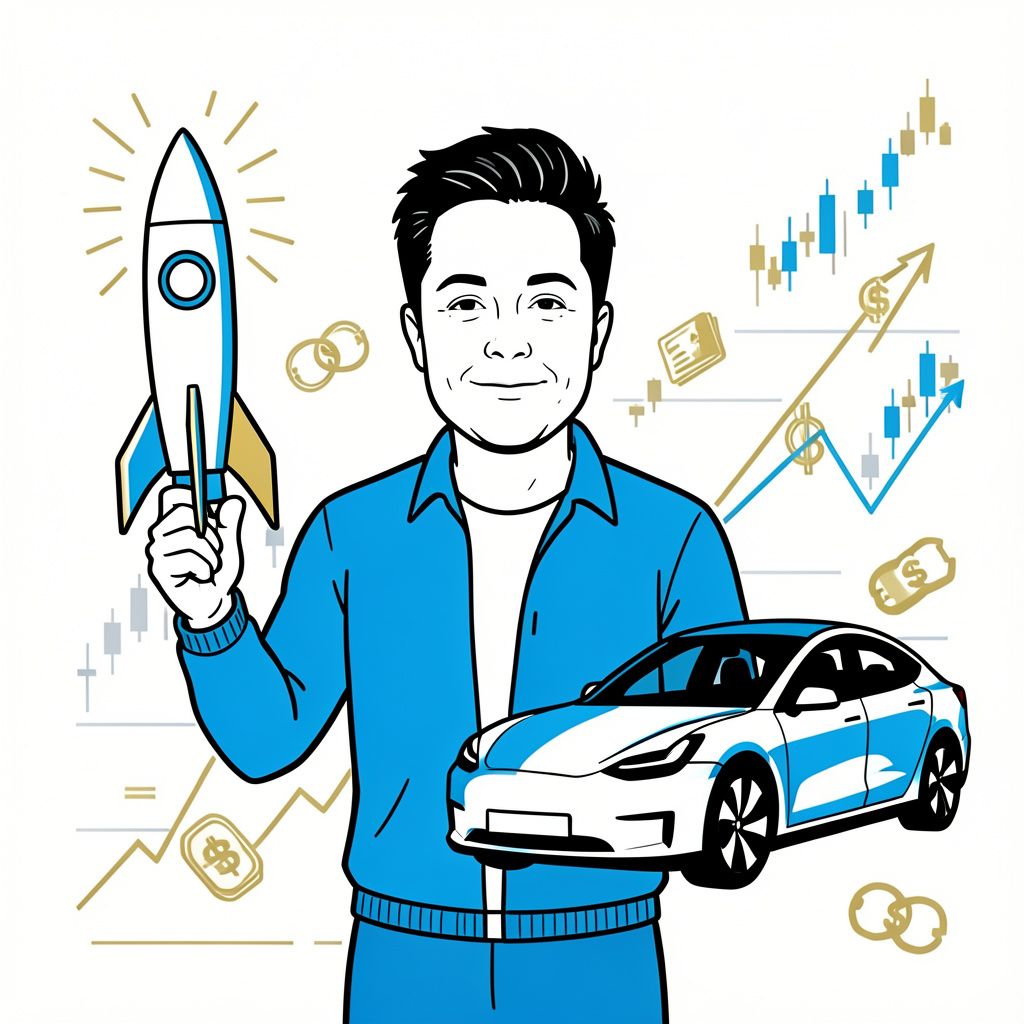
New York, Sunday, 25 October 2026.
Elon Musk endorsed combining SpaceX and Tesla into a potential $3.5 trillion tech powerhouse, though the proposed union faces steep shareholder voting thresholds and significant international antitrust reviews.
A Potential $3.5 Trillion Megacorp: What a SpaceX-Tesla Merger Would Look Like
Elon Musk’s public endorsement of a SpaceX-Tesla merger on October 20, 2026, during SpaceX’s Q3 earnings call, positioned the two companies on the brink of forming what analysts and market observers are calling the world’s first $3.5 trillion industrial conglomerate [3][5]. The combined entity would merge SpaceX’s dominance in aerospace, satellite networks, and emerging AI infrastructure with Tesla’s leadership in electric vehicles, energy storage, and humanoid robotics. Musk framed the deal as a strategic move to accelerate technological convergence under a single corporate umbrella, stating, ‘Do I think it would be a good idea? Yes’ [3][5]. However, the proposal is not without controversy, as institutional investors and antitrust experts question whether such a union would create an unchecked monopoly spanning space exploration, terrestrial mobility, and artificial intelligence [7].
Regulatory and Shareholder Hurdles: Why the Deal Faces a Steep Climb
The merger’s viability hinges on overcoming formidable regulatory and governance obstacles. On the regulatory front, antitrust analysts warn that a combined SpaceX-Tesla could face scrutiny under both U.S. and international frameworks due to vertical integration risks, including potential ‘vertical foreclosure’ scenarios where access to SpaceX’s Starlink satellite network could be restricted to Tesla vehicles, thereby disadvantaging competitors in the autonomous driving and electric vehicle markets [7][alert! ‘antitrust experts caution that vertical mergers, while often pro-competitive, can raise concerns about supply chain control and market access restrictions’] One former U.S. Department of Justice official told Semafor that while vertical mergers are typically viewed as efficiency-enhancing, the Tesla-SpaceX combination could trigger intervention if regulators determine it would foreclose competition by bundling critical infrastructure [7]. Additionally, the deal would require Tesla shareholders to approve a merger via a 50% vote of all outstanding shares, a threshold Musk described as ‘quite a high hurdle,’ given that the proposal has not yet reached agreement on transaction terms as of October 22, 2026 [2][3].
Market Reactions and Analyst Assessments: From Hyperscaler to ‘World’s Super Company’
Wall Street’s response to the merger chatter has been swift and volatile. Following Musk’s endorsement, Tesla shares fell 3% on October 22, 2026, extending a year-to-date decline of 17% , while SpaceX shares plummeted 9% , erasing gains from its June IPO and pushing its valuation below opening levels [3]. Analysts at Canaccord Genuity raised Tesla’s price target to $442.00 from $410.00 on October 22, citing potential merger synergies, while JPMorgan doubled SpaceX’s target to $500.00 after the company reported better-than-expected quarterly results between October 13 and October 19, 2026 [1]. The proposed merger has ignited speculation that the combined entity could become the ‘fifth hyperscaler’ and possibly the world’s first ‘super company,’ according to Futurum Group CEO Daniel Newman, who highlighted SpaceX’s AI-driven satellite growth and Tesla’s Optimus robotics initiative as complementary strengths [1]. Newman added, ‘This doesn’t only become the fifth hyperscaler, this becomes the world’s super company’ [1].
Strategic Rationale and Long-Term Ambitions: Building the Infrastructure of the Future
Proponents of the merger argue that the union would unlock unprecedented synergies in AI development, space-based data infrastructure, and autonomous mobility. SpaceX’s ambitions to expand into mobile carrier services and build data centers in space, alongside Tesla’s goal of producing 20,000 Optimus robots per week by the end of 2027, could create a vertically integrated ecosystem capable of reducing production costs by up to 90% across multiple sectors [1][alert! ‘SpaceX’s AI compute business and satellite growth are projected to drive annual recurring revenue to between $500 billion and $1 trillion by the end of 2027’] Analyst Tom Narayan of RBC Capital Markets suggested that the merger could enable the new entity to bypass competitors like Nvidia and TSMC in AI chip development and semiconductor supply chains [1]. Meanwhile, the companies’ long-term goals—including SpaceX’s plans for lunar bases and Martian cities—align with Musk’s vision of making life multi-planetary, a strategy JPMorgan’s Doug Anmuth described as ‘bigger than any company’s we’ve seen’ [1][3]. However, critics, including analysts at William Blair, question whether the merger would yield material benefits beyond what Musk already achieves by operating both companies as a de facto single entity, noting that he controls SpaceX with near-80% voting power through supervoting shares and owns approximately 19.8% of Tesla’s outstanding shares [3].
Antitrust, Geopolitical Risks, and the Road Ahead
Beyond regulatory scrutiny, the proposed merger faces geopolitical and national security risks. Analysts at Counterpoint Research warn that antitrust reviews, national security considerations tied to SpaceX’s military contracts, and cross-border regulatory hurdles could delay or derail the deal [3]. The integration of Tesla’s operations in China, where Starlink technology has been deployed in conflicts, further complicates the landscape, as U.S. lawmakers and regulators may scrutinize the merger’s implications for Pentagon dependencies and foreign policy [8]. Senator Cory Booker (D-NJ) emphasized the national security dimension, stating, ‘When one person controls the infrastructure that governments and militaries depend on, his business decisions become national security decisions, too’ [8]. Adding to the complexity, Musk’s public endorsement of the merger has raised concerns among insiders that premature announcements could invite heightened shareholder scrutiny and delay negotiations by several weeks [6]. Former Tesla board member Steve Westly suggested that a formal merger proposal could be announced before the U.S. midterm elections, though no definitive timeline has been confirmed [3].
Sources
- finance.yahoo.com
- finance.yahoo.com
- www.cnbc.com
- finance.yahoo.com
- finance.yahoo.com
- www.facebook.com
- www.semafor.com
- www.reuters.com