US Considers Banning Fuel Exports to Fight Soaring Prices
Washington, Thursday, 24 September 2026.
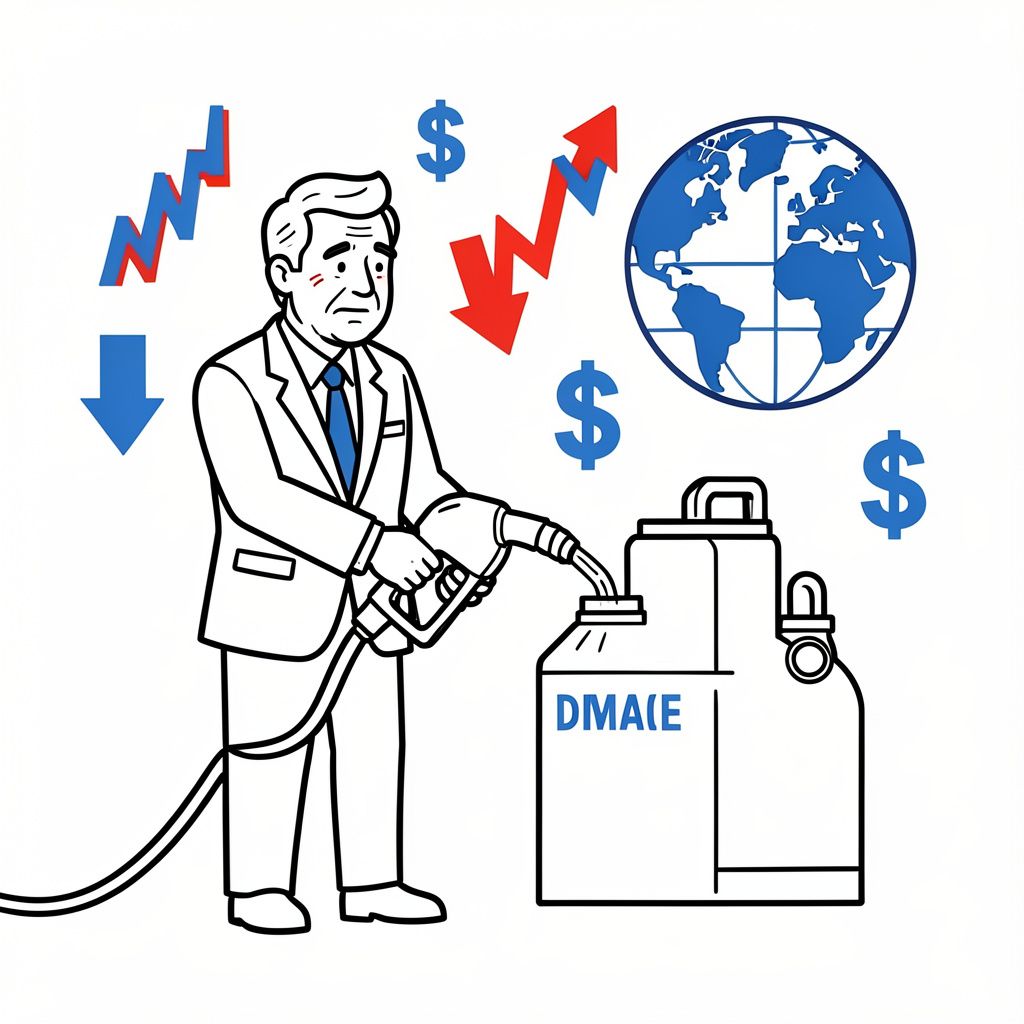
To curb record domestic prices reaching $6.52 per gallon, the administration is weighing a diesel export ban, though experts warn it could double global costs and trigger widespread inflation.
Administrative Proposal and Price Surge
On 2026-09-22, President Donald Trump announced he has called for a 90-day ban on U.S. diesel exports to mitigate price hikes caused by the ongoing war with Iran, which initiated in late February 2026 [1]. The national average diesel price reached a record $6.53 per gallon on 2026-09-22, compared to $3.69 one year prior, representing a significant year-over-year increase 76.965 [4]. Federal data indicates consumer prices rose 0.4% in August 2026, four times the July 2026 monthly rate, contributing to a 3.4% increase over the 12-month period ending August 2026 [1]. The administration is reportedly preparing this export ban to stabilize domestic fuel costs ahead of the midterms scheduled for early November 2026 [1]. President Trump stated, “I’ve called for it. I’ve called for it within my people. I’ve been talking about it,” confirming the proposal during a meeting with Ukrainian President Volodymyr Zelensky [4].
Political Dynamics and Election Timing
Republican lawmakers are pressuring the administration to restrict diesel exports to alleviate voter financial strain before the 2026-11-03 mid-term elections [3]. Sen. Dan Sullivan (R-Alaska) and Rep. Ashley Hinson (R-Iowa) have publicly supported the export moratorium proposal [1]. Rep. Ashley Hinson, a candidate for Iowa Senate, stated on 2026-09-21 that citizens are “being squeezed and shouldn’t have to foot the bill at the pump” [3]. US Treasury Secretary Scott Bessent confirmed on 2026-09-21 that officials are evaluating the feasibility of a full or partial diesel export ban without compromising refinery operations [3]. However, Interior Secretary Doug Burgum stated on 2026-09-14 that the administration would only consider an export ban if it were proven to lower prices, noting “that’s not the case” at the time [5]. Senate Majority Leader John Thune (R-S.D.) expressed he was “open” to an export ban on 2026-09-14, while others like Sen. John Cornyn (R-Texas) called it “a gimmick” [5].
Industry Warnings and Refinery Constraints
The American Petroleum Institute (API) argues an export ban would be counterproductive, causing refineries to reduce production and worsening global shortages [4]. Mike Sommers, president and chief executive at the API, stated, “Americans are hurting from rising diesel costs driven by an unprecedented disruption to global refining capacity… restricting U.S. energy exports would only compound the problem” [4]. U.S. refineries are currently operating at record rates, often exceeding 100% of their nameplate capacities to address global supply deficits [8]. Roughly 54% of U.S. refining capacity is located along the Gulf Coast, creating a surplus of fuel that necessitates export to maintain production balance [8]. Restricting diesel exports could force Gulf Coast refineries to reduce overall crude oil processing once local storage capacity is reached, as refineries cannot isolate diesel production from other fuels like gasoline and jet fuel [8].
Global Repercussions and Strategic Risks
The U.S. currently supplies approximately 20% of the 8 million barrels of diesel traded by sea daily, and experts warn that a ban could cause global prices to double [1][4]. Lorne Stockman, research director at Oil Change International, said, “The proposed diesel export ban is a short-sighted ‘America First’ response to a global crisis his reckless war helped create” [1]. Global diesel supply constraints are driven by Middle East conflict and Ukraine’s drone attacks on Russian refining capacity, which impact global reserves and prices [3]. Philip Verleger, an energy economist, warned the move would have the same long-term effect as President Richard Nixon’s 1970s soybean embargo, where the world would no longer view the United States as a dependable source [1]. UN Secretary-General António Guterres called on governments at the United Nations General Assembly to “adopt a national plan to transition away from fossil fuels,” highlighting the economic chaos of continued dependence [7].
Sources
- www.commondreams.org
- www.wsj.com
- www.bbc.com
- www.nytimes.com
- www.axios.com
- www.theguardian.com
- www.commondreams.org
- www.api.org