Norway Push for Arctic Gas Falls Short of Future EU Energy Needs
Oslo, Monday, 21 September 2026.
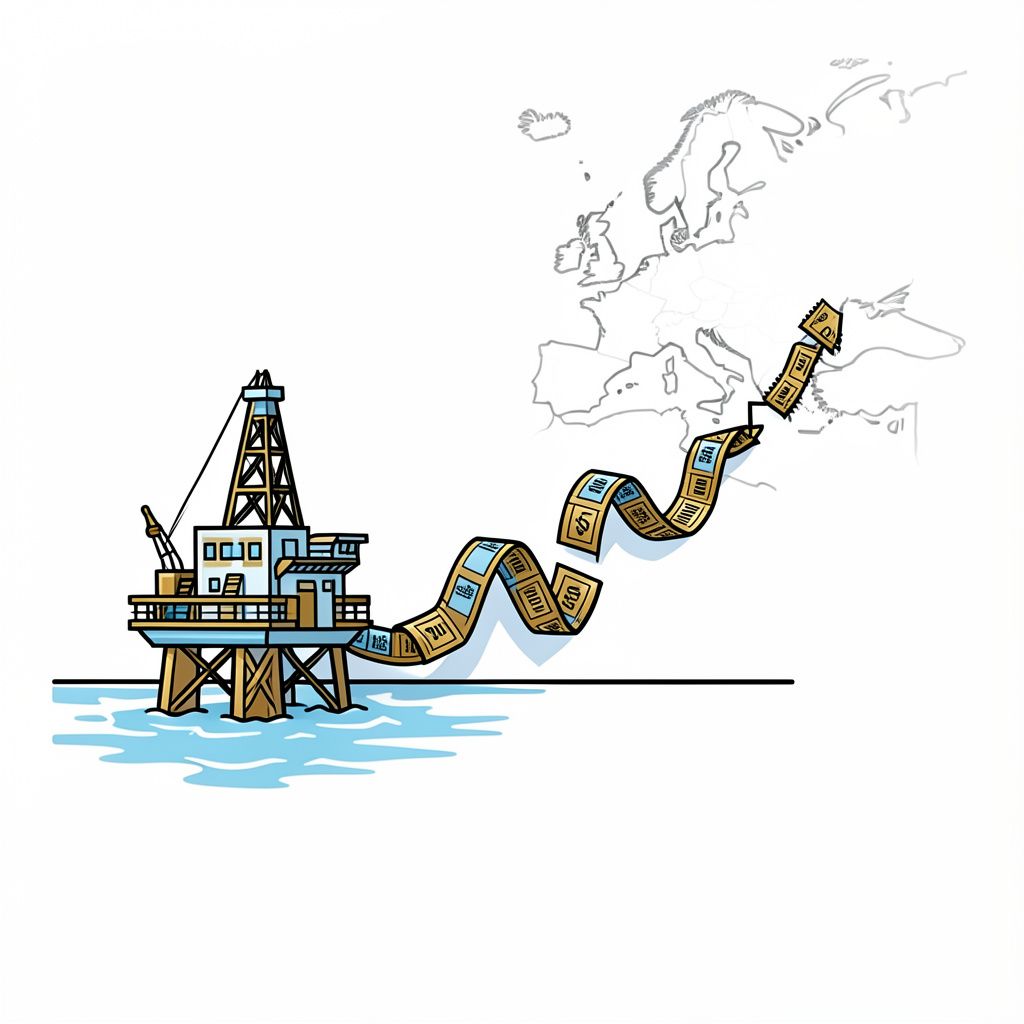
Despite intense pressure from Norway, new research indicates Arctic gas discoveries would take roughly two decades to produce, arriving far too late to aid Europe’s planned transition away from fossil fuels.
Report Findings on Production Timelines
A new report published by WWF-Norway on 21 September 2026 reveals that potential Arctic gas production volumes would be minimal and could not reach European markets until the 2040s [1]. Arctic oil and gas projects require an average of 18.7 years from discovery to production, meaning a discovery made in early 2027 would realistically not produce until the early-to-mid 2040s [1]. Current Arctic gas supplies account for only 4.1 billion cubic metres annually, representing 1.4% of EU imports [1]. No new standalone gas projects are currently under consideration in the Norwegian Arctic [1]. The WWF report concludes that barring exceptional exploration results, Arctic gas is too small to matter for energy security [1].
European Commission Policy Status
The European Commission confirmed on 3 September 2026 that its moratorium on new oil and gas exploration in the Arctic will remain unchanged [2]. A spokesperson stated that policies have objectives to address climate change and environmental degradation [2]. The revised version of the EU’s 2021 Arctic strategy is scheduled for announcement on 20 October 2026 [2]. In 2021, Germany, Sweden, and Finland supported the Commission’s position that new oil and gas resources should remain in the ground [2]. The Commission is maintaining its stance despite pressure from Norway to abandon the moratorium [5].
Norwegian Energy Strategy and Exports
Norway remains the EU’s largest LNG supplier, providing 54.4% of total EU imports between January and June 2026 [2]. Norwegian Energy Minister Terje Aasland stated that continued activity in the Barents Sea serves both Norwegian and European interests [4]. Norway plans to exploit the Barents Sea for oil and gas despite the 2021 EU commitment to keep Arctic hydrocarbons underground [4]. The Wisting field is the only active project under consideration in the Barents Sea [4]. Equinor is expected to reach a final investment decision on the Wisting project at the end of 2027 [1]. Norway provides a 78% tax deduction on exploration costs for fossil fuel companies [4].
Demand Projections and Climate Targets
Total EU gas demand is 329 billion cubic meters per year, projected to drop to between 77 and 90 bcm by 2040 to meet emission reduction targets of 90% [1]. EU fossil gas demand is projected to decline from approximately 329 bcm in 2024 to about 85 bcm by 2040 under a 90% emissions reduction pathway [2]. This represents a demand reduction of 74.164 percent by 2040 [2]. WWF-Norway analysis indicates that significant new Arctic supplies would arrive as EU gas demand is expected to fall sharply [2]. A coalition of 130 organizations argues that any new field approved in 2026 would not reach full production until around 2040 [6].
Sources
- euobserver.com
- www.euronews.com
- carbon-pulse.com
- www.renewablematter.eu
- ca.news.yahoo.com
- en.ara.cat