Trump Imposes 25% Tariff on Advanced AI Chips Under National Security Order
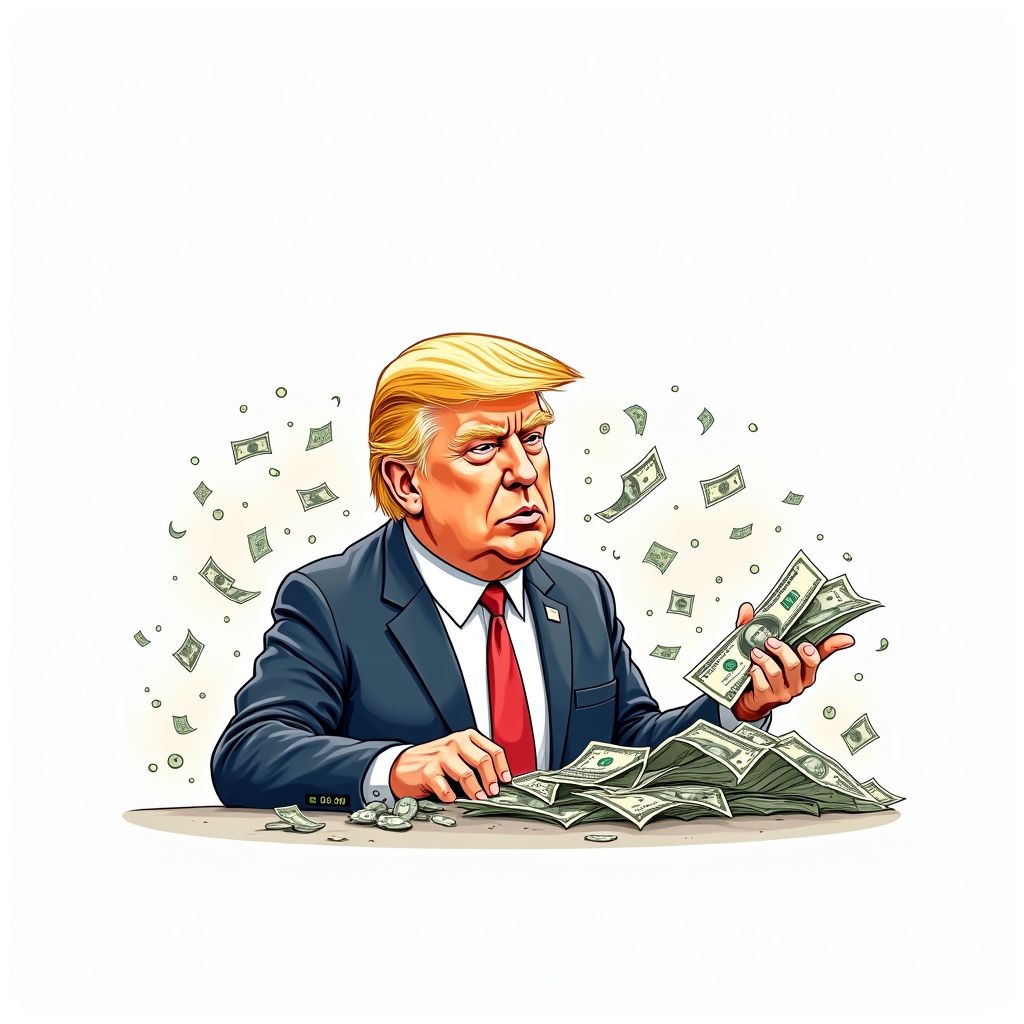
Washington, Thursday, 15 January 2026.
This 25% levy on imported Nvidia and AMD processors effectively functions as a surcharge on hardware destined for China, allowing the U.S. government to monetize export demand directly.
A Fiscal Compromise in the Chip War
While Nvidia CEO Jensen Huang previously characterized the total decoupling of U.S. and Chinese semiconductor markets as “naive”, the Trump administration has opted for a fiscal compromise that maintains trade flows under strict supervision. On Wednesday, January 14, President Trump signed a national security order imposing a 25% tariff on specific advanced computing chips, explicitly naming Nvidia’s H200 and AMD’s MI325X processors [1][5]. This policy, formalized by the White House following a proclamation, effectively creates a toll road for American technology: the chips, manufactured in Taiwan, must enter the U.S. for third-party testing and taxation before they can be re-exported to approved customers in China [2][4]. This mechanism allows the U.S. government to capture revenue from China’s demand while technically adhering to national security protocols [8].
Strategic Exemptions and Domestic Protection
The administration has structured this tariff to function as a surcharge on foreign buyers rather than a tax on American innovation. According to the directive, the 25% levy will not apply to chips imported to support the U.S. technology supply chain, ensuring that domestic data centers, startups, and civil industrial applications are shielded from increased costs [1][6]. This exemption structure suggests the policy is designed to penalize “non-essential” or strategic destination flows—specifically those heading to Beijing—while incentivizing the buildout of domestic infrastructure [6]. President Trump framed the move as a way to monetize the trade deficit, stating that while the technology is not the absolute highest level available, “the United States is getting 25% of the chips, in terms of the dollar value” [8].
Market Constraints and Technical Limits
Despite the green light for exports, Nvidia and AMD face significant operational constraints. The Department of Commerce’s Bureau of Industry and Security (BIS) revised its licensing policy on Tuesday, January 7, establishing a case-by-case review process that requires rigorous end-user screening [5]. Furthermore, a strict volume cap has been implemented: shipments of H200 chips to China cannot exceed 50% of the total product volume shipped to U.S. customers [8]. This ensures that American industry retains priority access to hardware. Additionally, the H200 processor itself is already a generation behind Nvidia’s cutting-edge Blackwell and Rubin architectures, which remain blocked from the Chinese market entirely [7][8].
Industry Reaction and Future Outlook
The industry response has been cautiously optimistic, viewing the tariffs as a stabilizing framework after months of uncertainty. Nvidia, which had previously estimated the Chinese market opportunity at $50 billion annually, applauded the decision, noting that it allows the company to compete for “vetted and approved commercial business” while supporting U.S. manufacturing jobs [8]. CEO Jensen Huang confirmed earlier this month that interest from China remains “very high” and that the company is ramping up production to meet this regulated demand [8]. However, the White House has signaled that this may only be the beginning, with indications that broader tariffs on semiconductor and derivative products could follow in the near future to further incentivize domestic manufacturing [6][5].
Sources
- www.reuters.com
- www.bloomberg.com
- www.barrons.com
- www.foxbusiness.com
- www.axios.com
- investinglive.com
- www.bbc.com
- www.cnbc.com