Why Ferrari Must Fix Its Engine to Reclaim Racing Dominance
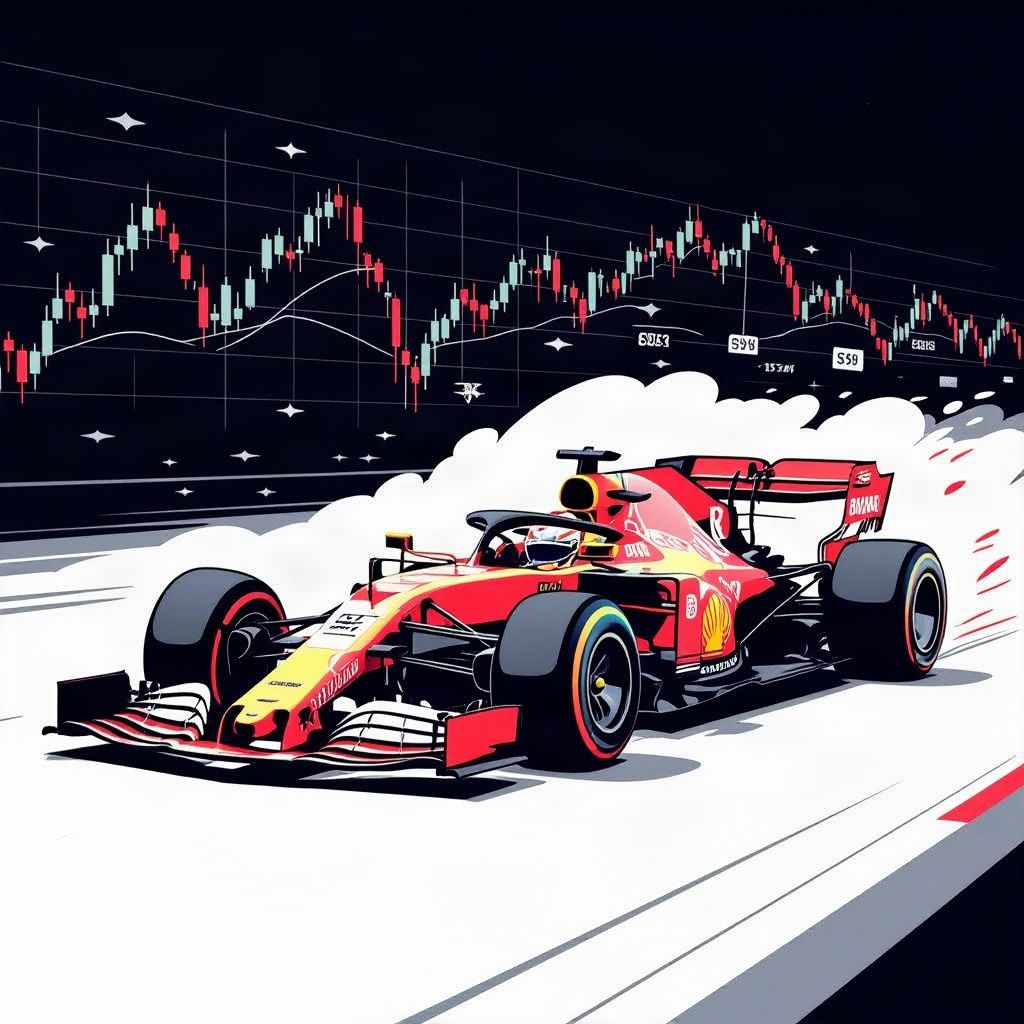
Maranello, Sunday, 22 November 2026.
Despite boasting 2026’s best chassis, Ferrari lost a full second per lap on straights in Las Vegas, making engine upgrades essential to protect racing performance and high-value brand equity.
Ferrari’s 2026 Chassis Praised as F1’s Best
Ferrari NV (NYSE: RACE) enters the final stretch of the 2026 Formula 1 season with a technical paradox: its SF-26 chassis has been widely regarded as the benchmark of the grid, yet its competitive struggles persist due to an underperforming power unit. Lead driver Charles Leclerc’s post-race assessment in Las Vegas confirmed what many observers had noted—Ferrari’s aerodynamic and chassis package delivered class-leading performance across the season [1][3][5]. Leclerc’s endorsement of the SF-26 as the best chassis in Formula 1 for 2026 was unequivocal, emphasizing that the car’s mechanical and aerodynamic strengths were consistent with the team’s high standards [1][3]. However, he framed these strengths as insufficient without commensurate engine performance, particularly on circuits where straight-line speed dictates race outcomes [1][5].
Las Vegas GP Exposes Engine Deficit
The Las Vegas Grand Prix on 21 November 2026 served as a stark reminder of Ferrari’s power deficit. Both Leclerc and teammate Lewis Hamilton were eliminated in Q2, qualifying 11th and 12th respectively—a result Leclerc described as painful and indicative of systemic issues beyond driver error [7]. The circuit’s 1.7-kilometre back straight, a critical overtaking zone, laid bare Ferrari’s one-second deficit per lap in straight-line speed, a margin Leclerc called ‘crazy’ [7]. This performance gap was further underscored by the absence of any Ferrari-powered car in Q3, a rarity on a power-sensitive track where engine output is decisive [7]. Leclerc attributed the deficit to the power unit’s inability to sustain competitive speeds, particularly in qualifying conditions where margins are razor-thin [7].
Engine Upgrades as Strategic Imperative for 2027
Ferrari’s focus for the 2027 season is now squarely on powertrain development, with Leclerc’s comments signaling a shift in priorities from chassis refinement to engine innovation. The team’s immediate challenge is to close the power gap that cost them dearly in Las Vegas, where Leclerc’s reported one-second deficit per lap on the back straight would translate to significant losses in qualifying positions and race pace [1][7]. While Ferrari has made strides in chassis development, Leclerc’s observation that ‘we lost one second down the straight’ highlights the urgency of addressing the power unit’s shortcomings [7]. Industry observers suggest that even incremental gains in horsepower—reportedly in the range of 20hp—could materially improve Ferrari’s competitiveness on power-sensitive circuits [4]. For a team that prides itself on engineering excellence, the power deficit is not merely a technical issue but a strategic vulnerability that risks eroding brand equity and commercial appeal [GPT].
Broader Implications for Ferrari’s Motorsport Division
The stakes for Ferrari’s motorsport division extend beyond on-track performance. As the luxury automotive group’s primary engine for brand equity and technological innovation, Scuderia Ferrari’s success is inextricably linked to its ability to compete at the highest level of Formula 1 [GPT]. The SF-26’s chassis strengths have been a source of pride, but Leclerc’s remarks underscore the reality that sustained competitiveness requires a balanced approach to both chassis and power unit development [1][3]. With three races remaining in the 2026 season, Ferrari’s leadership must balance immediate performance pressures with long-term strategic investments in powertrain technology. The 2027 season, with its anticipated regulatory changes, presents both a challenge and an opportunity for Ferrari to reclaim its position at the front of the grid [1][4]. Failure to address the power deficit risks ceding ground to rivals who have already begun investing in next-generation power units, potentially widening the competitive gap [GPT].
Sources
- www.grandprix.com
- x.com
- www.autoracing1.com
- www.autoracing1.com
- www.instagram.com
- www.grandprix.com
- www.youtube.com
- www.youtube.com
- www.facebook.com
- www.instagram.com