White House Directs Federal Contractors to Coordinate Congressional Disclosures
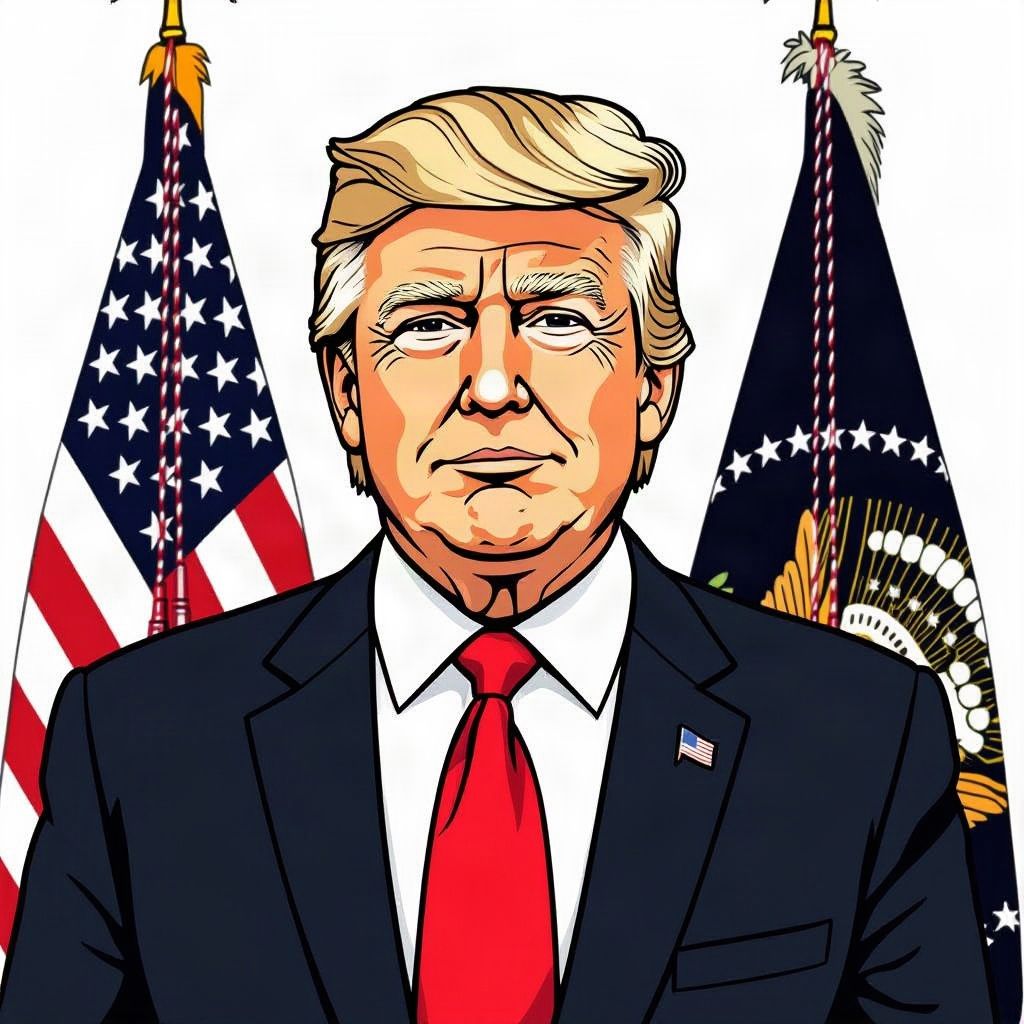
Washington, Sunday, 22 November 2026.
According to reporting by ABC News and CNN, President Donald Trump issued an executive order requiring federal contractors to coordinate congressional inquiries with the White House or risk contract termination.
A New Era of Executive Oversight
On November 20, 2026, President Donald Trump—representing the Republican Party—signed Executive Order 14438, a sweeping directive that mandates federal contractors and subcontractors to coordinate with the White House before responding to congressional inquiries related to their government work [1][2][3][4][5]. This policy, framed as a measure to protect executive privilege and enhance operational efficiency in federal contracting, introduces a centralized layer of oversight that places the administration at the nexus of corporate-government communications. The order explicitly cites the Federal Property and Administrative Services Act (40 U.S.C. 101 et seq.) as its legal foundation, asserting that uncoordinated disclosures to Congress could undermine national security, chilling sensitive communications between agencies and their contractors [5]. The move arrives amid heightened tensions between the Trump administration and the incoming Democratic majority in Congress, set to assume control in January 2027 [2][3][6].
Contractors Face Severe Penalties for Non-Compliance
Federal contractors—including an estimated 100,000 prime contractors and their subcontractors—now face termination, suspension, or debarment of their government contracts if they fail to notify the White House and contracting agencies of congressional requests for information [1][2][5]. The order tasks the Office of Management and Budget (OMB) with developing compliance guidelines and empowering contracting agencies to enforce these penalties, signaling a dramatic shift in the balance of power between the legislative and executive branches [1][5]. In a statement accompanying the order, President Trump argued that Congress lacks authority to seek information from federal contractors without a ‘valid legislative purpose’ that respects ‘core Executive functions’ [5]. This interpretation directly challenges the constitutional oversight authority of Congress, a power explicitly recognized by the Supreme Court and rooted in the separation of powers [GPT].
Democratic Lawmakers Condemn the Order as Unlawful
Democratic leaders, including Rep. Robert Garcia of California—set to chair the House Oversight Committee in January 2027—and Rep. Jamie Raskin of Maryland, have condemned the executive order as an unlawful encroachment on congressional oversight powers [2][3][6]. Garcia accused the White House of attempting to ‘stop us from exposing the rampant waste, fraud, and corruption’ within the administration, while Raskin labeled the directive ‘blatantly unlawful’ and emphasized that federal contractors, funded by taxpayer dollars, have a ‘duty and a right to speak truthfully’ when Congress calls [2][3][6]. The incoming House Judiciary Committee chair-designate further stated that the order represents the Trump administration’s latest effort to obstruct accountability, framing it as part of a broader pattern of resistance to congressional scrutiny [2][3].
Context: Escalating Tensions Over Congressional Oversight
This executive action follows a November 16, 2026, memo from White House Counsel Will Scharf instructing executive agencies to obtain explicit permission from the White House before allowing employees to testify before Congress [1][3]. The memo, obtained by ABC News, warned agencies against cooperating with congressional inquiries without internal legal approval, a directive that aligns with the broader effort to centralize control over executive branch communications [1][3]. Scharf has also taken direct action against lawmakers, including a letter sent to Rep. Robert Garcia last week—between November 5 and 12, 2026—warning of potential criminal probes, a move critics argue is an attempt to intimidate congressional oversight efforts [2][3]. These developments come as Democrats prepare aggressive oversight agendas targeting administration policies, conflicts of interest, no-bid contracts, and alleged pay-to-play schemes once they assume control in 2027 [2][3][6].
Industry and Legal Implications: A Chilling Effect on Transparency
The executive order is expected to have significant implications for industries reliant on federal contracts, including defense, infrastructure, and technology sectors [GPT]. Companies operating in these spaces may now face a dual burden: balancing compliance with the White House while navigating the demands of congressional oversight committees. Legal experts note that the order could trigger litigation over the scope of executive privilege and the limits of congressional subpoena power, particularly as Democrats prepare to investigate high-profile administration projects, such as the White House Ballroom construction and Department of Homeland Security contracts [2][3][6]. The order also raises questions about the enforceability of contract termination clauses, with some analysts suggesting that courts may intervene if the White House oversteps its constitutional authority [alert! ‘legal interpretations remain unsettled’].
What Comes Next: Enforcement and Confrontation
With Democrats poised to take control of Congress in January 2027, the stage is set for a constitutional confrontation over the balance of power between the branches of government [2][3][6]. The White House has indicated it will develop additional guidance through the OMB, though no deadline for implementation has been specified [1][5]. Meanwhile, lawmakers like Sen. Richard Blumenthal have already signaled their intent to launch investigations into administration works, including the White House Ballroom project and DHS contracts, further escalating the conflict [2][3]. For federal contractors, the immediate challenge will be navigating the new requirements while avoiding the punitive measures outlined in the order. As the administration doubles down on its assertion of executive privilege, the coming months will test the boundaries of congressional oversight and the resilience of transparency in federal contracting.