Vietnam Plans New Power System to Connect Home Solar and Electric Vehicles
Hanoi, Monday, 7 September 2026.
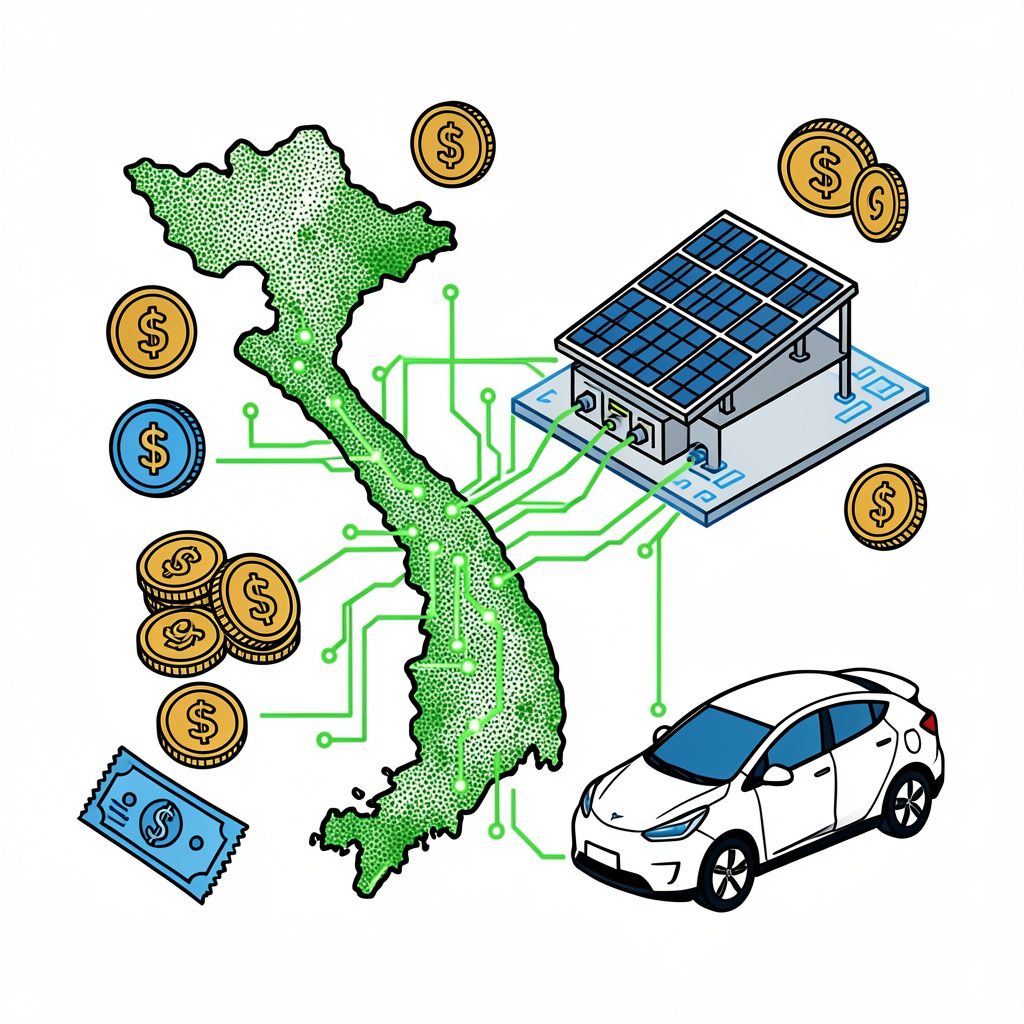
Vietnam is laying policy groundwork for virtual power plants, uniting rooftop solar, batteries, and electric vehicles to resolve severe grid bottlenecks and stabilize its expanding clean energy network.
Policy Framework Initiated
Vietnam’s Ministry of Industry and Trade has initiated early policy groundwork to transition the national power grid toward virtual power plants, according to a report published in September 2026 [1]. The prospective framework aims to aggregate distributed energy resources, including rooftop solar photovoltaics, battery storage, and electric vehicles, moving beyond basic time-of-use tariffs and industrial demand response programs [1]. This initiative opens strategic avenues for international clean technology providers, grid software developers, and infrastructure investors targeting Southeast Asia’s growing clean energy transition [1]. By orchestrating thousands of distributed energy resources through algorithmic dispatch and controls, grid operators can absorb potential midday photovoltaic generation and dispatch stored energy during the evening peak [1].
Grid Constraints and Solar Overbuilding
The Ministry’s rapid public framing of virtual power plants is notable, with the country having previously overbuilt solar capacity which led to severe grid bottlenecks and curtailment across central and southern provinces [1]. The move, with the Ministry outlining virtual power plant aggregation, suggests potential benefits for the grid by managing these intermittency issues [1]. In the publication, the author noted that the remaining issue is to develop a suitable roadmap and mechanism so that dispersed resources can participate in the electricity market effectively and transparently [1]. This transition seeks to resolve the imbalance where midday generation exceeds demand, a phenomenon often associated with high solar penetration [1].
Market Mechanisms and Future Roadmap
Vietnam’s market architecture, with state utility EVN maintaining a near-monopoly on transmission and single-buyer dispatch, means that for virtual power plants to deliver real balance sheet viability, the country will need a clear aggregation framework under its market rules [1]. Authorities are beginning to express early thoughts on aggregation platforms to link distributed rooftop solar, behind-the-meter battery energy storage systems, and electric vehicles into flexible grid assets [1]. The concept aims to ensure that dispersed resources can participate in the electricity market effectively and transparently [1]. This structured approach is critical for stabilizing the expanding clean energy network amidst evolving demand patterns [1].