Canada Deploys 12 New Firefighting Aircraft to Protect North American Supply Chains
Ottawa, Monday, 25 May 2026.
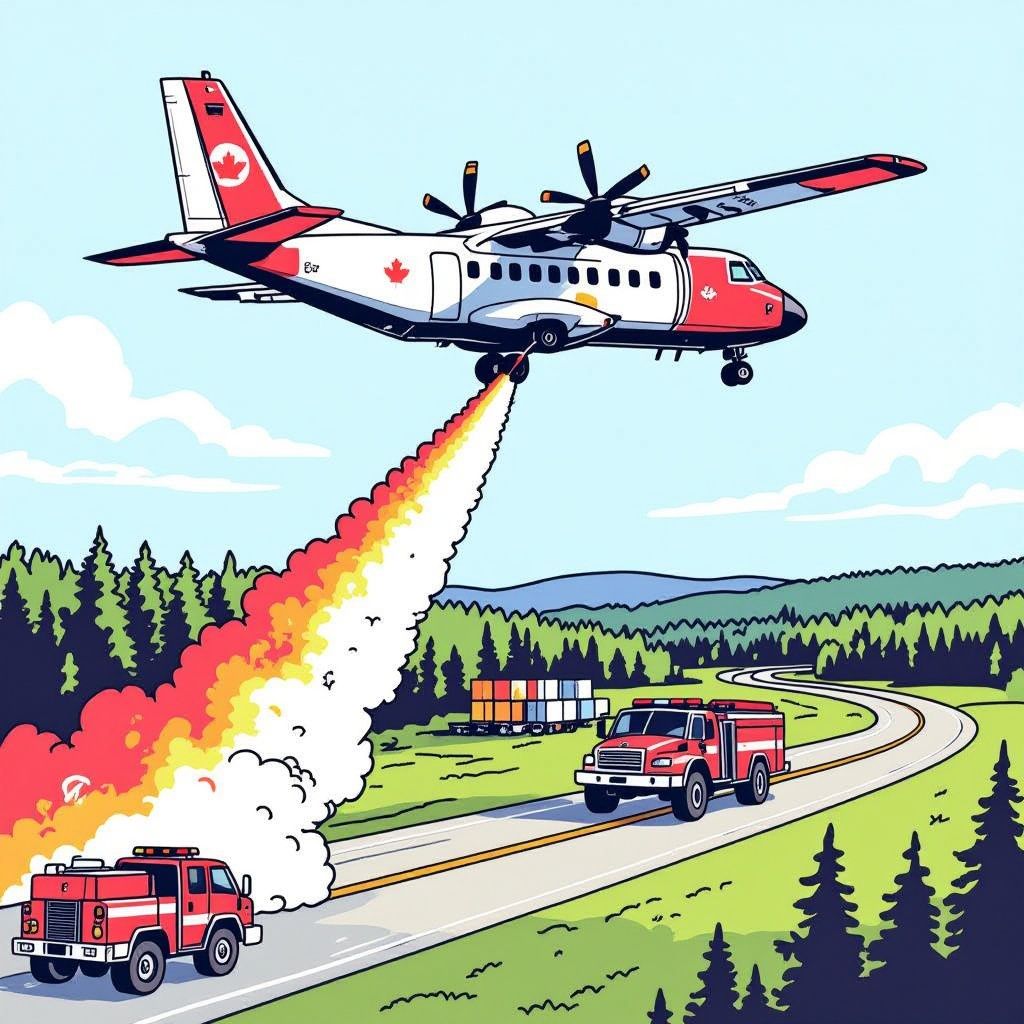
Backed by a $316.7 million investment, Canada has secured 12 new firefighting aircraft for 2026 to combat severe wildfires and prevent major cross-border supply chain disruptions.
A Strategic Investment in Surge Capacity
The Canadian federal government has committed a substantial $316.7 million over five years, originating from Budget 2025, to establish a national aerial firefighting surge capacity [1][2]. This funding equates to an average annual allocation of 63.34 million dedicated to bolstering wildfire resilience [1][2]. Through this initiative, the Canadian Interagency Forest Fire Centre (CIFFC) has leased 10 new firefighting aircraft and two support assets for the 2026 fire season [2]. The strategy shifts the nation toward a more unified, pan-Canadian response model, allowing provincial and territorial agencies to request these critical resources during periods of elevated fire activity [1][2].
Mitigating Economic and Environmental Disruption
The operational framework relies on a centralized prioritization system managed by the Canadian Multi-Agency Coordination Group [1]. When provincial or territorial agencies face overwhelming wildfire events, they will submit resource requests directly to the CIFFC [1]. Kelsey Winter, Executive Director of the CIFFC, emphasized that coordinating these assets on behalf of member agencies is paramount to reducing the escalating impacts of wildfires and building a more resilient future [1]. Emergency management remains a shared responsibility among various levels of government, Indigenous communities, and non-governmental organizations, making this centralized surge capacity a vital structural enhancement [2].
Looking Ahead to the 2026 Fire Season
As Canada enters the summer of 2026, the nation is balancing these rigorous emergency preparedness efforts with significant cultural and economic milestones. May 2026 marks Asian Heritage Month, and the country is actively preparing to co-host the highly anticipated FIFA World Cup 2026™ [3]. Safeguarding the nation’s infrastructure, air quality, and logistical networks from wildfire disruptions is essential not only for domestic stability but also for ensuring that Canada remains a reliable hub for international events and cross-border trade [GPT]. The successful integration of these 12 aerial assets will serve as a critical test of Canada’s modernized emergency response infrastructure [1][2].