UK Plans New Legal Framework for Police Facial Recognition
London, Saturday, 7 November 2026.
Britain announced a dedicated law and watchdog to regulate police facial recognition, following reports that the biometric surveillance technology contributed to over 3,000 arrests in two years.
A Landmark Shift in Policing Technology
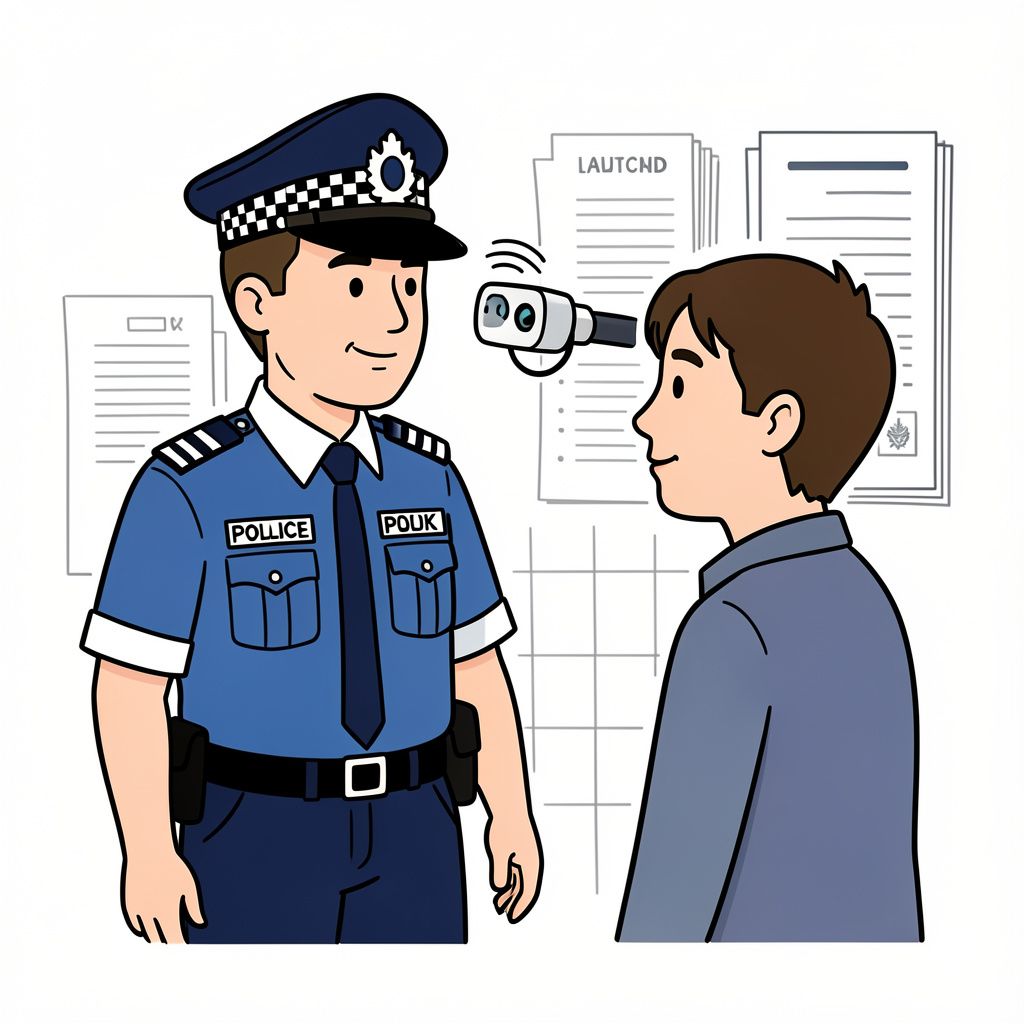
On 4 November 2026, the British government announced a statutory framework to regulate police use of facial recognition technology (FRT), marking a pivotal shift in the country’s approach to biometric surveillance [1][2][4]. The move follows operational data from London’s Metropolitan Police, which confirmed that live facial recognition (LFR) systems contributed to 173 arrests over a two-year period—including 173 arrests during a Croydon pilot program that scanned 470,000 faces [1][2][4]. The framework introduces an independent watchdog with enforcement powers to block non-compliant police forces and mandates rigorous bias testing for age, gender, and race [1][2][4]. Home Secretary Shabana Mahmood framed the technology as ‘the biggest breakthrough for catching criminals since DNA matching,’ while emphasizing the need for ‘fair, safe, and proportionate’ use [4].
Operational Impact and Global Implications
The Metropolitan Police’s deployment of LFR has already demonstrated measurable public safety outcomes. During the Notting Hill Carnival in 2026, police identified 86 registered sex offenders, leading to 7 arrests for breaches of civil orders [4]. The technology also contributed to a 10.5 = 10.5% reduction in overall crime in Croydon’s pilot zone and a 21% decrease in offenses linked to violence against women and girls compared to the previous year [4]. Beyond London, Western Australia Police conducted a trial between June and October 2026, scanning 1,380,882 faces and resulting in 122 arrests, 146 sex offender contacts, and a claimed error rate of 0.00065% [1]. For global enterprise leaders and surveillance tech developers, the UK’s regulatory regime sets emerging compliance benchmarks that could influence international standards for algorithmic security systems [GPT].
Regulatory Safeguards and Civil Liberties Concerns
The new legal framework includes two separate codes of practice—one for police and another for private businesses—designed to address the ‘patchwork’ of current practices criticized by Policing Minister Sarah Jones [2][3]. Jones underscored the importance of proportionality, noting, ‘If I had an outstanding parking fine, I would not expect this technology to be used for that’ [2][3]. Civil liberties groups, however, argue that LFR remains an indiscriminate tool that scans the faces of every passerby [2][3]. Jasleen Chaggar of Big Brother Watch described it as ‘an indiscriminate tool which scans the face of every single person who walks by the camera’ [2][3]. The Ada Lovelace Institute has welcomed the watchdog’s creation but warned that the legislation must set a clear legal threshold for the seriousness of crimes that warrant FRT use to prevent disproportionate deployment [5]. Independent bias testing by the National Physical Laboratory found no statistically significant differences in LFR performance by race or gender at recommended thresholds, though critics argue that error rates may still disproportionately affect marginalized communities [6].
Future Deployments and Technological Evolution
The Home Office has invested £11 million to triple the number of LFR vans in England and Wales, with plans to introduce fixed cameras in London’s West End and Soho by December 2026 [1][4]. By 2027, police forces will have access to a new retrospective FRT algorithm, developed through Home Office funding, to identify suspects after incidents [1][4]. Dorset Police’s recent social media outreach—featuring a community scrutiny panel member addressing public concerns—highlights ongoing efforts to build trust in the technology [7]. Meanwhile, forces like Avon and Somerset Police are collaborating with regional partners to deploy LFR in compliance with data protection laws, including the Data Protection Act 2018 and Equality Act 2010 [8]. As the UK pioneers this regulatory model, its success or failure may determine whether FRT becomes a globally accepted tool for law enforcement or a cautionary tale of unchecked surveillance.
Sources
- maccus.fr
- www.bbc.com
- www.gov.uk
- www.facebook.com
- www.facebook.com
- www.avonandsomerset.police.uk
- www.linkedin.com