State Crackdown Targets Fake Hemp Retailers Ahead of Stricter Industry Rules
Jefferson City, Saturday, 7 November 2026.
State lawsuits reveal tested ‘hemp’ flower contained over fourteen times the legal THC limit, signaling aggressive regulatory enforcement that threatens to disrupt thousands of regional businesses.
Missouri’s Regulatory Crackdown Gains Momentum
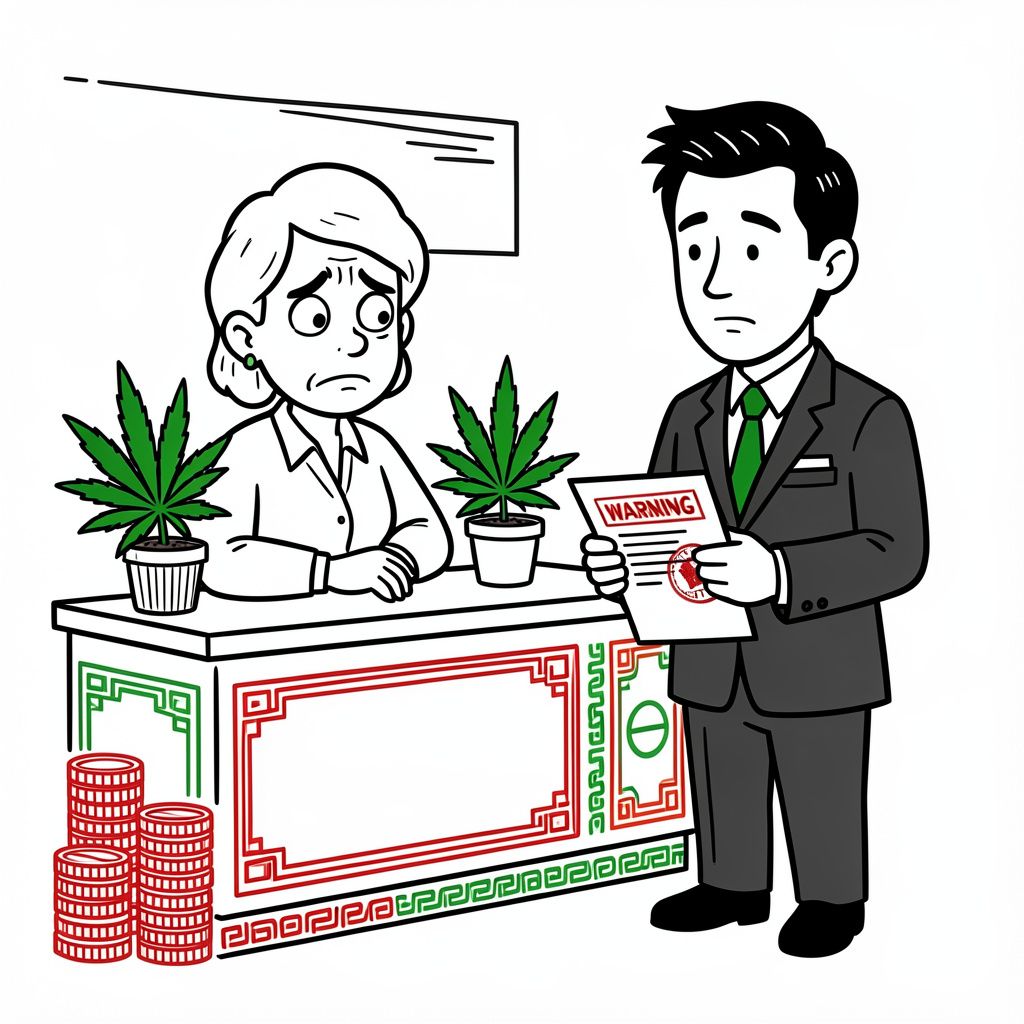
Missouri Attorney General Catherine Hanaway, a Republican [alert! ‘political party affiliation is not explicitly stated in sources’], has escalated enforcement against retailers marketing illicit marijuana under the guise of legal hemp products. On 5 November 2026, Hanaway filed four lawsuits targeting establishments in Aurora, Independence, Rock Port, and Des Peres, alleging these businesses sold THCA flower containing 4% delta-9 THC—14.286 times the labeled 0.28% concentration and vastly exceeding the state’s 0.3% total THC limit for hemp [X]. The legal actions mark the first wave of a broader regulatory sweep aimed at businesses circumventing Missouri’s cannabis licensing frameworks. Hanaway emphasized the state’s commitment to enforcing House Bill 2641, warning that additional lawsuits would target any retailer attempting to bypass consumer safety statutes or state licensing requirements [X][X].
New State Law Set to Reshape Hemp Industry
A landmark Missouri law restricting intoxicating hemp products is scheduled to take full effect on 12 November 2026, just days after Hanaway’s initial enforcement actions [alert! ‘implementation date is pending as of 7 November 2026’]. Under House Bill 2641, hemp products are redefined to contain no more than 0.3% total THC, while finished cannabinoid products are capped at 0.4 milligrams of THC per container [X]. The legislation follows years of debate since 2023, with a federal judge dismissing a hemp industry challenge to the law on 28 October 2026, upholding Missouri’s regulatory authority over intoxicating hemp-derived cannabinoids [X]. State officials estimate the regulations could impact 40,000 food establishments and smoke shops, as well as 1,800 food manufacturers, though not all are expected to face immediate enforcement [X].
Industry Upheaval and Legal Challenges
The crackdown has sparked significant backlash from hemp advocates, with industry representatives arguing the regulations amount to market protection rather than consumer safety. John Grady, a hemp business owner and industry advocate, criticized the state’s four-year failure to establish clear regulations, stating that the new law effectively eliminates compliant businesses while doing little to address unregulated sellers [X]. The Missouri Hemp Trade Association echoed these concerns, highlighting that federal regulations passed in late 2025—limiting hemp-derived products to 0.4 milligrams of THC per container—could devastate an industry where many beverages currently contain 5 to 10 milligrams per container [X]. Despite these challenges, the state has shown no signs of delaying implementation, with Hanaway asserting that the law is ‘stronger and easier to enforce’ than previous frameworks [X].
Regional Impact and Future Enforcement
The targeted retailers—Puffers Choice LLC (Aurora), Herb Depot (Independence), Token THC Dispensary (Rock Port), and CBD Kratom Cannabis Dispensary (Des Peres)—face civil penalties, injunctive relief, and potential drug-den public nuisance designations that could shutter their operations [X]. The lawsuits allege deceptive practices, including businesses falsely advertising as licensed dispensaries and mimicking state-licensed marijuana retailers [X]. While hemp-derived beverages are exempt from the immediate restrictions, the broader industry faces uncertainty as businesses prepare for full enforcement. Hanaway’s office has indicated that additional lawsuits will follow, signaling a sustained regulatory push ahead of the 12 November deadline [X][X].