Cuba's Bold Leap: Why 176 Free-Market Reforms Could Reshape an Economy
Havana, Sunday, 21 June 2026.
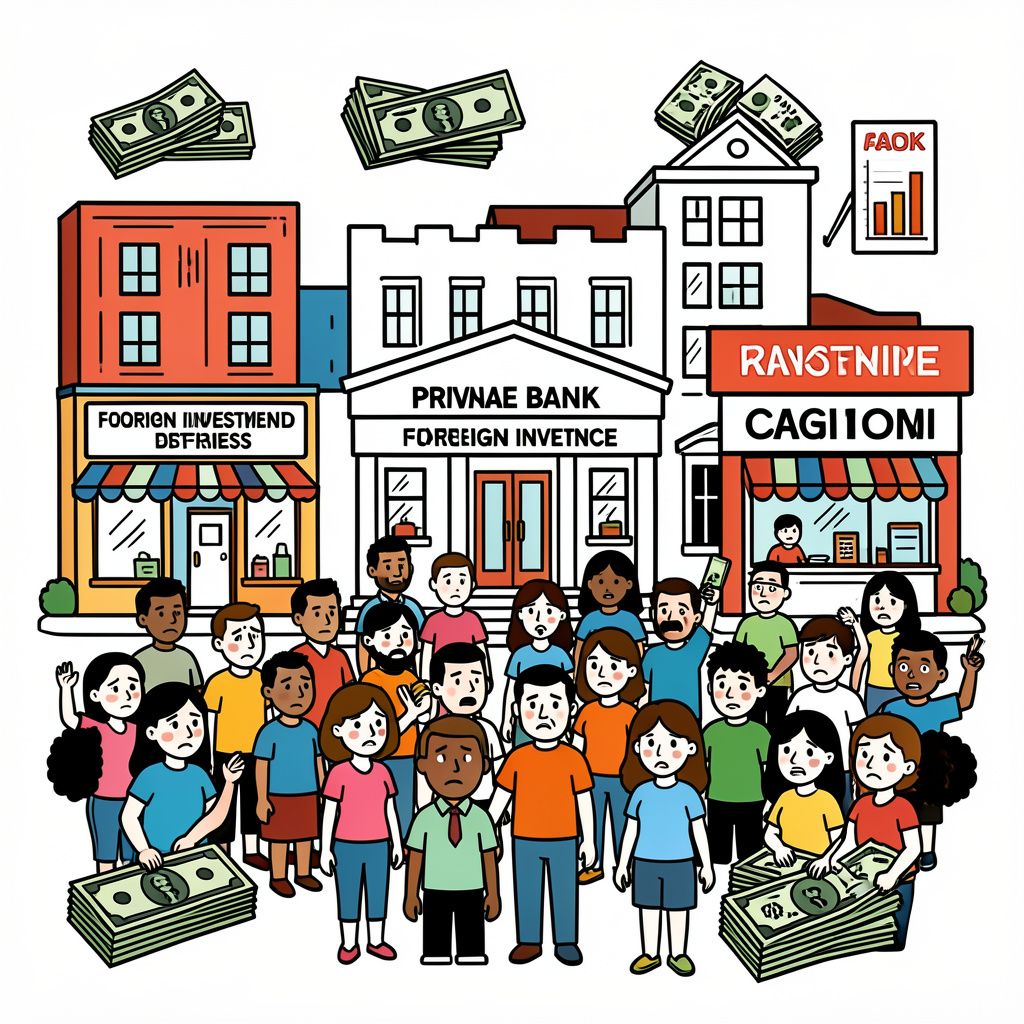
Cuba has enacted its most radical economic reforms since 1959, introducing 176 free-market measures to revive its struggling economy. The reforms dismantle decades-old socialist pillars, allowing private banks, foreign investment, and even fast-food chains—while Raúl Castro’s grandson publicly backs the shift. Yet, with the U.S. maintaining a harsh embargo and blackouts crippling daily life, success is far from guaranteed. Will this gamble pay off, or is Cuba’s socialist identity at risk?
The Blueprint: 176 Measures to Decentralize Cuba’s Economy
On 18 June 2026, Cuba’s Communist Party approved a sweeping 176-point economic reform package, marking the most significant shift in economic policy since the 1959 Cuban Revolution [1][2]. The reforms aim to decentralize the state-run economy by dismantling long-standing pillars of the socialist system, including the state monopoly on foreign trade and the centralization of productive forces [1]. Key measures include permitting private banks, allowing Cubans abroad to invest in the island’s economy, and authorizing fast-food chains to establish operations in Cuba [1]. The reforms also expand private enterprise by enabling direct imports and exports without state intermediation and allowing free hiring of personnel [1]. Prime Minister Manuel Marrero emphasized that these measures do not signify ‘an abandonment of the construction of socialism, but are a prerequisite for its preservation’ [7].
A Crisis-Driven Transformation
The urgency of these reforms is underscored by Cuba’s severe economic crisis. Between 2020 and 2025, Cuba’s economy contracted by 15% due to the combined impact of the COVID-19 pandemic, domestic structural issues, and U.S. sanctions [6]. The situation worsened in January 2026 when the U.S. imposed a harsh energy and financial embargo, effectively cutting off Cuba’s fuel supply [1]. This led to daily blackouts lasting up to 20 hours, severely disrupting healthcare, transportation, and education services [1]. The economic downturn has also driven mass emigration, with over 400,000 Cubans leaving the island since 2021 [GPT]. Raúl Castro’s grandson, Raúl Guillermo Rodríguez Castro, framed the reforms as a ‘very Cuban’ economic model, stating that Cuba must ‘diversify our economy, diversify the way we do business, and diversify the way we do investments’ [1].
Political Backing and Bureaucratic Hurdles
The reforms have garnered critical political support, including from former President Raúl Castro, who called the plan ‘the best solution for the revolution at this time’ [6]. President Miguel Díaz-Canel acknowledged that the reforms ‘will not have absolute consensus, but cannot be postponed’ [3]. However, Cuban authorities have cautioned that implementation could be slow due to bureaucratic resistance and the constraints imposed by the U.S. embargo [1]. The reforms also face skepticism from hardline members of the Communist Party, which has ruled Cuba since 1965 [3]. Despite these challenges, the reforms signal a dramatic departure from socialist orthodoxy, drawing comparisons to economic models in China and Vietnam [6].
Sector-Specific Reforms: Agriculture and Tourism
The 176-point reform package includes targeted measures for key sectors such as agriculture and tourism. In agriculture, the reforms aim to reduce state control and encourage private sector participation [7]. The tourism sector, which has been severely impacted by U.S. sanctions, will see new business opportunities, particularly in previously restricted areas like Havana’s old town and the Los Cayos island chain [7]. The reforms also permit the private sector to buy and sell homes and allow Cuban or foreign investors to purchase shares in state-owned companies, though specific details on which companies will be included remain undisclosed [7]. These changes are designed to attract foreign investment and stimulate economic growth, but their success will depend on overcoming both domestic resistance and external pressures.
Global Reactions and Future Outlook
The international community has reacted with cautious optimism to Cuba’s reforms. The European Union, while condemning Cuba’s ‘systematic repression,’ has called for ‘profound economic and political change’ [3]. Meanwhile, the reforms have sparked debate about whether Cuba is abandoning socialism or adapting it to modern realities. Cuban-American political scientist Luis Carlos Battista noted that elements ‘listed as pillars of the revolutionary economy…have been dismantled’ [1]. The reforms’ long-term impact will hinge on Cuba’s ability to navigate U.S. sanctions, attract foreign investment, and implement the measures effectively amid bureaucratic resistance [1][6]. If successful, these reforms could reshape Cuba’s economic relationship with the U.S. and the world, potentially easing decades of isolation [1].
Sources
- apnews.com
- apnews.com
- www.aljazeera.com
- apnews.com
- apnews.com
- pluralia.com
- uk.news.yahoo.com
- www.thenationalnews.com