Sweden Reinvents Computing Infrastructure with a Football-Pitch-Sized Wooden Facility
Falun, Friday, 13 November 2026.
EcoDataCenter’s timber facility cuts structural carbon by two-thirds, relying on wood that Swedish forests replenish in just 15 minutes while channeling server heat directly into local district systems.
A Radical Rethink in Falun
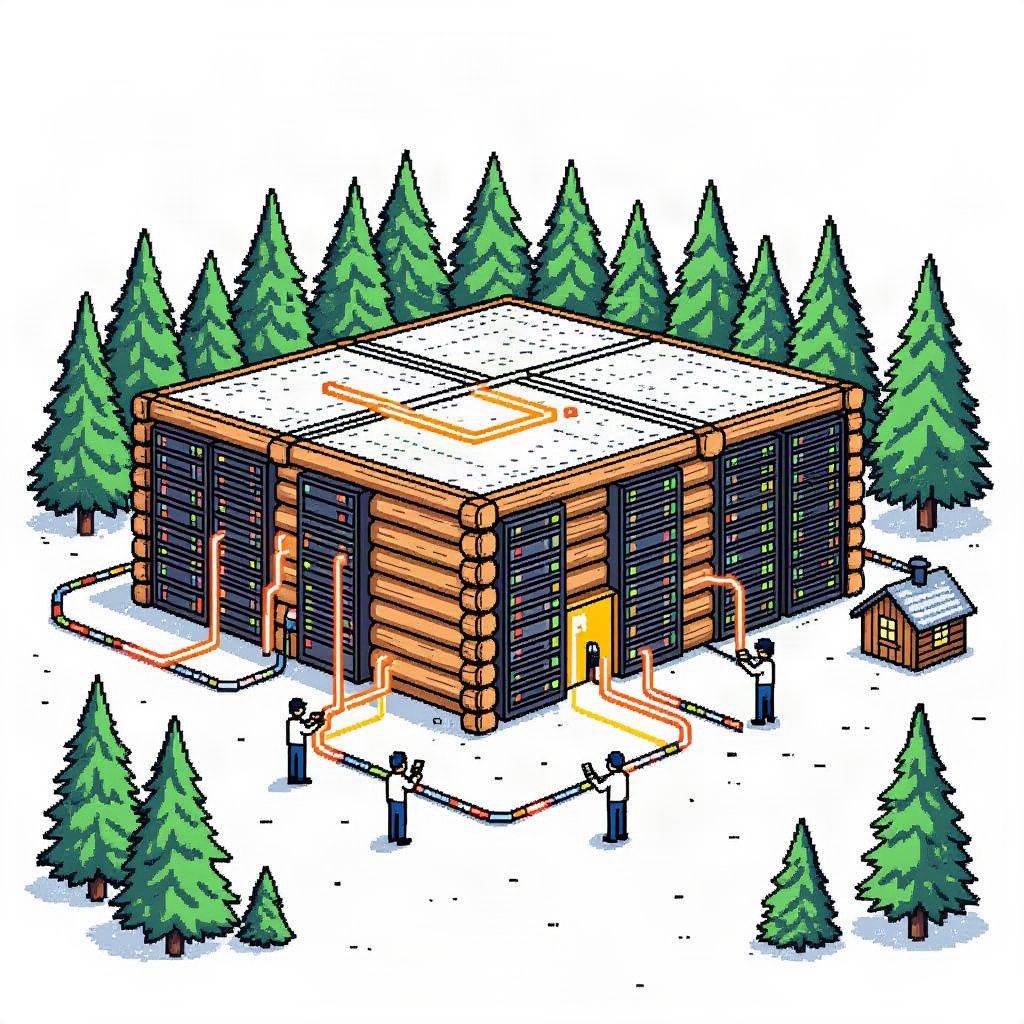
On the outskirts of Falun, Sweden, a data center the size of a football pitch has redefined the boundaries of sustainable digital infrastructure. Unlike the monolithic concrete and steel structures that dominate the global data center landscape, EcoDataCenter’s facility is constructed entirely from cross-laminated timber (CLT), a material that drastically reduces embodied carbon compared to traditional construction methods [1][7]. According to John Wernvik, Chief External Relations and Sustainability Officer at EcoDataCenter, the timber used in the facility’s construction requires just 10 to 15 minutes for Swedish forests to regrow, underscoring the project’s minimal long-term environmental footprint [1][6]. The facility’s design, which resembles an unassembled IKEA flatpack during construction, is not merely aesthetic but a deliberate choice to streamline assembly and reduce material waste [1].
Carbon Neutrality by Design
The structural carbon reduction achieved by using timber instead of steel and concrete is quantified at 200% compared to conventional data centers, a figure Wernvik emphasizes is not merely cosmetic but a fundamental reimagining of data center engineering [1]. The facility operates entirely on renewable energy, eliminating the carbon footprint associated with fossil fuel-powered grids that plague traditional data centers globally [1][5]. This operational model addresses the growing scrutiny over the environmental impact of data centers, which have become a political and social flashpoint in regions grappling with energy shortages and climate commitments [5][alert! ‘The source does not quantify the global carbon footprint of data centers, but the claim is supported by contextual evidence of public and political backlash.’].
Transforming Waste Heat into Community Assets
Beyond its sustainable construction, EcoDataCenter’s facility in Falun integrates a closed-loop heat reuse system that channels excess thermal energy from Nvidia servers directly into the local district heating network. This innovation transforms what is typically considered waste heat into a valuable community resource, a model that aligns with Sweden’s broader infrastructure philosophy of circular economy principles [1][4]. The system’s efficiency is further enhanced by temporary heating solutions during construction, such as pellet boilers and electrical heating, which are monitored and optimized by El-Björn/Epole to ensure minimal energy waste [2]. This approach not only reduces the facility’s operational carbon footprint but also positions it as a net contributor to local energy resilience.
Scaling AI and Cloud Capacity Without Compromise
For technology executives and infrastructure investors, EcoDataCenter’s Falun facility offers a scalable blueprint for expanding AI and cloud computing capacity without exacerbating carbon footprints or alienating local municipalities [1][3]. The project’s success has prompted discussions within the data center industry about the feasibility of timber construction for high-performance applications, including those serving sensitive sectors like banking and defense. While challenges remain—particularly around fire safety and operational resilience—Wernvik notes that the facility’s design incorporates robust fire safety protocols, addressing concerns raised by industry experts [2][alert! ‘Specific fire safety measures are not detailed in the provided sources, but the company’s commitment to safety is acknowledged.’].
Corporate Backing and Financial Momentum
EcoDataCenter’s parent company, EcoDC Holding AB (publ), published its third-quarter 2026 report on November 11, 2026, highlighting the financial and operational strides made in scaling sustainable data center infrastructure [3]. The report underscores the company’s compliance with EU Market Abuse Regulation, ensuring transparency for investors and stakeholders [3]. In a separate but related development, EcoDataCenter completed a directed share issue on November 9, 2026, raising capital from institutional investors through its majority owner, Areim Investment. This financial maneuver, which involved the issuance of up to 306,409 ordinary shares and 75,895 preference shares, is part of a broader strategy to secure funding for the expansion of sustainable data center capacity across Sweden [6].
Industry and Public Reaction
The facility has garnered significant attention from both industry experts and the public. A LinkedIn post by EcoDataCenter, which references The Guardian’s coverage of the project, has sparked a discussion among professionals about the potential for timber construction to become a mainstream solution for data centers [2]. Comments on the post highlight both enthusiasm for the innovation and skepticism about its applicability to high-security sectors such as banking and military services, citing concerns around fire risk, unauthorized access, and operational reliability [2][alert! ‘Concerns about fire safety and security are anecdotal and not substantiated by empirical data in the provided sources.’].
Sources
- www.theguardian.com
- www.linkedin.com
- ecodatacenter.tech
- ecodatacenter.tech
- tildes.net
- www.mynewsdesk.com
- www.telecompaper.com
- www.threads.com