Billionaire Investor Paul Tudor Jones Warns Big Tech Stock Market Surge Will Reverse by 2027
New York, Tuesday, 13 October 2026.
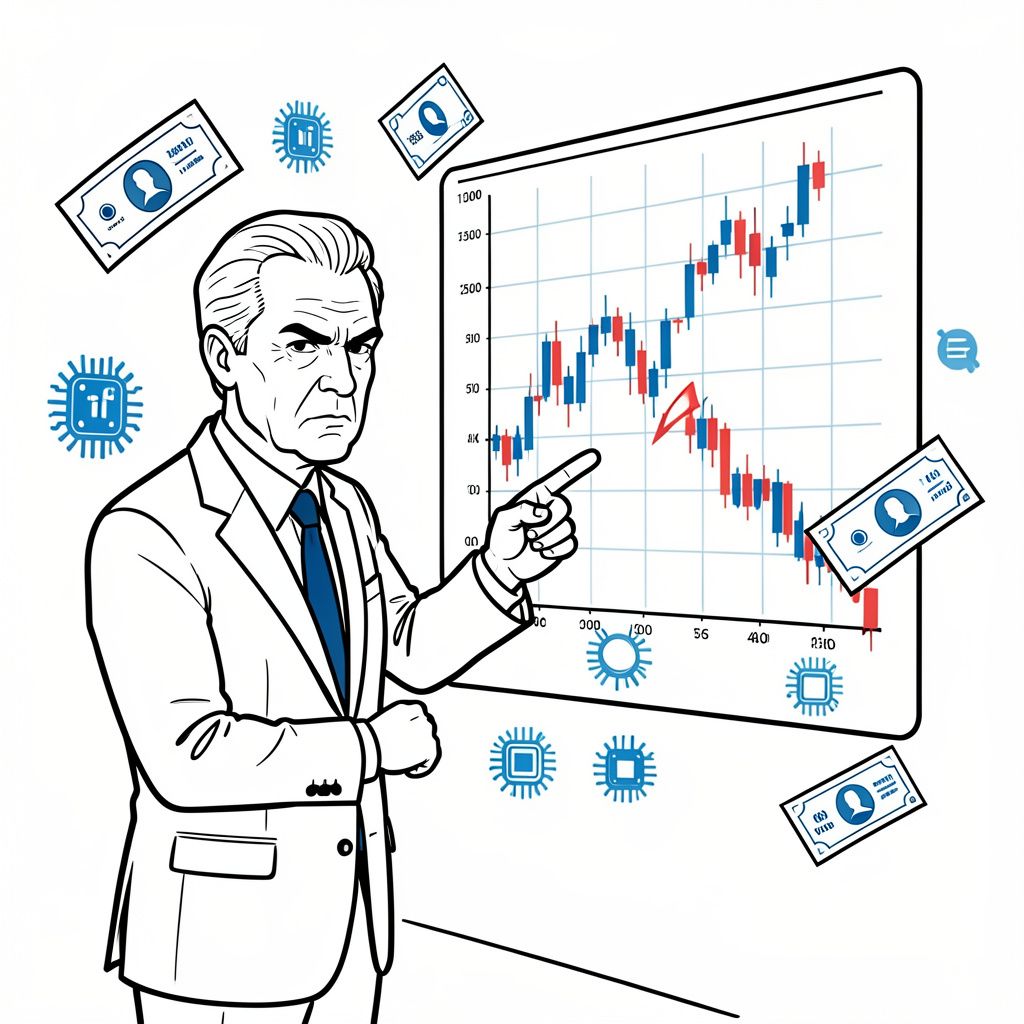
Paul Tudor Jones warns stock markets face severe headwinds by 2027. Massive AI stock offerings like OpenAI will flood supply, reversing years of share buybacks that previously supported market gains.
Capital Preservation Amidst Looming Supply Shock
On Tuesday, 13 October 2026, billionaire hedge fund manager Paul Tudor Jones issued a stark warning to equity investors, forecasting that 2027 could prove to be an exceptionally difficult environment for stock markets [1]. Speaking in an interview, the founder of Tudor Investment Corporation emphasized the critical necessity of capital preservation and proactive risk management in light of looming fiscal pressures and macroeconomic headwinds [1]. Jones cautioned that the tailwinds supporting the current bull market, specifically corporate buybacks and mergers, are about to reverse into significant headwinds [1]. This outlook serves as a signal for corporate leaders and institutional portfolio managers to reassess long-term exposure and risk control strategies well ahead of anticipated market turbulence [2].
The Reversal of Buyback Tailwinds
The macro investor highlighted that corporate buybacks, along with mergers and acquisitions, have been a primary tailwind for the stock market during most of the current four-year bull market as it decreased the equity supply [1]. However, this dynamic is now turning with major offerings ahead in the artificial intelligence space from companies such as Anthropic and OpenAI, along with one just finished in SpaceX [1]. Jones noted that there will likely be more secondary offerings from companies in order to raise money for the AI buildout, creating a surge in equity supply [1]. He stated, “2027 is going to be really, really challenging for the stock market,” citing the most negative flow picture for the U.S. stock market since 2002 [2].
Unprecedented IPO Market Capitalization
Market analysts are projecting that the combined market capitalization of SpaceX, Anthropic, and OpenAI at the time of their respective IPOs would total approximately 5 trillion USD [3]. This figure would exceed the total market capitalization of every IPO combined from the previous 100 years, which analysts estimate at roughly 3 to 4 trillion USD [3]. In the first half of 2026 alone, US startups raised over 400 billion, marking the highest volume of capital raised in any full year in history [3]. Furthermore, 80% of venture capital dollars were directed toward AI companies, indicating extreme concentration in the sector [3].
Bond Yields and Valuation Pressures
Concerns regarding valuation are compounded by the current interest rate environment, where the 10-year T-note yield is approximately 5.30% while the broad market dividend yield sits at roughly 1.1% [3]. The spread between the risk-free rate and dividend yield is 4.2, highlighting the pressure on equity valuations when fixed income offers competitive returns [3]. Ed Yardeni noted that bond yields are reflecting a solidly growing economy but warned that if 10-year yields move towards 6% quickly, investors would have to start worrying [4]. This yield environment contrasts sharply with the liquidity that fueled previous market gains.
Energy Prices and Inflation Risks
Commodity prices remain a critical variable, with Paul Tudor Jones stating he is long oil and that it could rally another 20 to 25 after the midterms [1]. Concurrently, Ed Yardeni stated that we can anticipate higher for longer oil prices around 100 per barrel [4]. Jones believes if oil prices rise significantly, the stock market will “hate it,” linking energy costs directly to inflationary pressures and consumer sentiment [1]. Inflation is currently reported at 3.4%, a level characterized by analysts as consistent with figures seen during parts of the 1990s but still a concern for real returns [3].
Market Breadth and Historical Parallels
Despite the S&P 500 trading near all-time highs, market breadth has narrowed significantly, with 54% of the Russell 3000 index currently experiencing a drawdown of 20% or more [3]. This internal deterioration contrasts with the performance of the “Magnificent Seven,” which are currently acting as the primary support for the broader market indices [3]. Echoing these concerns, Michael Burry warned that today’s stock market looks eerily similar to the months leading up to the bursting of the Dot Com Bubble [5]. Jones likened the current period to 1999, just about a year before the dot-com bubble in 2000, suggesting a similar cycle of issuance and subsequent correction [2].