Pentagon Warns U.S. Troops Must Prepare for AI Drone Warfare
Washington, Sunday, 20 September 2026.
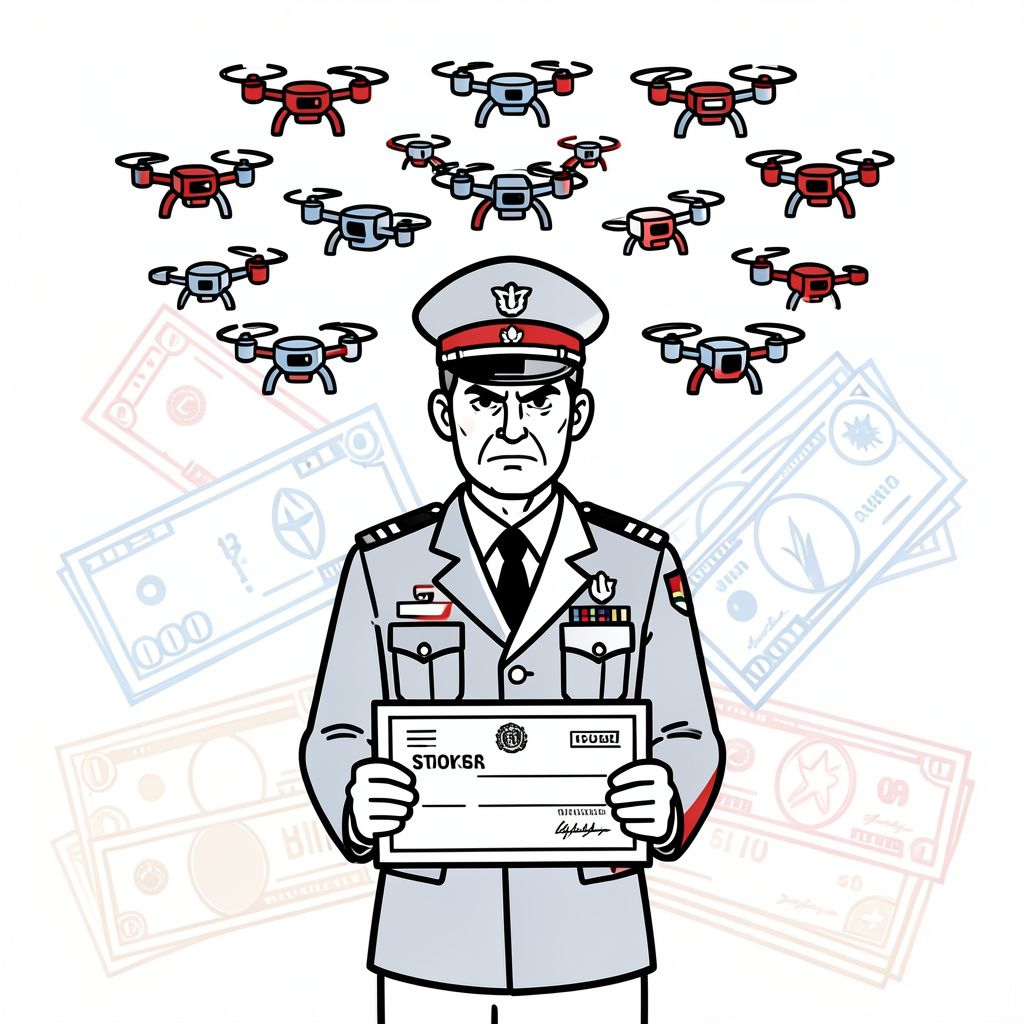
Joint Chiefs Chairman Gen. Dan Caine warned that U.S. forces face threats from autonomous AI drones, urging fast adaptation as low-cost tech drastically cuts battlefield survival times.
Strategic Shift in Defense Procurement
The address by Chairman of the Joint Chiefs of Staff Gen. Dan Caine on September 16, 2026, signals a critical pivot in U.S. defense strategy, moving from theoretical preparation to operational necessity regarding AI-enabled warfare [1]. This strategic warning implies significant macroeconomic implications for the defense procurement sector, as capital allocation is expected to accelerate toward counter-drone innovation and AI-driven electronic warfare platforms [1]. Gen. Caine stated that U.S. armed forces must immediately adapt to being actively hunted by autonomous systems and continuously tracked across real-time electronic spectrums, indicating that traditional hardware investments may need rebalancing to meet these asymmetric threats [1].
Operational Evidence and Technological Reality
The urgency of this adaptation is underpinned by recent operational data from conflict zones and U.S. trials. In the Ukraine-Russia conflict, AI-enabled computer vision allows drones to strike targets even when GPS signals are jammed, reducing the life expectancy of new recruits on certain front lines to merely 20 to 30 minutes [1]. Domestically, the efficacy of these systems was demonstrated on June 9, 2026, when Task Force 59 utilized an autonomous Corsair surface vessel to recover downed pilots in the Strait of Hormuz [1]. This successful rescue was attributed to multi-year efforts to integrate AI into kinetic environments, turning vast data into actionable maritime pictures [1].
Policy Debate and Leadership Roles
Alongside technological adaptation, there is ongoing discourse regarding the role of military leadership in policy formulation. Reports from September 14, 2026, indicate debates surrounding General Caine’s stance that top ranks must clarify the limits of their role when advising senior leaders on operational risks [2]. This dialogue occurs as the U.S. joint force, comprising 2.8 million volunteer members, seeks an optimized mix of combat capabilities to adapt to decreasing lethal exchange costs [1]. The intersection of military advice and civilian policy remains a complex interface as the Pentagon navigates this new era of autonomous warfare [2].