Why Falling Inflation Fails to Ease American Household Budgets
Washington, Sunday, 25 October 2026.
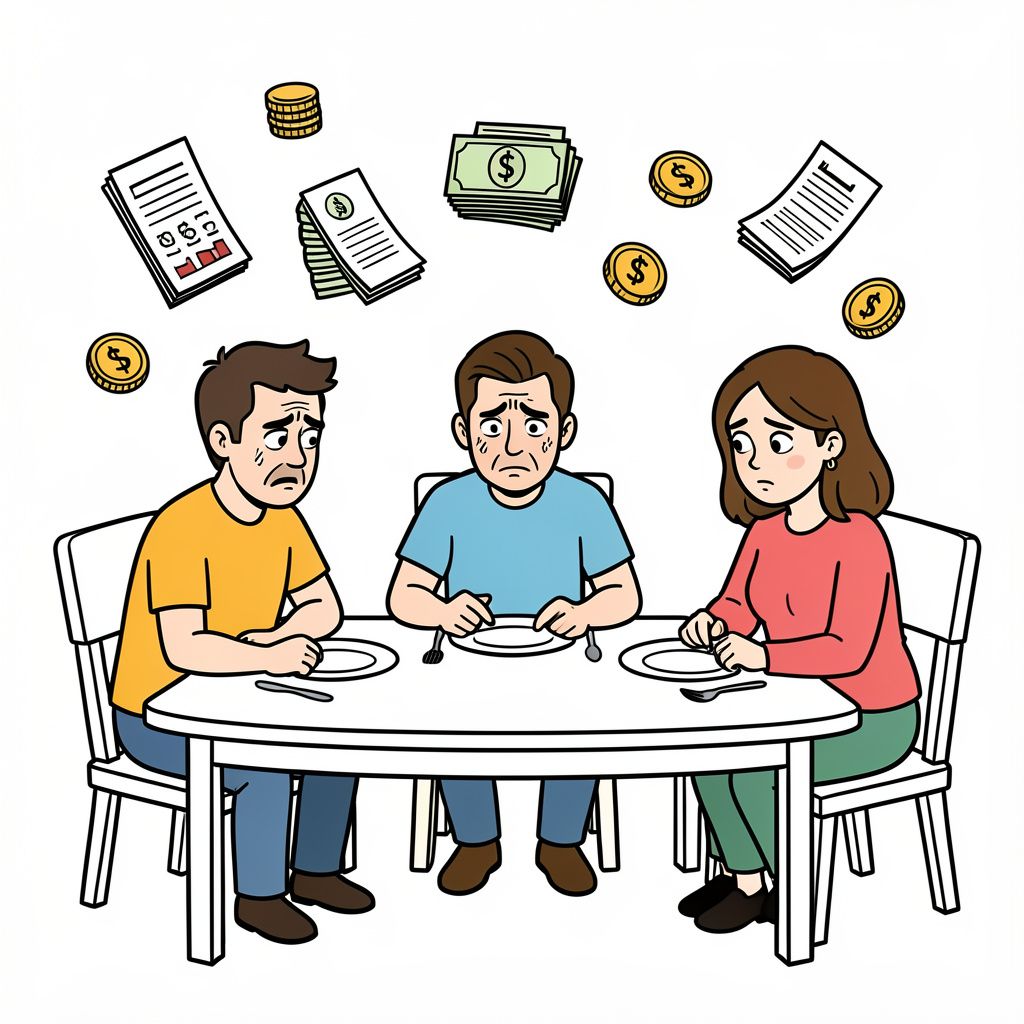
Despite price growth cooling by half to 5.4%, US consumer confidence has hit historic lows as cumulative costs and energy shocks maintain relentless pressure on household budgets.
Inflation’s Paradox: Cooling Prices vs. Surging Household Costs
As of October 25, 2026, the U.S. inflation rate has cooled significantly during President Donald Trump’s second term, with prices rising at 5.4% over the past two years—approximately half the ≈10.8% pace recorded during President Biden’s single term [alert! ‘Calculation based on 20% increase over 4 years under Biden (2021-2024) vs. 5.4% in 2.75 years under Trump (Jan 2025-Oct 2026)’][1]. However, this deceleration has done little to alleviate the financial strain on American households, where cumulative price increases over the past six years have left budgets permanently altered. Economists note that even with inflation easing, the cost of living remains 30% higher than it would have been had the Federal Reserve’s 2% target been consistently met since 2021 [5]. This persistent gap between headline inflation and household affordability has created a paradox where declining month-to-month price growth fails to translate into relief for consumers still grappling with the aftermath of the post-pandemic inflation shock and subsequent energy crises.
Energy and Tariffs: The Hidden Inflation Multipliers
The primary drivers of this enduring cost-of-living crisis are twofold: geopolitical energy shocks and Trump-era trade policies. Since March 2026, the closure of the Strait of Hormuz amid escalating tensions with Iran has pushed crude oil prices to 75% above January 2026 levels, with gasoline averaging $4.30 per gallon and diesel at $6.17 per gallon—up from $2.80 and $3.40, respectively [5]. These energy price surges have ripple effects across the economy, inflating transportation costs for food, manufactured goods, and services. Meanwhile, Trump’s sweeping tariffs—particularly the “Liberation Day” tariffs announced in April 2025—have kept import costs elevated despite some judicial rollbacks. The effective tariff rate remains above pre-2025 levels, with specific sectors like coffee (up 23% under Trump vs. a 4.6% decline under Biden) and toys (up 7.8% under Trump vs. a 4.6% decline under Biden) bearing the brunt of these policies [1][3]. The Federal Reserve’s own economists have debunked claims that tariffs contribute to wealth creation, instead confirming their role in driving consumer price inflation [3].
The Consumer Sentiment Crisis: Why Numbers Don’t Tell the Whole Story
While economic indicators such as GDP growth (averaging 2.1% annually under Trump) and unemployment (at 4.2%) suggest a relatively strong economy, consumer sentiment remains mired in historic lows. The University of Michigan’s Consumer Sentiment Index has plunged to levels below those recorded during the 2008 financial crisis and 2020 pandemic, standing at a 50-year low as of October 2026 [7]. This disconnect between macroeconomic performance and household sentiment stems from the cumulative burden of past inflation. The U.S. cost of living is now 30% higher than it would have been had inflation remained at the Fed’s 2% target since 2021, a gap that has eroded savings and strained budgets for years [5]. Even wage growth, which has slowed to below 4%, is failing to keep pace with these elevated costs, leaving many households in a state of financial precarity [5]. The persistence of these high prices—despite slowing inflation—has fostered deep public dissatisfaction, with 72% of Americans disapproving of Trump’s handling of inflation according to a New York Times/Siena poll conducted October 21–24, 2026 [1].
Policy Paralysis: Why Congress Can’t Fix the Cost-of-Living Crisis
With the U.S. midterm elections just days away on November 3, 2026, the political fallout from persistent high prices has become a central campaign issue. Democrats, who are favored to regain control of the House, have pledged an “affordability agenda” to address the cost-of-living crisis, but economists and analysts warn that legislative solutions are limited [8]. The primary drivers of inflation—geopolitical conflict and trade policies—fall outside Congress’s direct control. Even if Democrats secure a congressional majority, they lack the power to terminate the Iran war or unilaterally revoke Trump’s tariffs without presidential cooperation [8]. Meanwhile, the Federal Reserve’s recent interest rate hike in September 2026—its first in nearly a year—risks further dampening economic activity, particularly in the housing market where mortgage rates have already climbed substantially [5]. The Fed’s dilemma underscores the broader challenge facing policymakers: balancing inflation control with the need to stimulate economic growth in an environment where both consumers and businesses remain highly sensitive to price shocks.
Sources
- finance.yahoo.com
- www.facebook.com
- finance.yahoo.com
- www.telegraph.co.uk
- www.latimes.com
- www.moneyweb.co.za
- www.facebook.com
- www.washingtonpost.com