Why Central Florida Home Sellers Are Slashing Prices as Properties Linger on the Market
Orlando, Sunday, 25 October 2026.
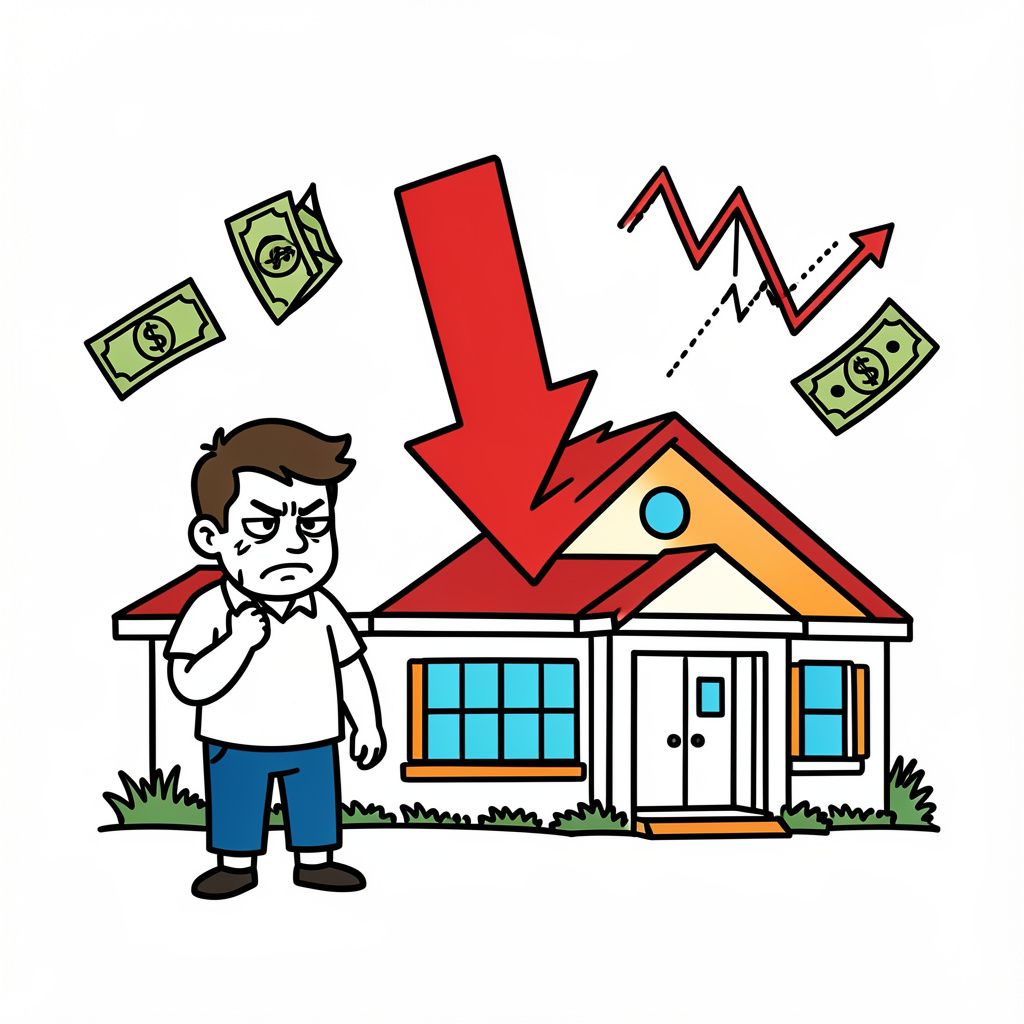
Over 56% of Central Florida listings with recent price cuts have sat unsold for at least 60 days, signaling a distinct shift toward buyer leverage across regional housing markets.
A Market Reversal: Price Cuts and Lingering Inventory
As of October 25, 2026, Central Florida’s housing market is showing clear signs of a buyer’s advantage, with 1,342 active residential listings across Orange, Seminole, Volusia, and Lake counties reducing their asking prices within the prior seven-day window [1]. This represents a notable shift from previous trends, where sellers held significant pricing power. The data, sourced from Stellar MLS and analyzed by The Homes In Orlando Team at NextHome Neighborhood Realty, indicates that 56.71% of these discounted properties—761 homes—have languished on the market for 60 days or longer despite price reductions [1]. The average price cut of 3.13% from prior asking prices further underscores the growing urgency among sellers to attract buyers [1]. Realtor Brenden Rendo of The Homes In Orlando Team emphasized the importance of time over the magnitude of the discount, noting that sellers who have already reduced prices once and remain unsold demonstrate heightened motivation to negotiate [1].
Regional Disparities: Where the Market is Softening Fastest
The slowdown is not uniform across Central Florida’s four-county region. Lake County stands out with the highest share of long-market listings, where 63.21% of the 280 price-reduced homes have been on the market for 60 days or more [1]. The county also recorded the deepest average price reduction at 3.67%, with an average list price of $428,911 [1]. Volusia County followed closely, with 55.41% of its 231 discounted listings remaining unsold for 60+ days, while Orange County—Central Florida’s largest market—saw the highest absolute number of price cuts at 633, though its average reduction was slightly lower at 3.07% [1]. Seminole County, meanwhile, had the smallest share of long-market listings at 52.02%, suggesting relatively stronger demand in that submarket [1]. The average list price across all 1,342 reduced listings stands at $494,770, reflecting the region’s diverse housing landscape [1].
Macroeconomic Implications: Inventory Stagnation and Consumer Equity
The surge in price cuts and the proliferation of long-market listings signal a broader macroeconomic shift that could have far-reaching consequences. With 56.71% of discounted properties sitting unsold for 60+ days, the market is effectively signaling a glut of supply relative to demand, a condition that typically erodes seller leverage and pressures prices downward [1]. This stagnation could impact consumer equity, particularly for homeowners who purchased at peak valuations in recent years and are now facing prolonged holding periods or losses upon sale [alert! ‘No direct data on consumer equity impacts provided in sources; this is an analytical extrapolation’]. The trend also raises questions about regional residential investment, as developers and investors reassess the viability of new construction projects in light of softer demand [GPT]. Orlando’s broader market dynamics offer additional context: in September 2026, the city recorded 2,840 home sales, the lowest September total since 2012, with a 3.8% year-over-year decline [3]. Single-family sales fell 2.1%, while condo and townhome sales dropped by approximately 10%, further illustrating the uneven cooling across property types [3].
The Path Forward: What Buyers and Sellers Should Expect
For sellers, the current environment demands strategic pricing and flexibility. Realtors like Brenden Rendo suggest that repeated price reductions—combined with extended time on market—signal a willingness to compromise, which could attract more offers in a slower market [1]. Buyers, on the other hand, may find themselves in a stronger negotiating position, particularly in submarkets like Lake and Volusia counties, where inventory is piling up. Looking ahead, forecasts from Homes.com indicate that Orlando home prices are expected to rise through the end of December 2026, finishing the year near 2025 levels before accelerating in 2027 [3]. However, this projection assumes a stabilization of demand and inventory levels, which remains uncertain given the current stagnation [alert! ‘Future price forecasts are contingent on market conditions not worsening’]. The Homes.com Market Analytics group, which compiles data for the report, notes that Orlando’s median home sale price fell 2% year over year in September 2026 to $400,000, down from a peak of $420,000 in May 2025 [3]. Meanwhile, the median time on market rose 9% year over year to 73 days, and months of supply sat at 5, both indicators of a market in transition [3].