Why Surging Oil Costs Are Driving Silver to Fresh Yearly Lows
New York, Friday, 23 October 2026.
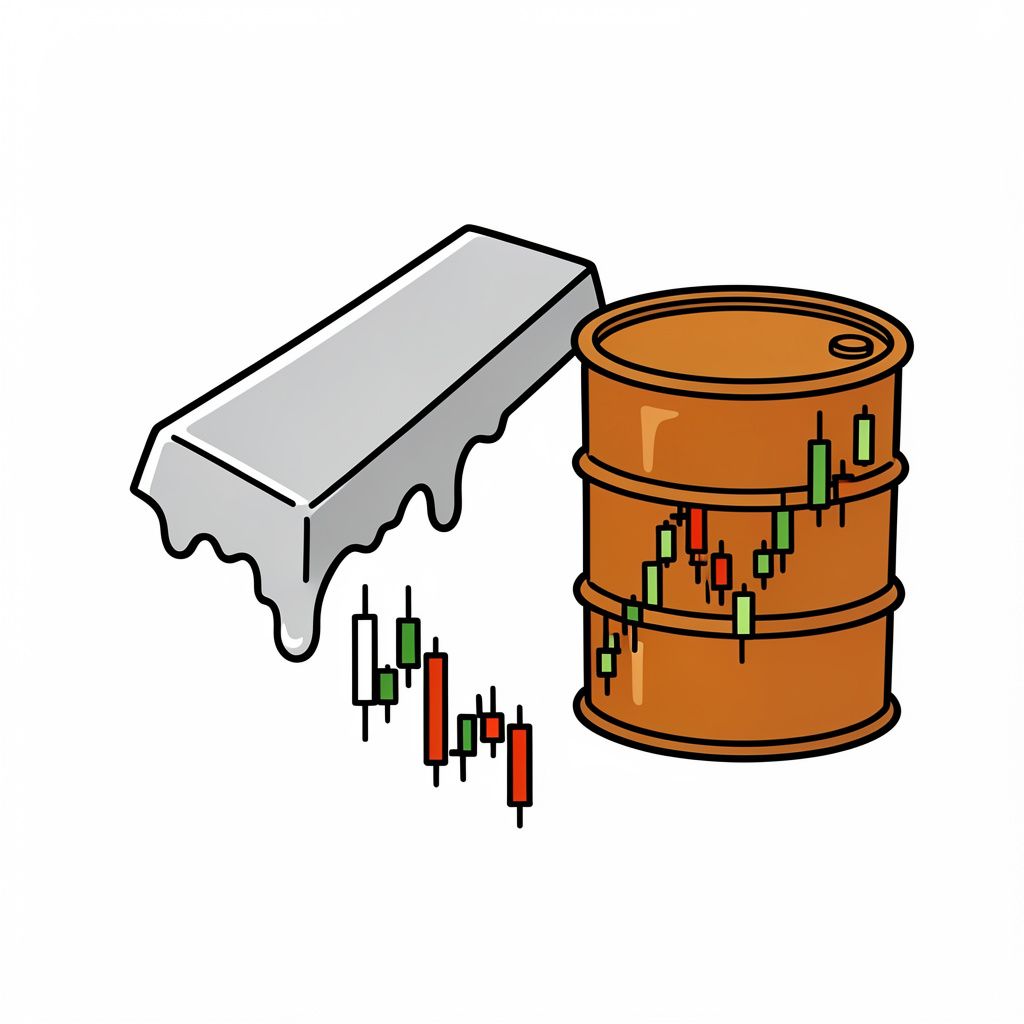
Silver plunged below $54 per ounce, falling over 50% from its January record as crude oil topping $115 revived fears of aggressive Federal Reserve rate hikes.
Silver Futures Hit 11-Month Low Amid Oil Surge
On Friday, October 23, 2026, silver futures in New York trading slumped to their lowest level of the year, dropping below $54 per ounce for the first time in 2026 and marking the weakest levels since November 2025. The decline coincided with Brent crude oil prices surging nearly 2% to over $115 per barrel, a five-month high driven by escalating Middle East tensions, including Houthi attacks on Saudi Arabia between October 19 and October 23, 2026. The U.S. responded by withdrawing diplomats from Saudi Arabia, while Saudi Aramco instructed employees to work remotely during the same period [1][2]. December silver futures opened at $54.69 per ounce on October 23, 2026, down 0.6% from the previous day’s close and further slipping to $54.04 by 7:15 a.m. ET, extending a steep weekly decline [2].
Gold Follows Silver Downward as Inflation Fears Mount
The sell-off in precious metals extended to gold, which also posted losses on October 23, 2026. Gold futures declined 0.5% to $4,040.50, nearing a three-month low as rising oil prices reignited inflation concerns. Analysts attributed the downturn to a combination of energy-driven inflation fears and expectations that the Federal Reserve may maintain higher interest rates for longer to combat persistent price pressures [1][2]. Ole S. Hansen, head of commodity strategy at Saxo Bank, noted that the inflationary impact of rising energy prices was a primary driver of the sell-off, describing silver as “heading for its steepest weekly decline in several months and potentially its weakest weekly close since November” [1].
Market Sentiment Shifts: Liquidity-Driven Selloff or Structural Break?
Justin Lin, an analyst at Global X ETFs, characterized the downturn as a “liquidity-driven selloff,” a phenomenon that “tends to happen in sharp market downturns” as investors rush to liquidate positions regardless of underlying value [1]. The broader context of this decline includes a historic rally in precious metals between November 2025 and January 2026, when silver peaked above $120 per ounce and gold reached $5,600, driven by interest rate cuts, tech industry demand, and geopolitical tensions [1][4]. However, the landscape shifted dramatically following the nomination of monetary policy hawk Kevin Warsh to lead the Federal Reserve, coupled with the ongoing Iran war and sustained high oil prices, which have weighed on metals markets throughout 2026 [4].
Domestic and Global Market Reactions
The impact of the silver sell-off was not confined to international markets. In India, MCX silver futures plunged nearly ₹33,000 per kilogram over 10 trading sessions, slipping below the ₹2 lakh mark on October 23, 2026. The benchmark contract fell by ₹6,799 (3.4%) to ₹1,92,800 per kilogram, reflecting a 14% drop in just 10 sessions amid mounting pressure across domestic and global markets [5]. The decline was attributed to rising crude oil prices, fears of tighter U.S. monetary policy, and fluctuations in the Indian rupee. Analysts at forex.com highlighted that silver had broken its July low and slipped into a long-term support zone between $50 and $55 in New York trading, breaking below the previous July low of $54.77 on October 22, 2026 [6].
Federal Reserve Policy Looms Large Over Precious Metals
Market expectations for Federal Reserve policy have played a critical role in shaping silver’s trajectory. As of October 22, 2026, CME Group’s FedWatch tool indicated a 9.4% probability of an interest rate hike and a 90.6% chance of rates remaining unchanged at the Federal Reserve’s late October 2026 meeting, with nearly an 80% probability of a hike by December 2026 [1][6]. This cautious stance reflects elevated inflation concerns, as September 2026 inflation data, released on October 1, 2026, showed persistent price pressures [1]. The Fed’s upcoming decision, scheduled for October 28, 2026, at 18:00 GMT, is widely anticipated to provide further direction for silver and other non-yielding assets [6].
Tax Implications and Investment Considerations
For investors holding physical silver, tax considerations add another layer of complexity. The IRS classifies physical precious metals as collectibles, taxed under Schedule D of federal returns. Short-term gains (held one year or less) are taxed as ordinary income up to 37%, while long-term gains (held over one year) are taxed at a maximum rate of 28%, regardless of the investor’s income bracket [2]. Middle-income earners in tax brackets of 10%, 12%, 22%, or 24% will pay their corresponding ordinary income tax rate on silver gains, whereas high-income earners in the top brackets of 32%, 35%, or 37% benefit from the capped 28% long-term rate [2].