Rising Inflation and Fuel Costs Drive Trump's Approval Rating to a Record Low
Washington, Sunday, 18 October 2026.
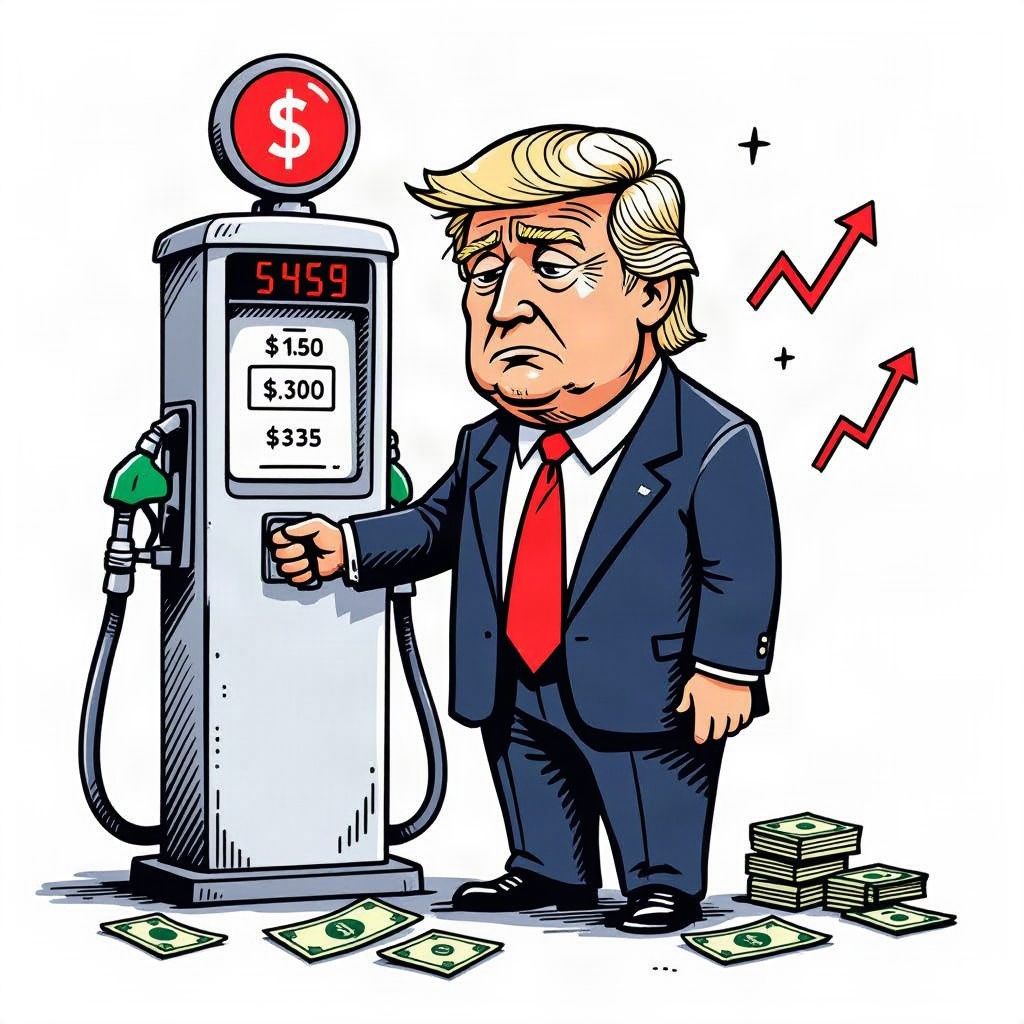
Worsening economic conditions and high gas prices have pushed President Trump’s approval rating down to 34 percent, giving Democrats a strong advantage ahead of the November 2026 midterm elections.
Polling Data Reveals Sharp Decline in Presidential Approval
According to the NBC News Decision Desk Poll released on October 17, 2026, President Donald Trump’s approval rating has fallen to 34% among U.S. adults, marking a second-term low [2][3]. This decline is corroborated by multiple outlets, with Pew Research Center reporting a drop to 30% in October 2026, down from 40% in September 2025, representing a -25 decrease in support over the year [1]. The sense of national dissatisfaction is pervasive, as 71% of respondents in the NBC survey stated the country is on the “wrong track,” the highest share recorded during the president’s second term [2][3]. Furthermore, strong disapproval has reached a peak, with 51% of respondents indicating they “strongly disapprove” of the administration’s performance [2][3].
Demographic shifts highlight the breadth of the political challenge facing the Republican Party heading into the election cycle. While approval among Republicans remains at 76%, support among independents has slipped to 21%, and only 31% of Latinos approve of the president’s job performance [2]. Comparative data from Fox News indicates Trump’s approval at 36%, noted as the lowest of either presidency, reinforcing the trend observed across different polling methodologies [1]. These figures suggest a significant erosion within the president’s base, with approval among his 2024 voters falling from 87% in September 2025 to 67% by October 2026 [1].
Economic Distress and Inflation Drive Voter Sentiment
Economic dissatisfaction serves as a primary driver for the declining approval ratings, with specific focus on inflation and energy costs. In the NBC survey, only 18% of Americans report financial improvement over the past year, while 44% report worsening conditions [1]. Inflation rose to 3.7% year-over-year in September 2026, contributing to the sentiment that personal finances are deteriorating [2]. A significant 67% of voters identify gasoline prices as a “serious problem,” a sentiment echoed by candidates observing financial hardship among workers such as shrimpers and fishermen facing high diesel prices [1][4]. Trump’s approval on inflation and cost of living specifically stands at just 27%, reflecting the public’s struggle with daily expenses [1][2].
The economic narrative extends beyond simple metrics to perceived policy impacts on household budgets. Voters report reducing grocery and discretionary spending due to inflation, linking their personal economic strain directly to federal policy [1]. Additionally, 58% of adults state that the administration’s policies are hurting the country, with particular concern regarding the economic impacts of foreign conflicts [2][4]. This economic anxiety is not limited to one party’s voters; 44% of respondents stated their financial situation is worse than a year ago, creating a broad base of discontent that transcends traditional partisan lines [2].
Midterm Implications and Dividend Proposal Skepticism
As the November 3, 2026, midterm elections approach, the political landscape favors Democrats in congressional control preferences. Registered voters prefer Democrats over Republicans to control Congress by a 55%-45% margin, threatening GOP House and Senate majorities [2][3]. This shift is partly attributed to skepticism regarding President Trump’s campaign proposal to provide a $5,000 dividend payment to every American adult if Republicans win the midterms [5]. The NBC News Decision Desk poll revealed that 71% of U.S. adults do not believe the president will deliver on this proposal, with only 14% expressing belief they will receive it [5].
Political analysts and opponents have characterized the dividend proposal as a “political bribe” and “corrupt and blatantly illegal,” further complicating the Republican messaging strategy [5]. Experts estimate the dividend program would cost $1.2 trillion and require congressional approval, adding to the doubt surrounding its feasibility [5]. With favorability ratings for both major parties underwater—43% for Democrats and 37% for Republicans—the election is shaping up to be a referendum on economic stability rather than partisan loyalty [2][3]. The upcoming midterms will test whether economic anxiety can overcome incumbent advantages in a highly polarized environment [1][5].