US and Iran Exchange War Threats as Middle East Tensions Escalate
Tehran, Monday, 19 October 2026.
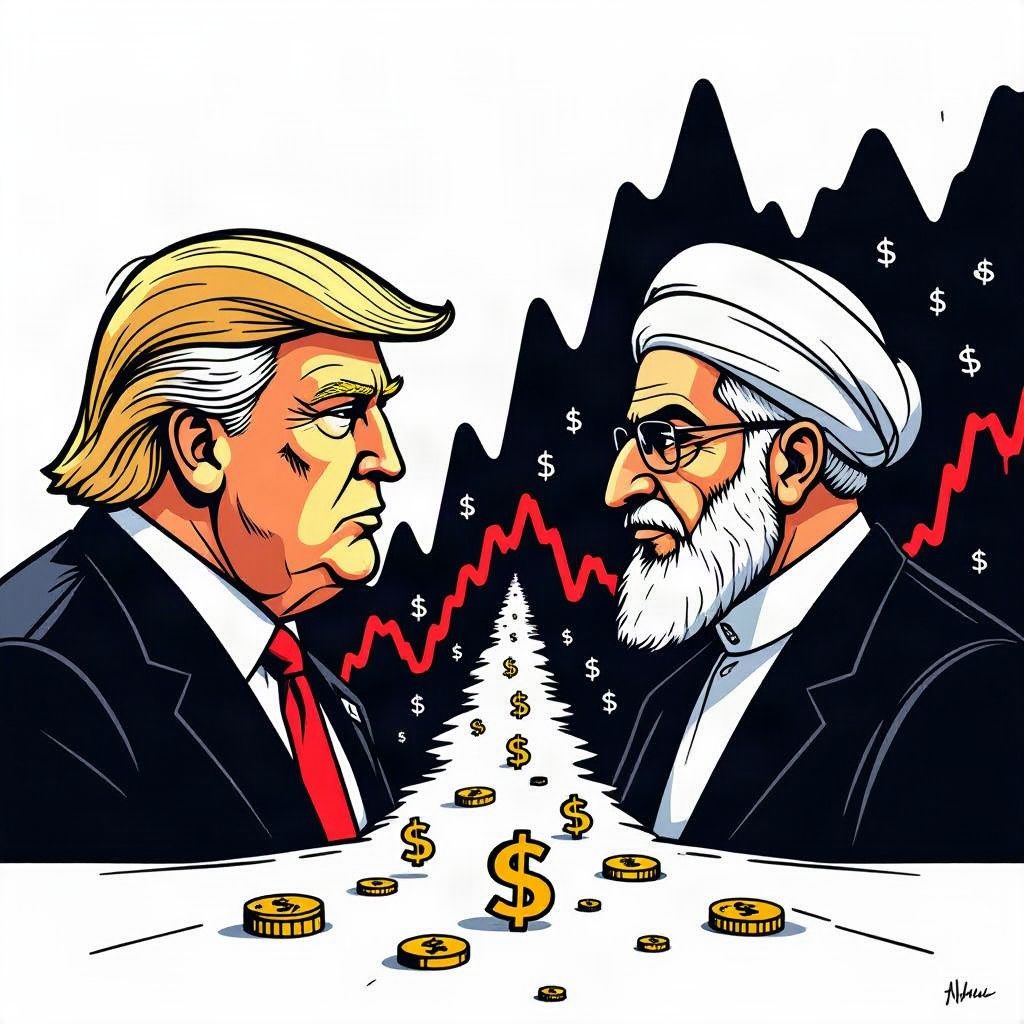
Tehran warned Washington of ‘unfinished business’ following renewed strike threats from Donald Trump, driving global oil prices up 46% amid ongoing shipping disruptions through the critical Strait of Hormuz.
Diplomatic Threats Intensify Between Washington and Tehran
Tensions between the United States and Iran escalated sharply on 19 October 2026, following a series of hostile exchanges between leadership in Washington, Jerusalem, and Tehran [1][6]. Iranian Foreign Minister Abbas Araqchi issued a direct warning to U.S. President Donald Trump, stating that Tehran also has “unfinished business” following previous military confrontations [2][3]. This rhetoric emerged after President Trump suggested on 18 October 2026 that the U.S. would “soon finish the job” regarding its conflict with the Islamic Republic, a statement he posted on Truth Social while endorsing Israeli Prime Minister Benjamin Netanyahu [7][8]. Araqchi countered by asserting that during the last attempt to “finish the job,” Iran emerged stronger, and he questioned whether the U.S. President wished to “try luck again” [2][7]. The Iranian diplomat explicitly accused Prime Minister Netanyahu of pushing Washington toward another war to avoid imprisonment over domestic corruption investigations, regardless of the consequences for Israel or the U.S. administration [1][3]. These statements were disseminated via social media platforms, marking a public deterioration in diplomatic communications [7].
Military Posturing and Strategic Capabilities
The recent exchange of threats includes discussions of significant military assets, with President Trump referencing the potential use of the GBU-43/B bomb, colloquially known as the MOAB or “mother of all bombs” [1][3]. This escalation follows a period of stalled negotiations that began after a surprise offensive launched by the U.S. and Israel on 28 February 2026 [6][8]. In response to that earlier offensive, Tehran conducted attacks on Israeli territory and U.S. interests in the region, alongside imposing restrictions on navigation in the Strait of Hormuz [3][6]. Military planning continues for potential resumption of hostilities, with reports indicating a third U.S. aircraft carrier is en route to the Middle East [8]. However, the exact arrival status of this carrier remains pending as of 18 October 2026 [alert! ‘status pending as per source’]. Analysts warn that without a diplomatic settlement, the probability of escalation remains high, with some experts suggesting Trump cannot declare victory yet cannot leave without further action [8].
Economic Repercussions and Energy Markets
Global energy markets have reacted volatily to the geopolitical instability, with oil prices increasing by 46% to reach $104 per barrel since the attacks on 28 February 2026 [8]. Concurrently, gasoline prices have risen to approximately $1.15 per liter, reflecting the strain on supply chains and shipping routes [8]. The Strait of Hormuz remains a critical flashpoint, recognized as a chokepoint through which 20% of global oil flows [8]. Disruptions in this corridor, combined with intensified fighting in Yemen between Iranian-backed Houthis and Saudi-backed forces, have contributed to the complex security environment [6][8]. The U.S. Department of State’s Bureau of Consular Affairs has advised Americans in the Middle East to exercise heightened vigilance due to the risk that Iran or its proxies could target U.S. interests throughout the world [6]. These economic indicators suggest that prolonged conflict could sustain upward pressure on energy costs globally.
Political Timelines and Regional Stability
The escalation occurs against a backdrop of critical political deadlines in both the United States and Israel. Israel’s national election is scheduled for 27 October 2026, leaving 8 days until voters decide on leadership amidst the security crisis [8]. U.S. midterm elections follow shortly after on 3 November 2026, adding pressure to the Trump administration’s foreign policy decisions [8]. Analysts anticipate a potential increase in regional escalation following the U.S. midterm elections, as political constraints may shift toward cementing a foreign policy legacy [8]. A Pew Research Center poll released on 11 October 2026 indicated that 64% of Americans disapprove of Trump’s handling of military action against Iran, complicating the domestic political landscape [8]. While some administration officials assess Iran as currently weak, skepticism remains among analysts regarding whether additional strikes will induce regime collapse or a nuclear deal before the next presidential term begins in January 2029 [8].
Sources
- www.andaluciainformacion.es
- www.democrata.es
- www.europapress.es
- www.iranintl.com
- www.facebook.com
- abcnews.com
- www.clevelandjewishnews.com
- www.timesofisrael.com