Global Markets Anticipate Shifts as Putin Signals Potential End to Ukraine Conflict
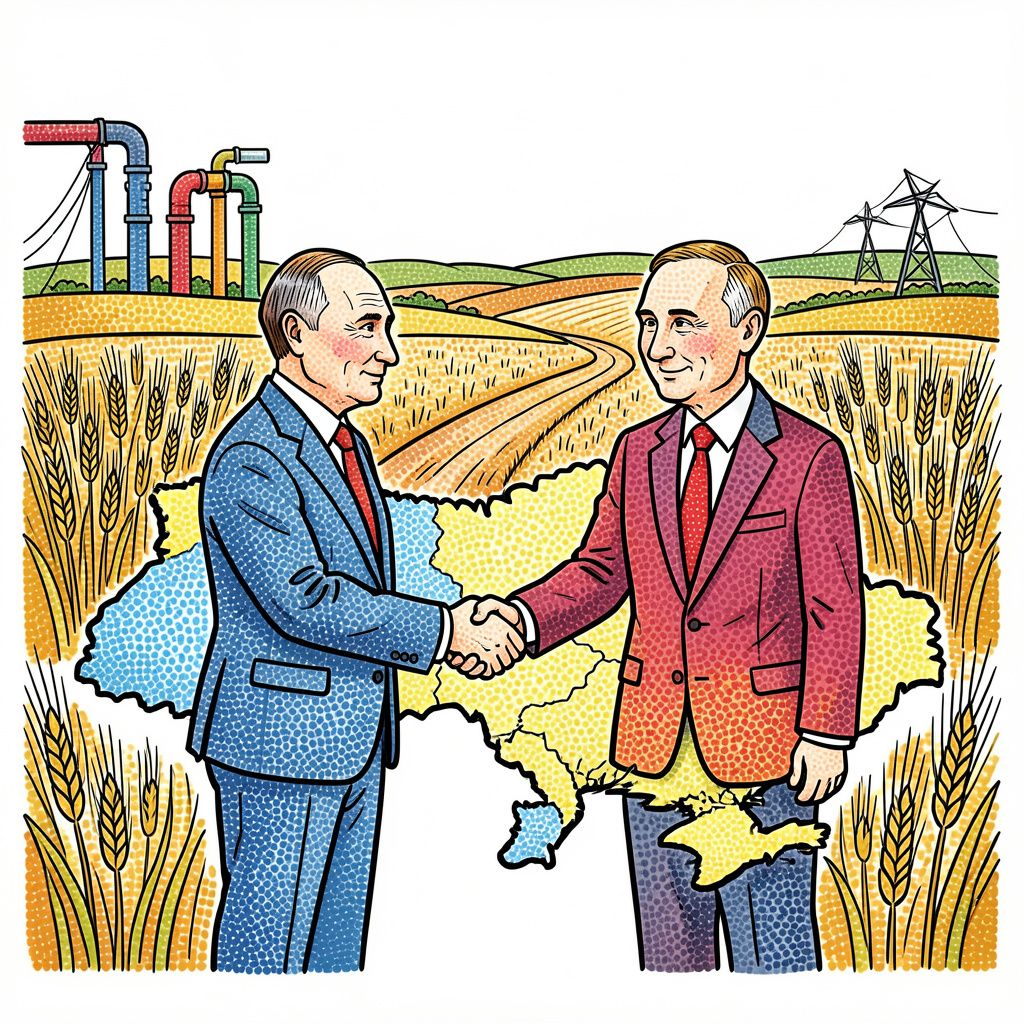
Moscow, Sunday, 10 May 2026.
As Putin hints the Ukraine conflict is concluding amid a U.S.-brokered ceasefire, investors are closely evaluating imminent shifts in global energy supply chains and agricultural commodity pricing.
A Subdued Parade and a Brokered Ceasefire
During the annual Victory Day celebrations in Moscow’s Red Square on May 9, 2026, Russian President Vladimir Putin delivered a notable assessment to reporters, stating that the conflict in Ukraine is “coming to an end” [1][2][6]. The remarks were made following a military parade that was conspicuously scaled down compared to previous years [1][2][3]. For the first time in nearly two decades, the procession lacked heavy military hardware, a decision officials attributed to the “current operational situation” and overriding security concerns [2][3][5]. To further ensure public safety during the event, authorities restricted mobile internet and text messaging services in the capital [3][5]. Prior to the parade, Putin was seen speaking with veterans, maintaining the traditional optics of the holiday despite the missing artillery [4]. Notably, the parade also featured the participation of North Korean troops, serving as a public tribute to Pyongyang’s ongoing alliance with Moscow [3][6].
Geopolitical Maneuvering and Energy Markets
As the conflict enters its fifth year, the diplomatic framework for a permanent resolution is beginning to take shape, carrying significant implications for global energy supply chains [3]. Putin has expressed a willingness to meet with Ukrainian President Volodymyr Zelenskyy in a third country, but with a strict caveat: the meeting must be the final step to sign a comprehensive, long-term peace treaty, rather than a forum for negotiations [2][3][6]. When it comes to forging new European security arrangements, the Russian leader explicitly identified former German Chancellor Gerhard Schröder as his preferred negotiating partner [1][2][6]. This preference underscores Moscow’s strategy of engaging with European figures historically amenable to Russian energy integration, though Zelenskyy previously condemned Schröder as “disgusting” for his meetings with Putin back in 2022 [1].
European Realignments and Economic Implications
Broader European leadership is also signaling a pragmatic approach to future relations with Moscow. On May 2, 2026, European Council President António Costa stated that there was “potential” for the European Union to negotiate directly with Russia when the timing is right [1][2][7]. Costa noted that he was actively consulting EU leaders on the matter and indicated that Zelenskyy favored such a move [2]. For multinational corporations and institutional investors, these diplomatic overtures are critical data points. Currently, Russian forces control just under one-fifth of Ukrainian territory, having failed to capture the entirety of the Donbas region [1]. If a long-term historic perspective is finalized into a treaty, as Putin suggested [6], the subsequent lifting of trade barriers could unlock billions in reconstruction contracts and drastically alter the pricing matrix for agricultural exports from the Black Sea region [GPT].
Sources
- www.theguardian.com
- www.bbc.com
- www.cbsnews.com
- www.instagram.com
- seligerlife.ru
- www.aljazeera.com
- www.dw.com