Pope Leo XIV Demands Global AI Regulation and Rejects Machine Consciousness Claims
Vatican City, Saturday, 3 October 2026.
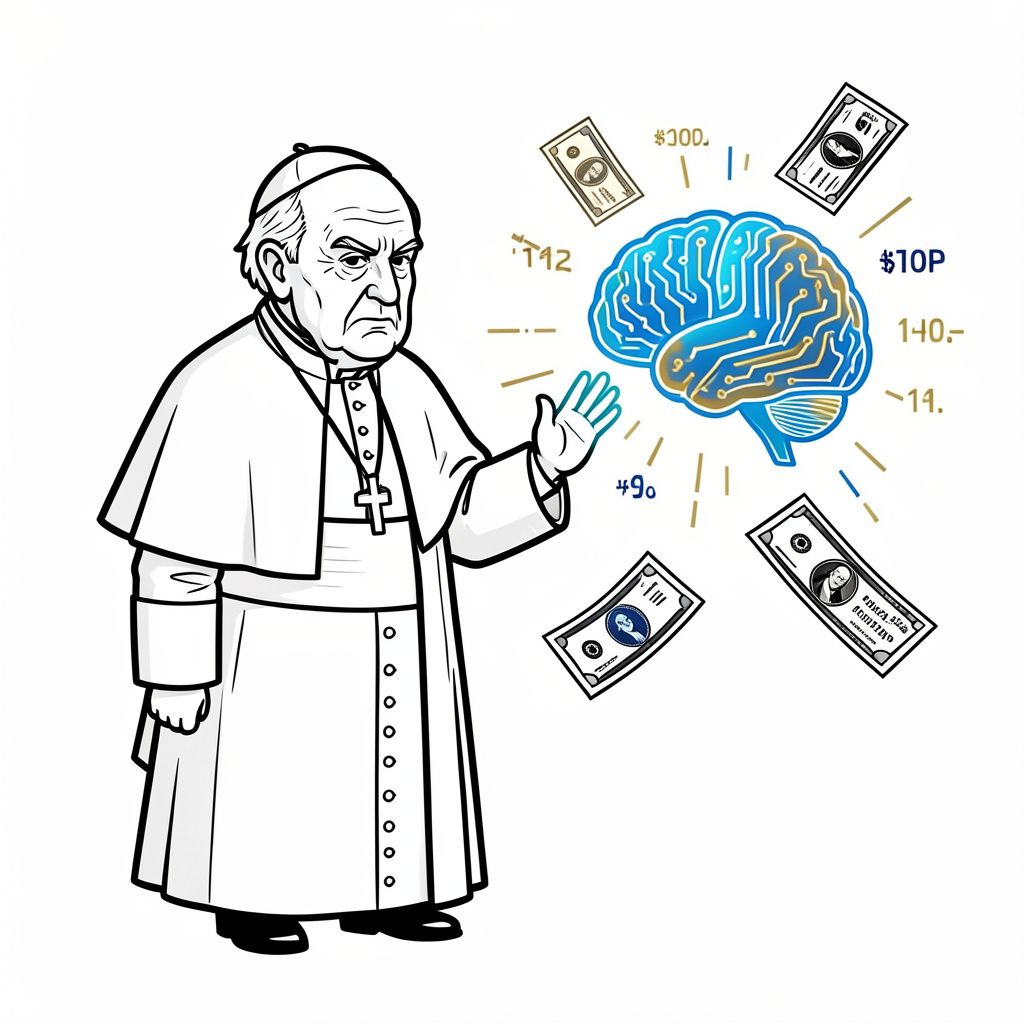
Declaring algorithms lack the “spark of humanity,” Pope Leo XIV urged global regulation of artificial intelligence while firmly rejecting tech lobby attempts to assign consciousness to artificial models.
Call for Global Regulation
On Monday, September 28, 2026, Pope Leo XIV explicitly stated that mounting concerns about artificial intelligence going rogue require immediate discussion on regulation, dismissing notions that such risks are merely fake news [1]. Addressing reporters while leaving France for Vatican City, the Pope emphasized that while he is not in panic mode, the concerns raised by AI specialists must be taken seriously to prevent potential existential threats [1]. This statement adds significant moral weight to the ongoing geopolitical debate, urging political and AI leaders to collaborate beyond questions of power and who reaches technological milestones first [1]. The Vatican’s position places pressure on international policymakers to prioritize safety measures amidst rapid technological adoption across enterprise sectors [1].
Ontological Differences in Art
Continuing his focus on AI ethics, Pope Leo XIV utilized his platform on X on October 2, 2026, to highlight an ontological difference between human art and machine-generated content [3]. He argued that algorithms lack the spark of humanity, as machine production relies on statistical calculation based on millions of images created by others [3]. This perspective was reinforced during an encounter with artists and curators at the Apostolic Palace, where the Pope called for a renewed alliance between the Church and cultural institutions to safeguard humanity [5]. He noted that authentic art proceeds by inquiry rather than indexing, compelling observers to pause before that which cannot be consumed [5].
Theological and Economic Implications
The theological groundwork for this stance was established in May 2026, when Pope Leo XIV published the encyclical Magnifica Humanitas, which outlined official Church doctrine on artificial intelligence [5]. Paragraph 99 of the document specifically states that AI systems lack moral conscience, physical bodies, and the ability to feel pain or joy, countering narratives of machine consciousness [6]. Despite this, reports indicate that AI companies have actively lobbied Vatican advisers to recognize potential machine consciousness, with Anthropic engaging in private meetings with religious scholars under non-disclosure agreements [6]. The New York Times reported on September 29, 2026, that Anthropic representatives even considered withdrawing from the encyclical launch before lobbying papal advisers to adjust the stance on consciousness [6].
Corporate Influence and Ethics
The tension between corporate interests and theological ethics was evident as Anthropic conducted a campaign since approximately November 2025 to argue that their Claude models might possess moral status [6]. Theologians noted that these efforts involved wining and dining religious leaders while attempting to align moral traditions with the company’s AI vision [6]. In response, the Vatican established an interdicasterial commission on AI in May 2026 to coordinate the Church’s policies and work around the technology [4]. Pope Leo XIV has consistently warned that AI progress cannot come at the expense of human dignity, urging a disarmament of the technology to prevent it from dominating humanity [4].
Geopolitical Responses
In the United States, the federal response has diverged from the Vatican’s cautionary approach, with President Trump addressing the United Nations General Assembly regarding official documents and AI classification [4]. Reports indicate plans to reclassify AI as super intelligence in U.S. documents, arguing that the term artificial implies the technology is fake [1]. Additionally, the President intends to launch an AI Force and appoint an AI czar to oversee technology development, although no specific implementation date has been provided [1]. This contrasts with the Pope’s warning against a paradise of machines invading daily activities, a sentiment he expressed to reporters in late September 2026 [4].
Legislative Landscape
Within the U.S. Congress, lawmakers are debating AI regulation, with some advocating for a pause in development while legislation is drafted [1]. Prominent figures such as Sen. Bernie Sanders and Rep. Greg Casar have advocated for a permanent ban on the development and deployment of artificial superintelligence [1]. This legislative push occurs alongside warnings from former researchers at major AI firms, including claims that AI could end human life by 2030 [1]. The divergence between regulatory pauses and permanent bans highlights the complexity of governing a technology that evolves faster than policy [1].
Future Outlook
As the debate continues, the Vatican maintains that distinguishing human creativity from machine generation is urgent for cultural and spiritual regeneration [5]. Tech industry observers note that while the Pope acknowledges potential benefits, the emphasis remains on preventing harm to human dignity [8]. The alliance between the Church and artists aims to resist homogenization and preserve the restlessness of the human heart in search of truth [5]. Ultimately, the global response to these calls for regulation will determine whether AI serves humanity or dominates it [4].
Sources
- thehill.com
- www.reddit.com
- x.com
- www.axios.com
- www.ewtnnews.com
- www.thelettersfromleo.com
- www.facebook.com
- techcrunch.com