Election Day Closures Spotlight Growing Public School Shutdowns Nationwide
Washington, Tuesday, 3 November 2026.
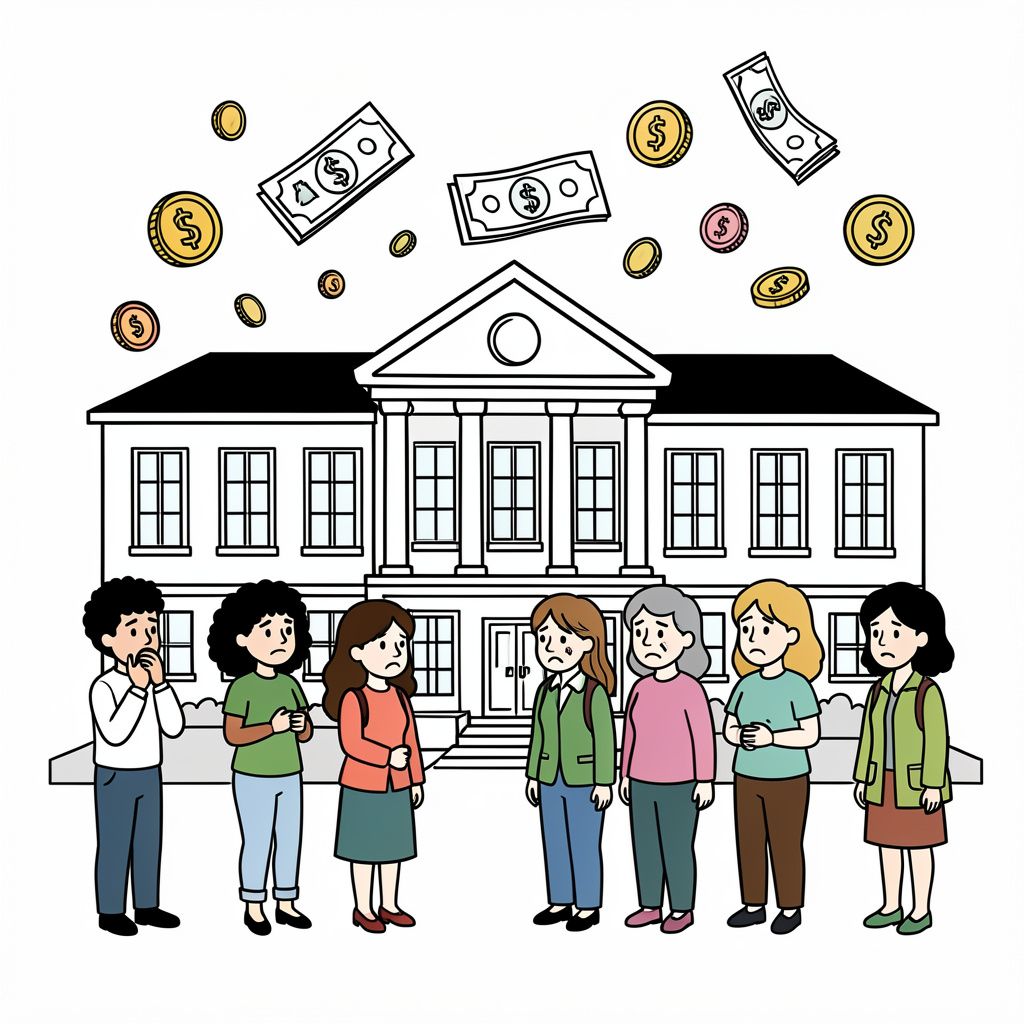
While millions of students stay home for voting today, national public school enrollment is projected to drop 7.5%, driving major ballot decisions on long-term campus closures and funding.
Election-Driven School Closures Disrupt Daily Life Across Three States
Public schools in Illinois, Alabama, and Tennessee shuttered their doors today as Election Day 2026 transformed campuses into polling sites—a logistical shift now routine since the COVID-19 era. In Alabama, Mobile County Public Schools and Lee County Public Schools canceled in-person classes to ease congestion at polling locations, shifting 59,000 students to virtual learning days [1]. Illinois followed suit: Chicago Public Schools, the state’s largest district, canceled classes entirely, while suburban districts including Wilmette District 39 and Indian Prairie School District 204 joined the closure wave [2]. Tennessee mirrored this trend; Nashville’s Metro Public Schools shuttered for parent-teacher conferences, with neighboring districts like Cheatham County and Wilson County also canceling classes [4]. Mobile County Probate Judge Mark Erwin framed the closures as a pandemic-era innovation to reduce ‘frustration for parents and voters’ alike [1].
Demographic Decline Fuels Broader Closure Debates
The closures arrive amid a historic contraction in U.S. public school enrollment, projected to fall 7.5% between 2019 and 2031—a decline driven by post-pandemic birthrate drops and expanded school choice programs [3][GPT]. Carrie Hahnel, partner at Bellwether Education Partners, noted that closures remain politically toxic, yet some candidates now argue consolidation is necessary to align ‘schools with the number of students we have’ [3]. Minneapolis Public Schools, serving 29,000 students, delayed closure discussions until 2027 despite enrollment pressures [3]. Meanwhile, Boston’s school district faces immediate turmoil: Mayor Michelle Wu and Superintendent Mary Skipper proposed closing Charlestown High School and two smaller schools, citing ‘half-empty buildings’ and low enrollment—Charlestown High’s student body has shrunk 32% in three years [6]. Wu argued public funds should serve ‘students, not empty buildings’ [6].
Ballot Initiatives and School Board Races Amplify Stakes
Today’s midterm elections carry outsized weight for education policy. Over 12 states are voting on school funding referendums and school board races that could accelerate or stall closures [3]. In Ohio, gubernatorial candidate Vivek Ramaswamy framed declining enrollment as an ‘accounting debate’ divorced from outcomes—a stance echoing national GOP skepticism toward federal education funding [3]. Noelle Ellerson Ng, chief advocacy officer for the School Superintendents Association, warned that congressional funding cuts force state and local districts to ‘cover shortfalls’ by reallocating budgets, risking further school closures [3]. In Boston, where Charlestown High students staged walkouts and a petition campaign erupted, City Councilor Julia Mejia plans to introduce a resolution calling for a postponement of the December 2 School Committee vote on closures [6].
Long-Term Fiscal and Labor Market Implications
The closure trend has ripple effects beyond classrooms. Districts like Chicago Public Schools, which canceled classes today, lose an estimated 110000 instructional days annually due to polling-site logistics [2][GPT]. Suburban districts such as Oswego Community Unit School District 308 in Illinois face similar trade-offs, with closures disrupting working parents’ schedules and local tax bases already strained by enrollment declines [2][GPT]. Experts warn that without policy interventions, closures could exacerbate labor shortages in education and strain public transit systems designed around school routes [3][GPT]. Marguerite Roza of Georgetown’s Edunomics Lab cautioned that legislative ‘hold harmless’ policies—temporary funding protections for districts—are ‘expensive’ and unlikely to scale, leaving shrinking districts with dwindling options [3].