Trump Replaces Midwestern Rallies with Virtual Campaign Sprint
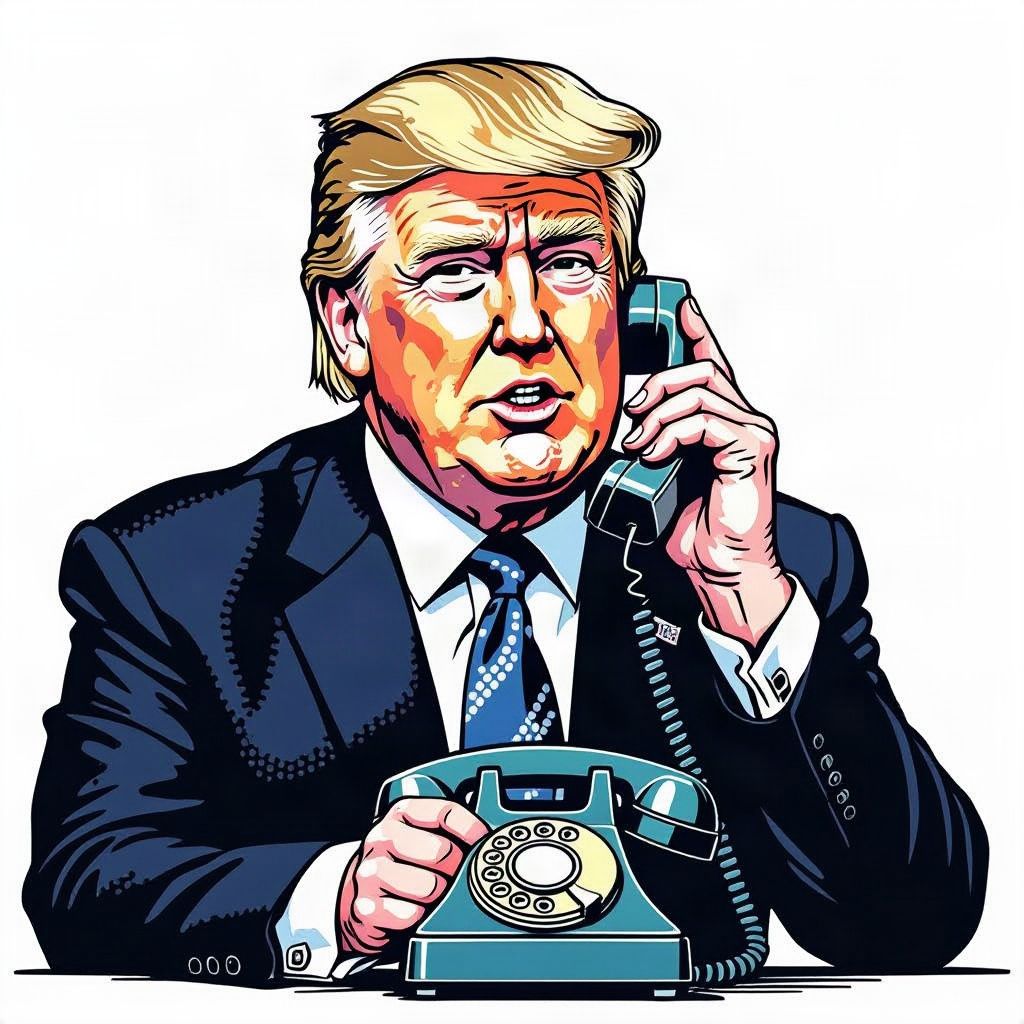
Des Moines, Friday, 30 October 2026.
Facing tight Senate races, Donald Trump canceled weekend rallies in Kansas and Iowa, shifting to twenty phone-in events to reach voters across competitive battleground states ahead of Tuesday’s election.
Cancelation of In-Person Events
President Donald Trump abruptly canceled in-person campaign rallies scheduled for Salina, Kansas, and Dubuque, Iowa, which were planned for 31 October 2026 and 1 November 2026, respectively [1][5][7]. The Salina event was to be held at Hangar 509 of the Salina Regional Airport [6]. In lieu of travel, the Trump campaign announced a 72-hour tele-rally sprint involving nearly 20 virtual campaign events across competitive states ahead of the 3 November 2026 midterm elections [1][5][7]. Republican National Committee (RNC) Chairman Joe Gruters framed the shift as a strategic move to maximize voter engagement in the final stretch, asserting that ‘voters across the country want to hear from President Trump before Election Day’ [1][5].
Rationale and Political Context
The cancellations occurred as Senate races in Kansas and Iowa tightened in the final days of campaigning. In Kansas, Republican Senator Roger Marshall faced Democratic challenger Adam Hamilton in a toss-up contest that had become the most expensive election in state history by 29 October 2026 [1][5][6]. Polling data from late October showed Marshall trailing Hamilton by 4 percentage points in a CNN/SSRS survey, while a September 2026 New York Times/Siena poll had both candidates tied at 45 percent [7]. In Iowa, Republican U.S. Representative Ashley Hinson and Democratic state legislator Josh Turek were competing for an open Senate seat in another closely watched race [1]. Trump had campaigned in Kansas as recently as 19 October 2026 and in South Carolina on 29 October 2026 for Senator Darline Graham, who was appointed to fill the late Senator Lindsey Graham’s term [1][5][6].
Response to Media Scrutiny and Campaign Adjustments
The decision to cancel the Kansas rally sparked pointed exchanges with the press. During a 29 October 2026 appearance in South Carolina, Trump dismissed speculation about his stamina, telling a Reuters reporter, ‘I feel perfect,’ before launching a personal critique in which he called the reporter ‘disgusting’ and suggested he ‘put yourself in shape, you look like hell’ [4][8]. The White House and RNC defended the pivot to tele-rallies as an opportunity to ‘highlight his accomplishments and expand his reach across the country,’ emphasizing a planned series of over 20 virtual events in the closing days before the election [1][5][7]. RNC sources cited high demand from candidates and the need to adapt to maximize outreach amid shifting voter priorities [7].
Broader Campaign Landscape and Polling Dynamics
The strategic recalibration unfolded against a backdrop of declining presidential approval ratings, which stood at approximately 32 percent in a Reuters/Ipsos survey released on 26 October 2026—an increase of 1 percentage point from a previous low recorded around 19 October 2026 [7]. Analysts noted that rising fuel costs linked to the conflict in Iran had contributed to falling approval ratings and prompted some Republicans in battleground states to distance themselves from Trump’s national brand [7]. The GOP sought to counter an enthusiasm gap with intensified voter-turnout operations, as polls indicated Democrats held an edge in several key races ahead of the 3 November 2026 midterms [GPT].
Sources
- www.newsfromthestates.com
- www.washingtonpost.com
- www.thehill.com
- www.pbs.org
- www.newsfromthestates.com
- www.ksn.com
- www.thehill.com
- www.pbs.org