Trade Dispute Escalates as United States Considers Renaming Lake Ontario
Washington, Tuesday, 25 August 2026.
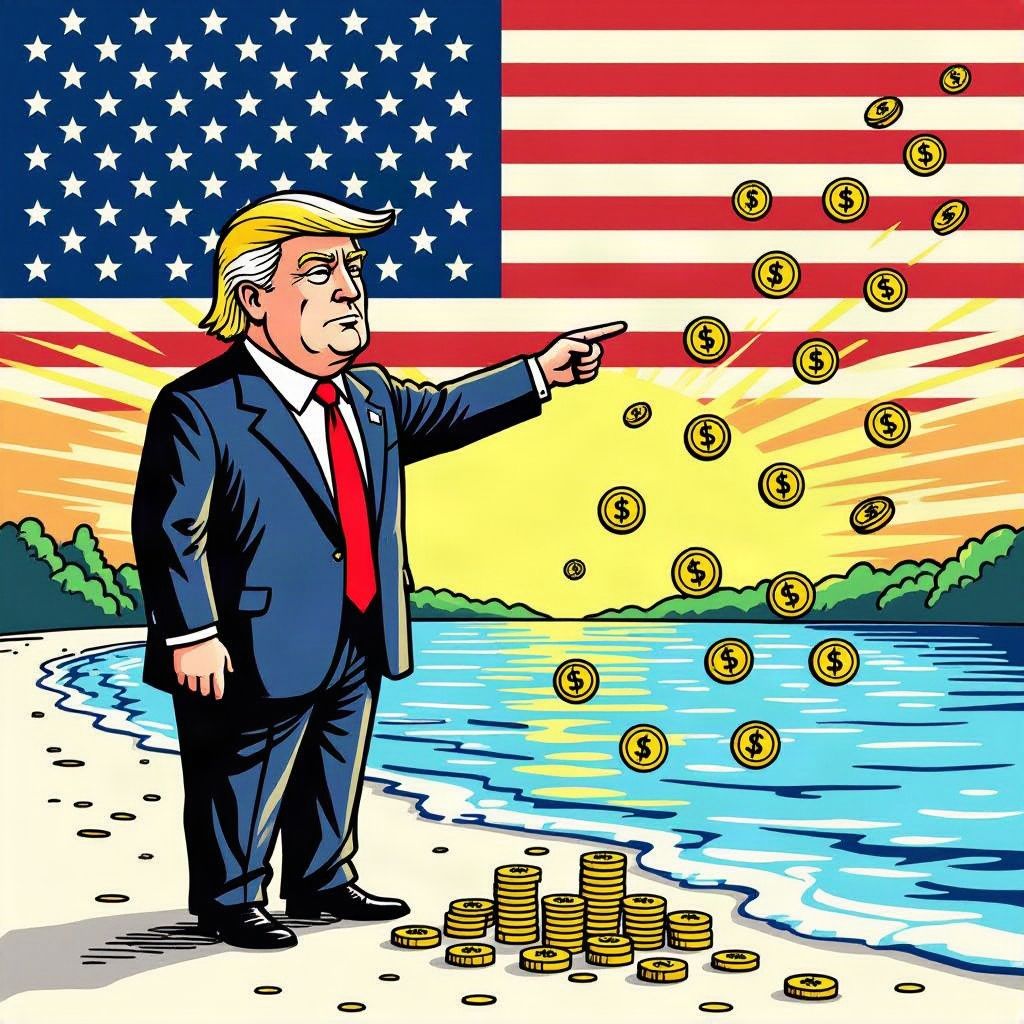
Escalating US-Canada trade tensions hit a symbolic low as President Trump proposed renaming Lake Ontario to “Lake America” following 50 percent tariffs and suspended cross-border negotiations.
From Broken Negotiations to Territorial Rhetoric
The current diplomatic standoff follows the recent collapse of cross-border trade negotiations, which fell apart after Canada rejected late-stage American demands [1]. In response to the breakdown, both nations prepared to implement matching 50% tariffs, threatening up to $20 billion in bilateral trade and disrupting highly integrated North American supply chains [1]. However, what began as a standard, albeit severe, trade dispute has rapidly devolved into an unprecedented rhetorical clash over shared geographical assets [2][3][4].
The Proposal to Rename Lake Ontario
On the morning of Tuesday, 25 August 2026, President Donald Trump escalated the conflict by posting on Truth Social that the United States is giving “serious consideration” to changing the name of Lake Ontario to “Lake America” [2][4]. Trump justified the proposed change by stating that the U.S. does not expect to conduct much business with the province of Ontario in the future [2][4]. This is not the first time the administration has targeted geographical names during geopolitical disputes; in 2025, President Trump used an executive order to rename the Gulf of Mexico to the “Gulf of America” [4].
A War of Words and Tariffs
The symbolic renaming proposal comes on the heels of concrete economic threats. Over the weekend of 22–23 August 2026, the United States imposed a new round of 50% tariffs on Canadian exports, valued at $28 billion according to some trade trackers [3], or $20 billion according to others [4]. On Monday, 24 August 2026, President Trump intensified pressure by threatening additional 50% tariffs on Canadian vehicles, auto parts, steel, and aluminum, warning Canadian leadership to “fall in line” or face consequences far worse than the active tariffs [2][4].
Canadian Leadership Rejects U.S. Demands
Canadian officials have firmly rejected Washington’s aggressive posture. On Monday, 24 August 2026, Ontario Premier Doug Ford publicly criticized President Trump, calling him a “dictator,” a “bully,” and “the king of bankruptcies” [3]. Simultaneously, Canadian Prime Minister Mark Carney suspended trade talks on 21 August 2026, citing U.S. demands that threaten Canadian sovereignty [3]. Carney stated that Canada would only return to the negotiating table if the United States ceases treating its northern neighbor as a “subsidiary” [4], accusing Washington of actively attempting to destroy Canada’s major automotive, steel, and aluminum industries [2][4].
Economic Safeguards and Retaliatory Measures
As the trade war deepens, Ottawa is preparing defensive and offensive economic measures. On Tuesday, 25 August 2026, Canadian Finance Minister François-Philippe Champagne and three other cabinet ministers are scheduled to announce targeted support packages for domestic workers affected by the U.S. tariffs [2][4]. To counter the American tariffs, Canada is expected to announce its formal retaliatory measures on 25 or 26 August 2026, with the tariffs scheduled to take effect on 8 September 2026 [3][4]. Prime Minister Carney suggested that Canada may pivot from a direct dollar-for-dollar tariff match to a highly targeted retaliation strategy designed to protect domestic businesses and laborers while maximizing pressure on U.S. exporters [4].