Lawmakers Face Backlash Over Proposed Fishing Limits in the Chesapeake Bay
Richmond, Friday, 16 October 2026.
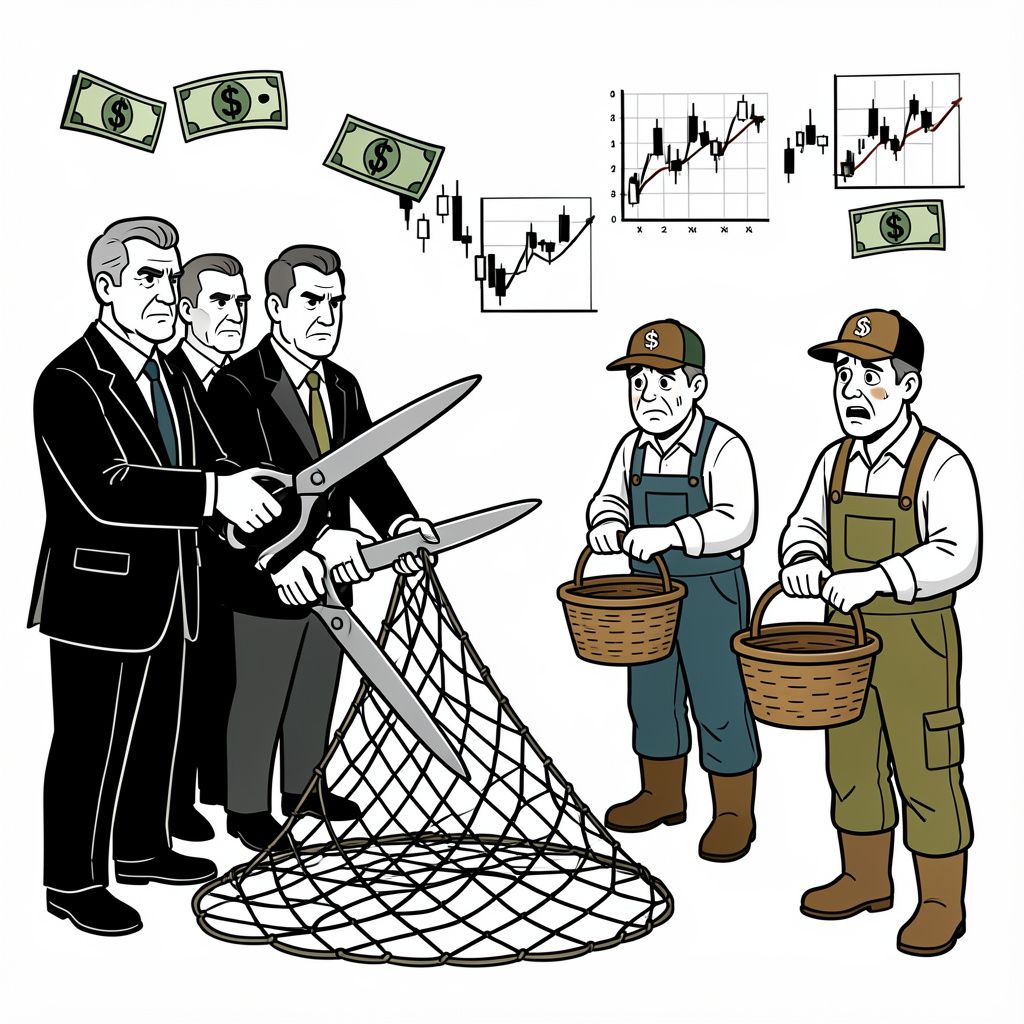
Bipartisan lawmakers face heavy criticism for seeking premature Atlantic menhaden fishing cuts in the Chesapeake Bay, threatening over 500 rural Virginia maritime jobs before scientific studies are completed.
Legislative Pressure Mounts on Chesapeake Bay Fisheries
On October 16, 2026, the Menhaden Fisheries Coalition issued a formal warning that proposed harvest restrictions on Atlantic menhaden fishing in the Chesapeake Bay could devastate hundreds of unionized maritime jobs [1][3]. This announcement follows a letter dated October 9, 2026, from bipartisan lawmakers including Senator Chris Van Hollen (D-Md.) and Representative Sarah Elfreth (D-Md.), urging the Atlantic States Marine Fisheries Commission (ASMFC) to impose additional fishing restrictions before critical research is completed [1][3]. Business leaders and regional economic stakeholders express concern that premature regulatory intervention threatens the stability of rural Virginia’s commercial fishing industry [1][3].
Economic Stakes for Rural Virginia
The economic implications are concentrated in Reedville, Virginia, where Ocean Harvesters and Omega Protein operate facilities supporting approximately 250 to 300 jobs [1][3]. The ASMFC’s Committee on Economics and Social Sciences estimates that over 500 full- and part-time reduction fishery jobs exist across Maryland and Virginia, with hundreds located in Northumberland County [1][3]. The Southern Christian Leadership Conference (SCLC) has intervened in the debate, highlighting that further restrictions pose disproportionate consequences to African American workers, union families, and rural communities [1][3].
Scientific Data and Regulatory Timeline
Scientific justification for the proposed cuts remains a point of contention, as the Virginia Institute of Marine Science reports there is no scientifically established Bay-specific harvest threshold or validated adult abundance index to demonstrate that commercial fishing has depleted menhaden [1][3][5]. Despite this, the congressional letter from October 9, 2026, urges the ASMFC to implement additional restrictions before ongoing research concludes [1][3]. To support data collection, Virginia committed $2 million over two years for Chesapeake Bay menhaden research, while Senator Van Hollen previously secured $2.5 million in federal funding for a Bay-specific menhaden survey, totaling 4.500 million in dedicated research funding [1][3].
Environmental Advocacy and Public Comment
Environmental groups are advocating for significant reductions, with the Choose Clean Water Coalition expressing gratitude for 54 member organizations joining their advocacy for a 50 percent cap on the Atlantic Menhaden Chesapeake Bay reduction fishery [2]. Social media campaigns have emerged urging the public to email comments to the ASMFC by October 19, 2026, to cut the menhaden catch limit by 40 percent to protect whales, bass, and ospreys [4]. Claims regarding ecological impact cite peer-reviewed research showing species who rely on menhaden are struggling, with specific attention drawn to osprey populations where 81 percent of monitored pairs in saltier portions of the Chesapeake Bay failed to raise their young [2][6].
Historical Context and Management Precedents
The ASMFC adopted ecological reference points (ERPs) in 2020, which have guided catch limits since 2021 by using striped bass as a focal predator model to ensure sufficient menhaden prey [1][3]. Historical precedents show volatility in management decisions; during a May 2008 congressional hearing, the ASMFC established a menhaden harvest cap that officials later admitted lacked scientific justification [1][3]. In 2018, the ASMFC reduced the harvest cap to 51,000 metric tons, though then-Chairman James “Jim” Gilmore Jr. stated the amendment lacked sufficient evidence to support the claim that this reduction was necessary to protect the Chesapeake Bay as a nursery area [1][3].
Balancing Stewardship and Economic Justice
The Menhaden Fisheries Coalition, supported by the United Food and Commercial Workers (UFCW) Local 400 and the SCLC, opposes the restrictions, citing potential economic harm to the regional workforce [1][3]. Industry stakeholders are currently cooperating with the University of Maryland Center for Environmental Science, the Virginia Institute of Marine Science, and NOAA on a research roadmap to ensure future decisions are grounded in completed science [1][3]. As the public comment period closes on October 19, 2026, the conflict highlights the tension between immediate regulatory action and data-driven fisheries management [4][5].
Sources
- www.newswire.com
- www.instagram.com
- www.joplinglobe.com
- www.facebook.com
- news.maryland.gov
- www.facebook.com