Iran Faces Severe Economic Strain as Local Currency Plunges to Record Lows
Tehran, Friday, 16 October 2026.
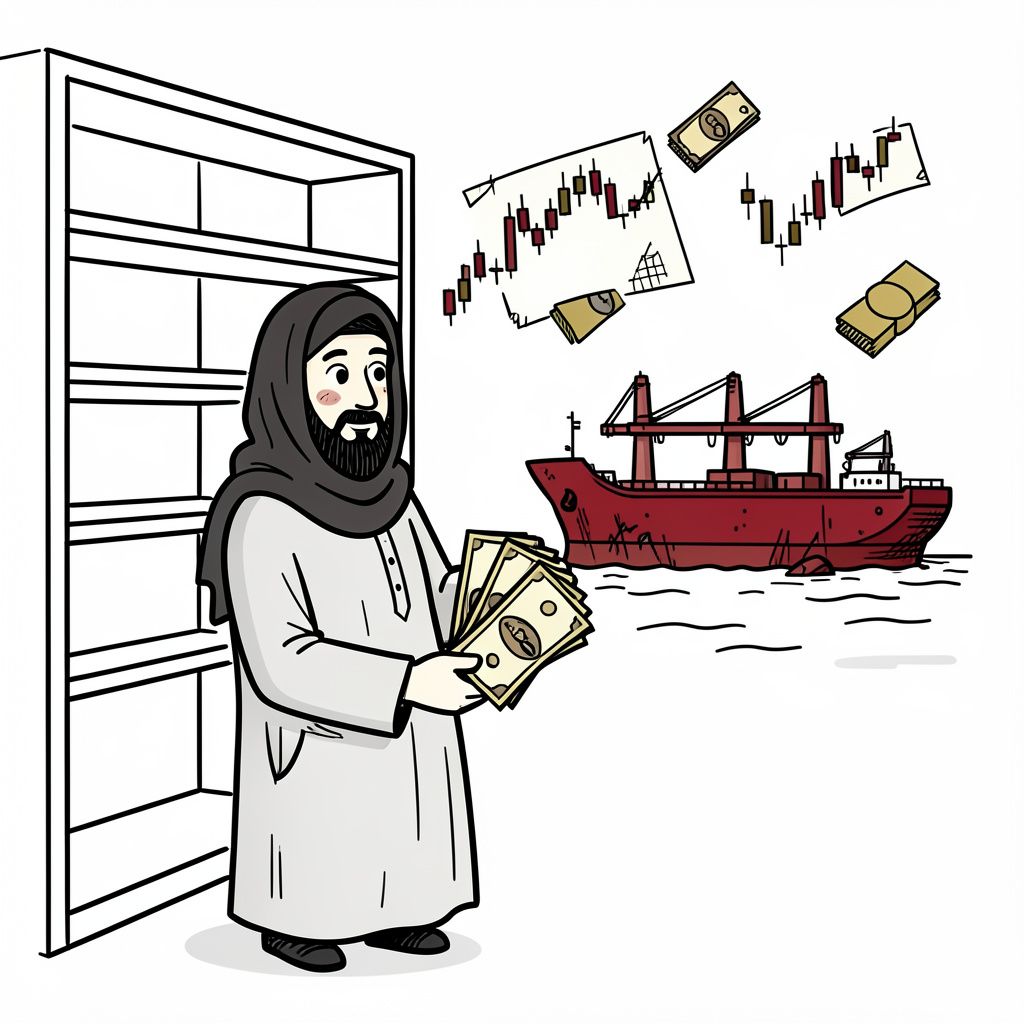
Iran’s crude oil exports reportedly fell to zero in October 2026 amid a U.S. blockade, sending the local currency plunging and driving record inflation and widespread product shortages.
Currency Depreciation and Market Volatility
Iranian business leaders are warning of severe inflation and product shortages as the national currency plunges to historic lows against the US dollar. As of 15 October 2026, open-market exchange rates reached 267,500 tomans per dollar, a level that translates to 2.675 million 2,675,000 rials [1]. By the following day, 16 October 2026, market data indicated the price remained near this peak at 2,674,000 rials, showing minimal change from the previous day’s closing [3]. This severe currency depreciation is eroding consumer purchasing power and heightening operational risks for regional supply chains engaging with Middle Eastern markets [1]. The volatility is not isolated to the dollar; other major currencies such as the Euro and British Pound have also seen significant fluctuations in the Iranian market, with the Euro trading around 3,005,000 rials [4]. Global forex markets show the Iranian rial remains under immense pressure compared to major counterparts like the US Dollar and Euro, which are trading at standard international rates unrelated to the domestic Iranian crisis [6].
Oil Export Collapse and Sanctions Pressure
The economic strain is compounded by a dramatic reduction in Iran’s primary revenue source, with crude oil exports reportedly falling to zero in October 2026 amid a U.S. maritime blockade [2]. This represents a stark decline from approximately 2 million barrels per day in March 2026 to between 220,000 and 255,000 barrels per day by August 2026 [2]. U.S. Treasury Secretary Scott Bessent indicated a continued strategy of financial pressure, stating that Iran would soon exhaust the oil available for sale outside the blockade [2]. The Statistical Center of Iran reported annual inflation at 73.6% in September 2026, with prices 89.8% higher than the previous year [2]. This inflationary spiral is driven by the combination of restricted foreign currency access and the loss of oil revenue, creating a challenging environment for import-dependent sectors [2].
Domestic Policy and Household Impact
In response to the deepening crisis, President Masoud Pezeshkian stated on 15 October 2026 that the country is facing unprecedented economic and infrastructure constraints [1]. The government has introduced new means-testing for electronic food subsidies, classifying households based on assets such as residential land exceeding 50 billion tomans [1]. Critics argue these measures are temporary; Hadi Mohammadpour, secretary of parliament’s Economic Commission, described the electronic food subsidy as a temporary painkiller that does not meet people’s needs [1]. Meanwhile, the central bank has attempted to stabilize the market, with Governor Abdolnaser Hemmati announcing plans to supply up to $2 billion to the foreign-exchange market [2]. Despite these interventions, the sustainability of the economy relies heavily on the government’s ability to maintain foreign currency access and finance household assistance without causing a collapse in essential service delivery [2].
source1
https://irannewswire.org/iran-inflation-import-pressure-dollar-267500-tomans/