Senate Rejects Proposal to Restrict Lawmakers From Buying Stocks
Washington, D.C., Wednesday, 30 September 2026.
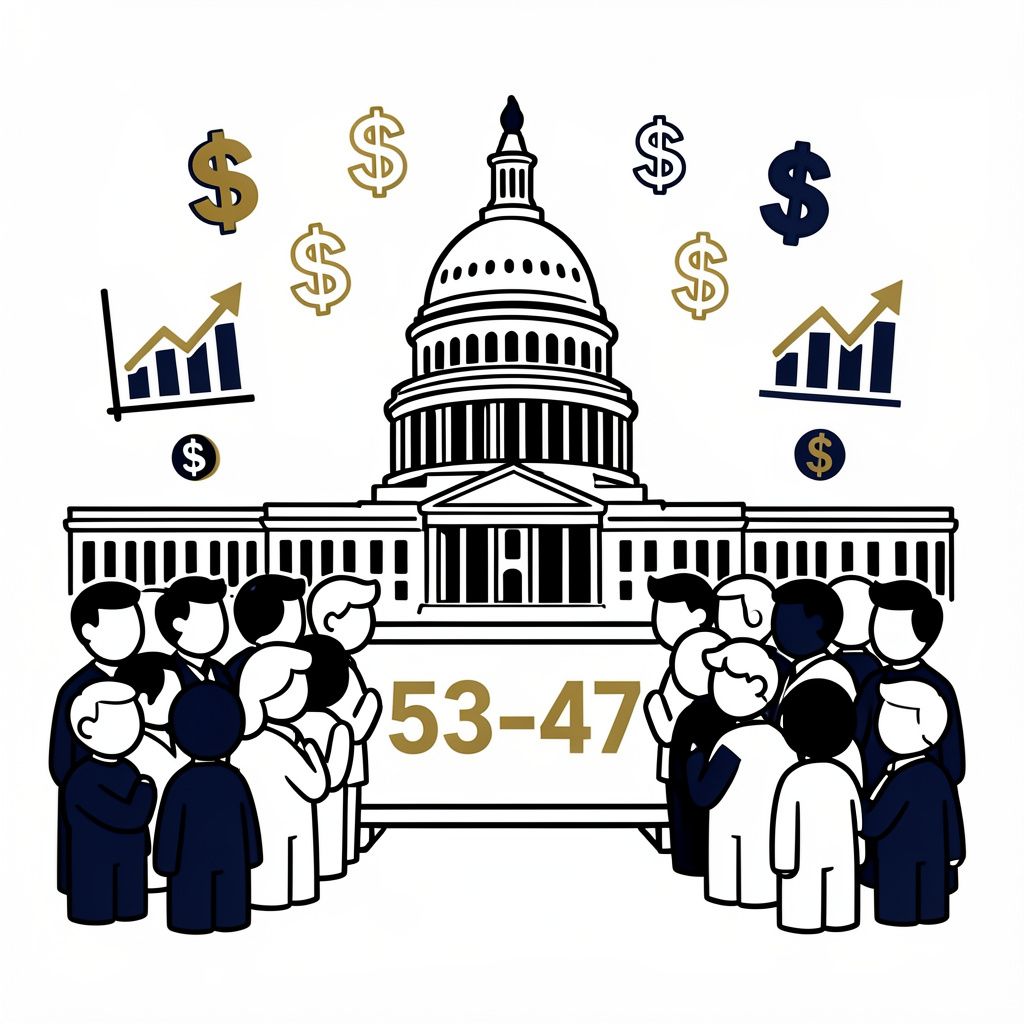
The U.S. Senate blocked legislation restricting lawmaker stock trading in a 53-47 vote on Wednesday, after lawmakers traded over $635 million in securities during 2025 alone.
Senate Blocks Stock Trading Bill
On Wednesday, September 30, 2026, the United States Senate blocked legislation aimed at restricting stock trading by members of Congress in a 53-47 vote [1][3][5]. The measure, known as the “Stop Insider Trading Act,” failed to reach the 60-vote threshold required to overcome procedural hurdles and advance to a final passage vote [1][4]. This legislative failure maintains the status quo for political leaders trading securities while in office, despite previous approval of the bill by the House of Representatives in July 2026 [1][7].
Senate Blocks Stock Trading Bill
The vote fell short by 7 votes, highlighting the significant partisan divide surrounding the issue [1][4]. While the House passed the legislation earlier in the year with full Republican support and 13 Democrat votes, the Senate opposition prevented further debate on the measure [3][7]. The bill aimed to prohibit members of Congress, their spouses, and dependent children from purchasing stocks in publicly traded companies, though it allowed existing holdings to remain [1][5].
Partisan Divide Over Provisions
Senate Democratic Leader Chuck Schumer criticized the legislation on September 30, 2026, characterizing it as a “desperate Republican attempt to pretend they’re fighting corruption” [1]. Democrats opposed the bill partly due to a controversial provision requiring photo voter IDs for federal elections, which they labeled a “poison pill” unrelated to financial ethics [1][3]. Schumer further described the proposal as “ineffective as a screen door on a submarine,” arguing it did not constitute a genuine ban on trading [5][7].
Partisan Divide Over Provisions
Conversely, Senate Majority Leader John Thune stated on September 29, 2026, that the bill’s provisions “strike at the very heart of issues that the American people care deeply about” [1]. Thune described the measure as a “common-sense piece of legislation” intended to ensure members of Congress are held to expected standards [3][7]. Republicans intended to use the vote as a campaign point against Democrats ahead of the midterm elections on November 3, 2026, amid voter frustrations over energy prices and interest rates [1][4].
Financial Context and Trading Volume
A study by Common Cause conducted in December 2025 revealed that members of Congress from both parties executed 13,324 trades totaling $635.6 million during 2025 [1][3]. This data underscores the scale of financial activity among lawmakers that the proposed legislation sought to regulate [1]. The legislative failure occurs against a backdrop of high trading volumes, with the bill aiming to mandate seven-day advance disclosure for sales while prohibiting new purchases [3][7].
Financial Context and Trading Volume
Discrepancies exist regarding presidential trading activity, with some media outlets reporting President Donald Trump executed 21,000 securities trades in 2025, while other reports claim 30,000 trades [1][5]. The difference in reported trade counts is 9000 trades, illustrating variations in media reporting on executive financial disclosures [1][5]. The “Stop Insider Trading Act” did not impose restrictions on the President or Vice President, a point of contention for some critics [3][5].
Legislative Outlook and Midterms
In addition to the stock trading bill, the Senate also failed to advance the Ratepayer Protection Act in a 57-43 vote on September 30, 2026 [4][7]. This companion legislation sought to address energy costs attributed to data centers but faced similar Democratic opposition regarding its scope and provisions [4][7]. Both measures are now stalled as Senators prepare to leave Washington for election-season campaigning following the adjournment [7][8].
Legislative Outlook and Midterms
Recent polling cited by Senator Todd Young indicates that 86% of Americans favor banning Members of Congress from trading stocks [6]. The House of Representatives adjourned on September 16, 2026, and is scheduled to reconvene on November 9, 2026, after the midterm elections on November 3, 2026 [7]. The control of both chambers of Congress remains at stake in the upcoming election, with Republicans currently holding slim majorities [1][7].
Sources
- www.yahoo.com
- www.politico.com
- www.cbsnews.com
- www.cnbc.com
- www.nytimes.com
- www.facebook.com
- finance.yahoo.com
- www.facebook.com