Congolese Group Calls for Stricter Mineral Supply Chain Sanctions
Washington, Thursday, 5 November 2026.
A Congolese civic coalition has urged Western governments to sanction illicit mineral networks, exposing critical supply chain vulnerabilities for global technology and electric vehicle manufacturers.
Diaspora-Led Campaign Targets Illicit Mineral Networks
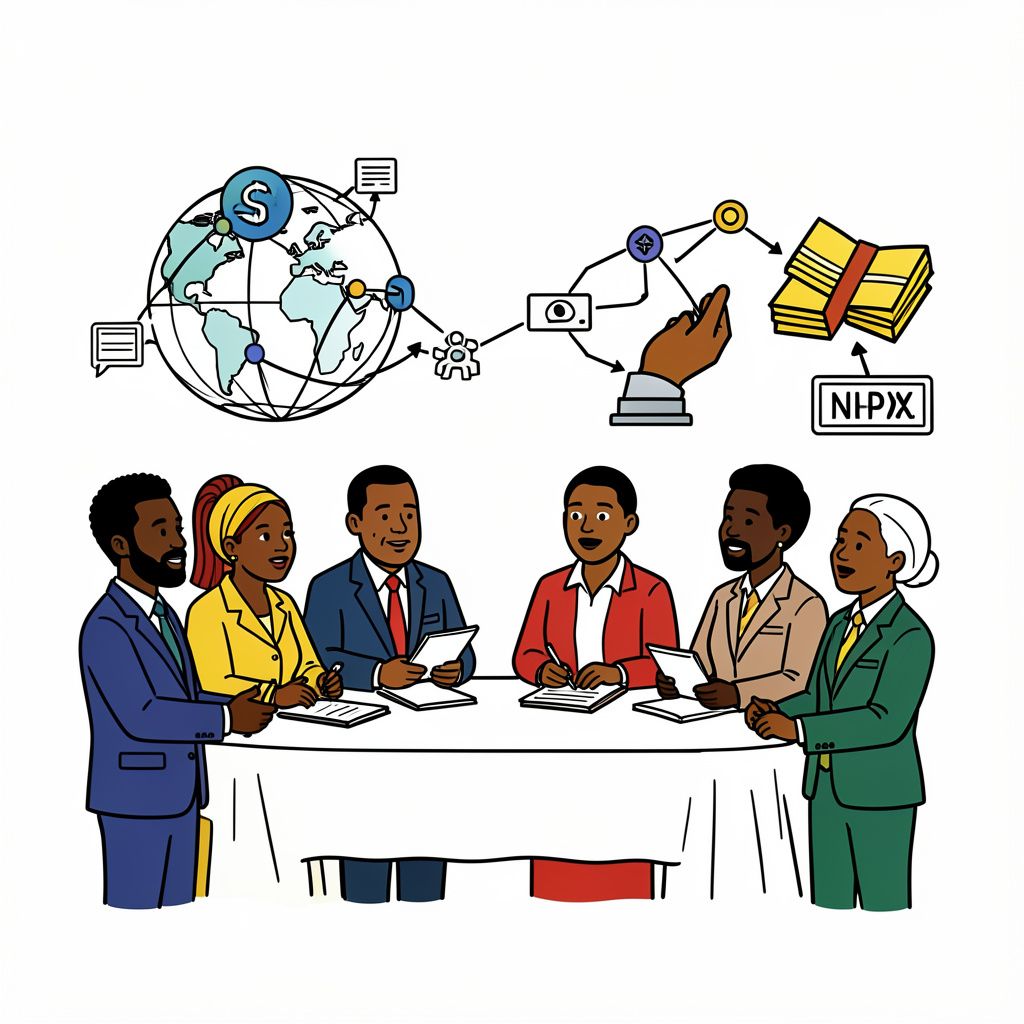
On November 5, 2026, the U.S.-based Congolese diaspora collective USN-USA escalated its campaign against conflict minerals by formally urging the U.S. government, United Nations, and international partners to impose sanctions on financial networks and intermediate brokers facilitating illicit mineral supply chains in the eastern Democratic Republic of the Congo (DRC). The appeal follows the October 12, 2026 formation of the Front de la Révolution Nationale (FRN), a political-military coalition that USN-USA and other observers link to former DRC President Joseph Kabila, who was sanctioned by the U.S. Treasury on April 30, 2026 [1][2]. The FRN’s emergence has intensified concerns over the militarization of mineral-rich regions, particularly in areas where tantalum, tin, tungsten, and cobalt are extracted under the control of armed groups [alert! ‘FRN’s explicit mineral control locations remain unverified in cited sources’].
Supply Chain Risks Amplify for Global Tech and EV Sectors
The diaspora’s call for regulatory action comes at a critical juncture for global supply chains, as the DRC accounts for approximately 70% of the world’s cobalt production—a mineral essential for electric vehicle (EV) batteries—and a significant share of tantalum, tin, and tungsten, which are critical for electronics and aerospace components [GPT]. Western technology manufacturers and automakers face mounting pressure to ensure their mineral procurement practices do not inadvertently fund armed groups or violate emerging sanctions regimes. USN-USA’s demands include mandatory supply chain audits, restrictions on the sale or import of minerals extracted from conflict zones, and sanctions against companies found to be knowingly complicit in illicit trade [1]. The organization’s statement emphasized that ‘the DRC’s natural resources must contribute to the development of its people, not the financing of armed violence’ [1].
Regional Instability and Public Health Overlaps
The mineral crisis in eastern DRC is further complicated by overlapping humanitarian and security challenges. As of October 30, 2026, the DRC’s Ebola outbreak had claimed over 5,000 lives, with more than 10,000 total cases reported, while the country grapples with the presence of armed groups like the M23, which control much of the mineral-rich east [4]. The BBC reported that former President Joseph Kabila was named leader of a new rebel coalition on October 13, 2026, despite his prior denials of links to the M23 [4]. Meanwhile, Rwanda’s role in the conflict has drawn international scrutiny, with the U.S. accusing Kigali of backing the M23 and ‘plundering minerals’ [4][5]. The interplay between health crises and mineral governance underscores the need for a coordinated international response to stabilize the region and disrupt illicit financing networks.