Europe Pays Record Price for Middle East Shipping Crisis
Brussels, Wednesday, 4 November 2026.
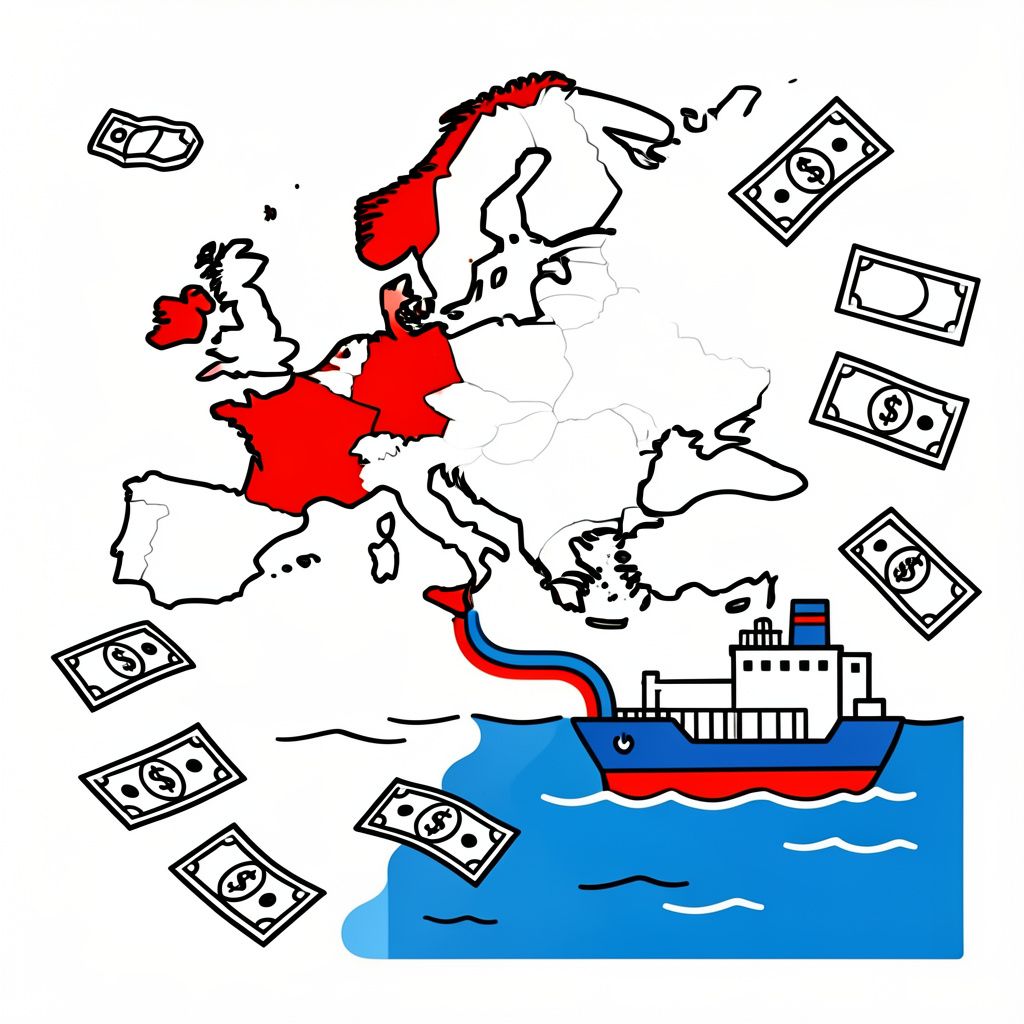
Strait of Hormuz disruptions have cost Europe an extra $142 billion for imported fuel without gaining any additional energy, accelerating urgent plans to end foreign fossil fuel reliance.
Europe’s $142 Billion Energy Shock
European Commission President Ursula von der Leyen delivered a stark warning at the WinWin Brussels Summit on November 3, 2026, revealing that the effective closure of the Strait of Hormuz has forced Europe to spend an additional €127 billion ($142 billion) on fossil fuel imports without receiving a single additional unit of energy [1][8][10]. This unprecedented financial burden comes at a time when the European Union is already grappling with the aftermath of Russia’s invasion of Ukraine, which had previously disrupted 45% of EU gas imports [4][8]. The crisis has exposed Europe’s vulnerability to geopolitical supply chain disruptions, with von der Leyen emphasizing that importing oil and gas inherently means ‘importing the shocks and crises that come with them’ [1][8][10].
From Crisis to Cost: The Timeline of Escalation
The economic impact of the Strait of Hormuz closure has unfolded in stages since the conflict escalated in early 2026. By April 2026, seven weeks into the war, the European Commission initially estimated additional fossil fuel import costs at €24 billion ($27 billion) [4][8]. This figure ballooned to over €100 billion ($111 billion) by late September 2026, according to EU Energy Commissioner Dan Jørgensen [4][8]. The cumulative cost since the crisis began has now reached €127 billion ($142 billion) through October 31, 2026 [1][8][10]. This represents a 425.926 = 425.93% increase in additional energy costs over the initial April estimate, illustrating the accelerating financial strain on European economies [4][8].
The Strait’s Strategic Significance and Current Reality
The Strait of Hormuz, which carries approximately one-fifth of the world’s traded oil, has been completely disrupted since the Iran war began in 2026 [4][8]. Before the closure, the Persian Gulf supplied over 40% of Europe’s jet fuel and diesel imports [4][8]. Rystad Energy analysis indicates that while Gulf exports have partially recovered to nearly 12 million barrels per day (bpd) from earlier lows, this remains substantially below pre-war levels of approximately 18 million bpd [2]. The security situation has actually deteriorated, with increased attacks on tankers in recent weeks, suggesting that normal trading conditions are unlikely to return soon [2]. Energy transportation and insurance costs now account for more than 30% of a barrel’s cost, compared to around 5% before the conflict [5].
Economic Ripple Effects Across the Continent
The energy crisis has sent shockwaves through European economies, with tangible consequences for businesses and consumers alike. By September 2026, EU drivers faced nearly 50% higher gasoline prices, exceeding $11 per gallon in some markets [4][8]. A weeklong truckers’ strike in Italy in late 2026 disrupted milk deliveries, while inflation reached 5.4% amid the energy crunch [4][8]. The International Energy Agency (IEA) reported on November 3, 2026, that EU gas storage is entering the heating season at its lowest level since 2013, with potential drops below 10% by late March 2027 during a cold winter [4]. These conditions have forced European policymakers to accelerate plans to reduce fossil fuel dependence, with EU officials expecting oil and gas prices to remain above prewar levels until at least the end of 2027 [4][8].
Policy Response: From Crisis Management to Energy Transition
The Strait of Hormuz crisis has become a catalyst for Europe’s energy transition strategy. EU members adopted a ban in January 2026 ending Russian LNG imports by the end of 2026 and pipeline gas by autumn 2027 [4][8]. The European Commission has pledged to achieve climate neutrality by 2050 with a 90% emissions reduction target [4][8]. Von der Leyen emphasized that the clean energy transition is essential not only for climate protection but also for Europe’s competitiveness and independence [1][8][10]. Former US energy envoy Amos Hochstein, speaking at Adipec 2026, warned that the energy crisis extends beyond fossil fuels, noting that AI-driven data center growth is creating fresh pressure on electricity infrastructure [5]. He called for greater investment in resilient infrastructure, including pipelines, electricity interconnections, and alternative supply routes [5].
Global Market Reactions and Geopolitical Implications
The geopolitical dimensions of the Strait of Hormuz crisis continue to reverberate through global energy markets. On November 2, 2026, the United States executed limited strikes against Iran in the Strait of Hormuz, driving Brent crude prices above $106 per barrel in a single-day 2% increase [7]. Financial markets reacted negatively, with the Nasdaq closing lower and semiconductor stocks declining as technology holdings faced volatility [7]. Rystad Energy analysts suggest that while some form of limited agreement between the US and Iran might emerge by mid-2027, fundamental differences remain unresolved [2]. The Middle East situation is expected to remain far from normal through 2027, with energy security concerns extending beyond oil to include LNG markets that have been upended by the conflict [2][3].
Sources
- fortune.com
- oilprice.com
- www.facebook.com
- www.khaleejtimes.com
- www.facebook.com
- wisevoter.com
- x.com
- finance.yahoo.com