Why LNG Prices Are Plunging as the Fed and Europe Reshape Energy Markets
New York, Friday, 19 June 2026.
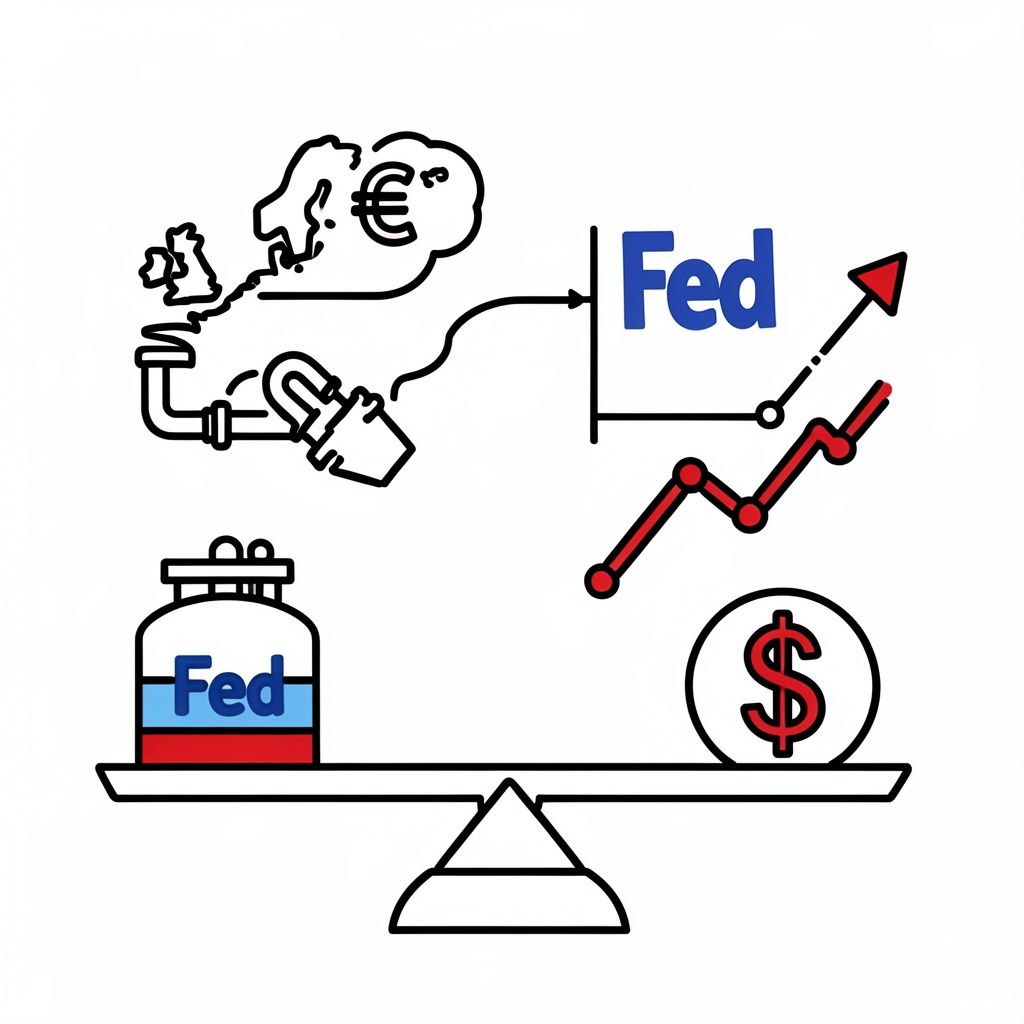
Europe’s LNG imports surged to 428 million cubic meters last week, yet prices crashed 17% in just five days—revealing how Fed policy and shifting energy strategies are rewiring global trade. With the U.S. Henry Hub price barely moving, the real story is Europe’s race to replace Russian gas, creating a high-stakes balancing act between supply security and volatile demand.
The Fed’s Steady Hand Sends Ripples Through Energy Markets
The U.S. Federal Reserve’s latest monetary policy decision on 17 June 2026 has sent shockwaves through global energy markets, with liquefied natural gas (LNG) prices experiencing significant volatility. Under the leadership of newly appointed Chair Kevin Warsh, the Fed maintained interest rates at their current levels, signaling a cautious approach to inflation management despite falling energy prices [7]. This decision has had an immediate impact on LNG markets, as traders recalibrate expectations for industrial activity and energy demand [1]. The Fed’s stance comes at a critical juncture, with inflation still above target levels and the economy demonstrating unexpected resilience [7]. While the central bank has not signaled imminent rate cuts, market observers note that the steady rates may provide some stability to commodity markets, including LNG, which had previously been priced with a geopolitical premium following disruptions in the Strait of Hormuz [1].
Europe’s LNG Surge: Record Imports Meet Falling Prices
Europe’s push for energy diversification has resulted in a record influx of LNG, with total EU flows reaching 427.96 million cubic meters (mcm) in the week ending 17 June 2026 [1]. This surge in imports comes as the continent continues its efforts to replace Russian pipeline gas, a process that has been underway since the escalation of geopolitical tensions in 2022 [GPT]. However, the increased supply has not translated into higher prices. The Dutch Title Transfer Facility (TTF), Europe’s benchmark gas price, plummeted by 17.1% over five trading sessions, falling from an undisclosed prior level to 41.46 as of 17 June 2026 (41.46 - X)/X100 = -17.1 [1]. This sharp decline contrasts with the more modest 0.4% drop in the U.S. Henry Hub gas price, which settled at 3.17 for the same period (3.17 - Y)/Y100 = -0.4 [1]. The concentration of LNG flows is notable, with the top five European terminals accounting for 43.3% of total imports, yielding a Herfindahl-Hirschman Index (HHI) concentration reading of 570.3 [1]. This indicates a moderate level of market concentration, suggesting that while Europe has diversified its LNG sources, a few key terminals continue to dominate the landscape.
Sources
- www.investing.com
- www.facebook.com
- fred.stlouisfed.org
- www.facebook.com
- amp.dw.com
- www.facebook.com
- www.argusmedia.com
- in.investing.com