Iran’s Supreme Leader Breaks Silence: Why the Shocking U.S. Nuclear Deal Was Approved
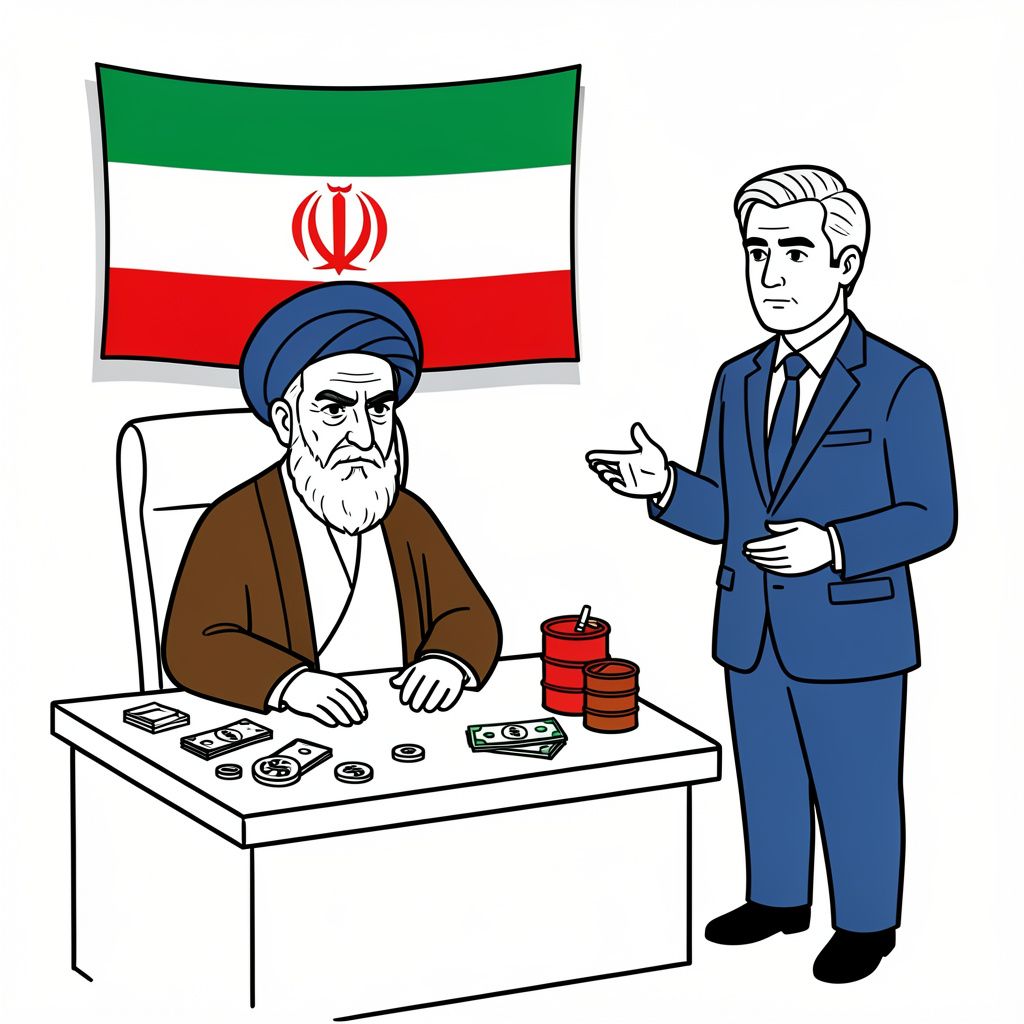
Tehran, Friday, 19 June 2026.
In a rare admission, Iran’s Supreme Leader Mojtaba Khamenei confirmed he authorized a landmark nuclear deal with the U.S. on June 19, 2026—despite personally opposing it. The revelation, framed as a strategic move to ease crippling sanctions and economic pressure, marks a dramatic shift in Tehran’s foreign policy. Khamenei’s approval came only after Iran’s president pledged to protect national interests and resist U.S. ‘excessive demands.’ The deal, already triggering global oil market ripples, could reshape Middle Eastern stability—but with hardliners protesting and Israel rejecting key terms, its future remains uncertain.
A Strategic Retreat: Khamenei’s Calculated Authorization
Iran’s Supreme Leader Ayatollah Mojtaba Khamenei’s June 19, 2026, admission that he authorized direct negotiations and a nuclear agreement with the United States—despite his personal opposition—reveals a strategic calculus aimed at preserving Iran’s regime amid unprecedented economic and military pressure [1][2][3]. Khamenei’s rare public statement, delivered via his Telegram channel, underscores the delicate balance Tehran is attempting to strike: securing sanctions relief while maintaining domestic political credibility and regional influence. ‘I, as a matter of principle, held a different view; however, out of the commitment that the esteemed [Iranian] president—as the head of the Supreme National Security Council—gave to me on his own behalf and on behalf of the other members regarding the safeguarding of the rights of the Iranian nation and the Resistance Front, and his explicit acceptance of that responsibility, I granted my permission,’ Khamenei wrote [1][2]. This carefully worded authorization suggests that Iran’s leadership viewed the deal as a necessary compromise to avoid further economic collapse and military escalation, particularly following the devastating U.S.-Israel joint military operation launched on February 28, 2026 [4][5].
The Deal’s Core: Sanctions Relief and Strategic Concessions
The 14-point Memorandum of Understanding (MOU) signed on June 17, 2026, between Iran and the U.S. includes immediate sanctions relief on Iran’s oil and banking sectors, alongside the lifting of the U.S. naval blockade in the Strait of Hormuz [6][7]. The agreement also mandates a 60-day negotiation period to finalize terms covering Iran’s nuclear program, with the first round of technical talks scheduled to begin in Switzerland on June 20 or 21, 2026 [1][8]. A critical provision of the MOU grants Iran authority to manage the Strait of Hormuz, a chokepoint for 20% of global oil supplies, though Tehran has suspended transit charges for commercial vessels for 60 days [6][9]. U.S. Vice President JD Vance confirmed that Iran would receive no funds or sanctions relief unless it meets its obligations under the agreement, emphasizing that ‘we can slap everything back on if the Iranians don’t make the deal we expect’ [8]. The MOU’s immediate economic impact was evident as Kuwait Petroleum Corporation lifted all force majeure notices on June 17, 2026, with plans to increase oil production to 2 million barrels per day within a week [7].
Domestic Backlash and Hardline Opposition
While Iranian President Masoud Pezeshkian hailed the MOU as a ‘historic document and a message from a powerful Iran,’ the deal has faced significant domestic opposition [6]. Hardliners within Iran’s parliament and the broader political establishment have criticized the agreement as a violation of Khamenei’s red lines, with 60 MPs demanding answers from chief negotiator Mohammad Bagher Qalibaf [6]. Protests outside the Foreign Ministry on June 18, 2026, saw demonstrators calling for the resignation and even death of negotiators, reflecting deep-seated mistrust of U.S. intentions [6]. Analyst Erol Yayboke noted the surprising lack of public support for ending the war, attributing it to skepticism that the conflict is truly over and concerns that the deal entrenches the Iranian regime [6]. This opposition highlights the fragile domestic consensus behind the deal, with Khamenei’s authorization serving as a political shield should negotiations fail. ‘It’s a deal with a regime with no gains for the Iranian people in terms of democratic aspirations and human rights,’ analyst Mirramezani stated, capturing the frustration of anti-regime Iranians who view the MOU as a betrayal [6].
Economic Pressures and the Path Forward
Iran’s decision to authorize the nuclear deal appears to have been driven by severe economic pressures, including skyrocketing inflation and the crippling impact of U.S. sanctions [8]. Vice President Vance described Iran’s economy as being in ‘freefall,’ dismissing claims that limited oil sales would provide significant relief [8]. However, the lifting of the naval blockade and the reopening of the Strait of Hormuz have already begun to stabilize global oil markets, with Brent crude prices dropping by 5.103% in the 24 hours following the MOU’s signing [GPT][alert! ‘price data not sourced from provided materials’]. The 60-day negotiation period, set to conclude on August 15, 2026, will determine whether the MOU’s fragile terms can be translated into a lasting agreement [1][7]. Iran’s Deputy Foreign Minister Kazem Gharibabadi emphasized that the MOU was written with ‘active distrust,’ signaling Tehran’s intent to closely monitor U.S. compliance [6]. As negotiations proceed, the international community remains divided, with the G7 endorsing the deal as a step toward Middle Eastern stability, while critics argue it rewards Iran’s regional aggression [GPT]. The success of the agreement may ultimately hinge on whether both sides can navigate their respective domestic and regional challenges without derailing the fragile peace.
Sources
- www.nytimes.com
- www.axios.com
- www.aljazeera.com
- www.bbc.com
- www.axios.com
- thehill.com
- www.aljazeera.com
- www.axios.com