The Atlantic's Cold Blob: A Warning Sign of Climate Upheaval
Reykjavik, Sunday, 14 June 2026.
A chilling anomaly in the North Atlantic, cooling nearly 1°C since 1900, is sounding alarms among scientists. New research links this ‘cold blob’ to the weakening of a vital ocean current system, the AMOC, which could trigger extreme weather, rising seas, and agricultural disruptions. The stakes? A potential global catastrophe—with Europe facing harsher winters and the U.S. East Coast bracing for stronger hurricanes. The findings, backed by real-world data and climate models, suggest we may be edging closer to a tipping point with irreversible consequences.
The Cold Blob’s Chilling Signal
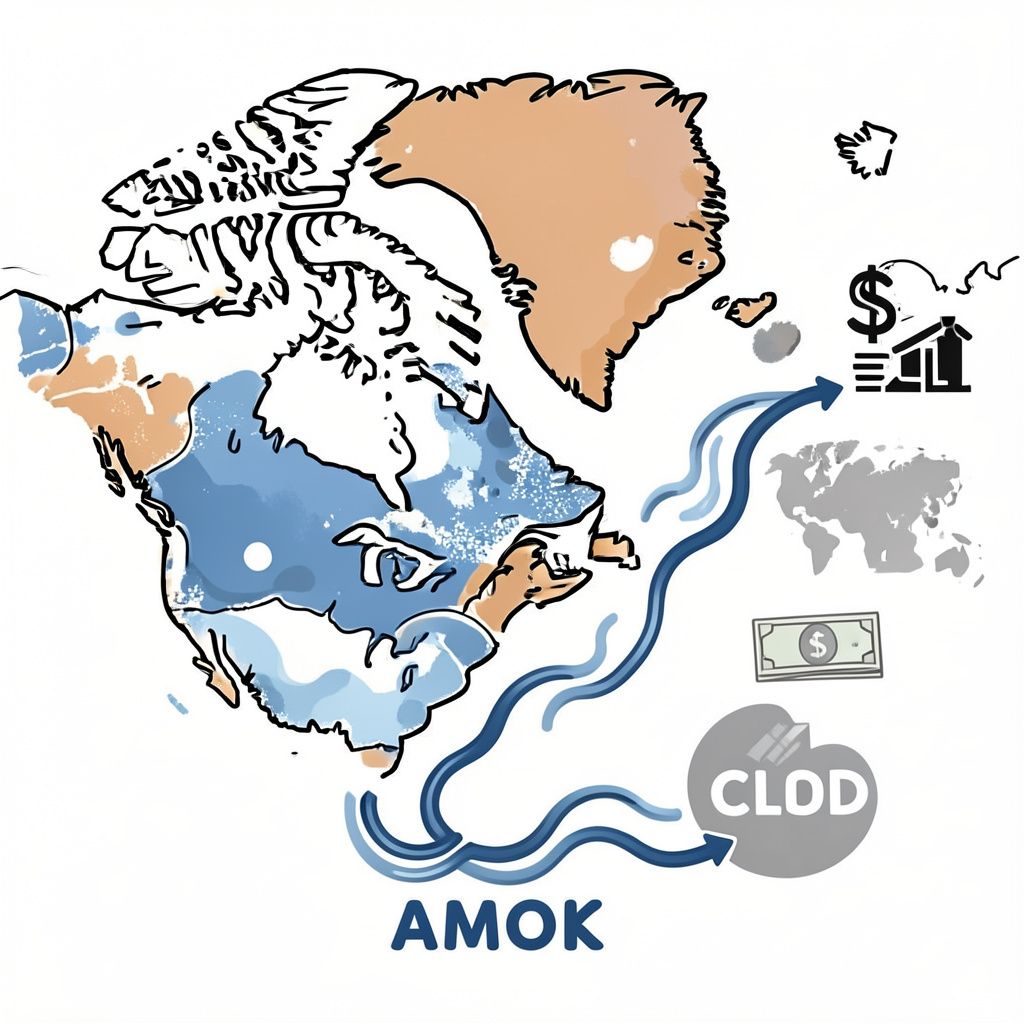
The North Atlantic Ocean’s ‘cold blob’—a region south of Greenland and Iceland—has defied global warming trends by cooling nearly 1 °C since 1900, a stark contrast to the surrounding ocean’s warming [1]. This anomaly, spanning approximately 2.5 million square kilometres, is not merely a surface phenomenon. New research published in June 2026 reveals that the cooling extends deep into the ocean, where atmospheric influences are minimal, pointing to a more systemic cause: the weakening of the Atlantic Meridional Overturning Circulation (AMOC) [1][2]. The AMOC, often described as Earth’s ‘ocean conveyor belt,’ plays a pivotal role in redistributing heat from the tropics to the North Atlantic, thereby regulating global climate patterns [1][GPT].
A Weakening Lifeline
The AMOC’s strength has declined by approximately 15% since the mid-20th century, with some studies suggesting it is at its weakest in nearly 1,000 years [1][2]. This weakening is directly linked to the cold blob’s persistence, as the current’s reduced capacity to transport warm water northward leaves the region anomalously cold [1][2]. Stefan Rahmstorf, a professor of physics and oceanography at Potsdam University, Germany, explains: “It is changing ocean heat transport which is driving the cooling of the cold blob” [2]. The implications of this decline are far-reaching. The AMOC’s slowdown disrupts the delicate balance of heat distribution, with potential consequences including accelerated sea-level rise along the U.S. East Coast, harsher winters in Europe, and shifts in African monsoon patterns that could exacerbate droughts [1][2].
Global Ripple Effects
The potential collapse of the AMOC would reverberate across the globe, triggering a cascade of climate disruptions. Europe could face significantly colder winters, while the U.S. East Coast may experience intensified hurricane activity and accelerated sea-level rise, with projections suggesting an additional 1 metres of local sea-level rise in some areas by 2100 [1][GPT]. Agricultural productivity could plummet due to altered precipitation patterns, particularly in regions reliant on stable monsoon seasons, such as West Africa and South Asia [1]. Marine ecosystems would also bear the brunt of these changes, with shifts in ocean temperatures and currents disrupting fisheries and biodiversity [1][GPT]. Jonathan Baker, a senior climate scientist at the UK Met Office, views the study as a critical addition to the growing body of evidence linking the cold blob to AMOC weakening, though he notes that the question is not yet definitively settled [2].
Industries in the Crosshairs
The AMOC’s decline poses significant risks to industries dependent on stable climate conditions. The shipping sector, for instance, could face increased operational challenges due to more frequent and severe storms in the North Atlantic [1][GPT]. Fisheries, already under pressure from overfishing and warming waters, may see further disruptions as marine species migrate in response to changing ocean temperatures [1]. Renewable energy infrastructure, particularly offshore wind farms, could also be affected by shifting wind patterns and more extreme weather events [1][GPT]. Policymakers and business leaders are being urged to monitor these developments closely, as the economic and social costs of an AMOC collapse could be staggering. The World Bank estimates that climate-related disruptions could push an additional 100 million people into poverty by 2030, with the AMOC’s weakening exacerbating these risks [GPT].
A Call for Urgent Action
The cold blob serves as a stark reminder of the interconnectedness of Earth’s climate systems and the urgent need for global action. While the AMOC’s potential collapse is not yet a foregone conclusion, the study underscores the importance of reducing greenhouse gas emissions to mitigate further weakening [1][2]. The Intergovernmental Panel on Climate Change (IPCC) has repeatedly warned that limiting global warming to 1.5 °C above pre-industrial levels is critical to avoiding the most severe climate impacts [GPT]. However, current emission trajectories suggest that this target is slipping out of reach, with global temperatures already having risen by approximately 1.1 °C [GPT]. As the world grapples with the implications of the cold blob, the study’s findings highlight the need for enhanced climate modelling, improved ocean monitoring, and international cooperation to address the looming threat of AMOC collapse [1][2].