Senate Narrowly Rejects Measure to Halt Military Conflict in Iran
Washington, Friday, 25 September 2026.
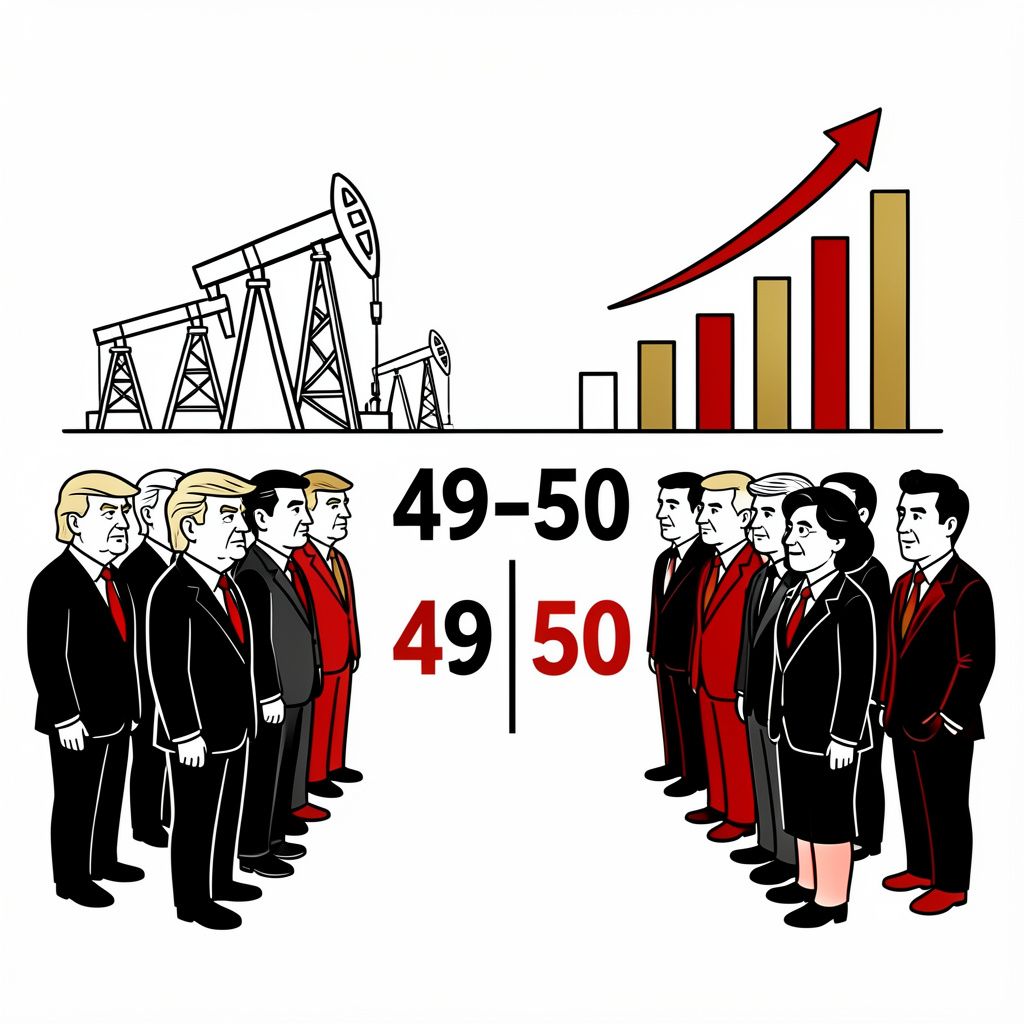
A 49-50 Senate vote failed to halt military operations in Iran, keeping geopolitical tension high while elevated energy costs continue to exert significant pressure on the U.S. economy.
Legislative Defeat for War Powers Measure
On 2026-09-24, the United States Senate voted down a bipartisan war powers resolution aimed at halting active military action in Iran, with the measure failing by a single vote [1][2]. The vote count stood at 49-50, falling short of the 50-vote threshold required for passage in the chamber [1][2]. This legislative action sought to require President Donald Trump to withdraw U.S. troops from Iran unless Congress explicitly authorized the war, though as a concurrent resolution, it would not have carried the force of law [1]. The defeat signals continued legislative support for current military strategies despite growing political divisions in Washington over ongoing foreign military engagements [1][2].
Partisan Divisions and Key Votes
The voting record highlighted significant fractures within both major parties, with four Republican senators voting in favor of the resolution alongside Democrats [1][2]. Senators Thom Tillis of North Carolina, Susan Collins of Maine, Lisa Murkowski of Alaska, and Rand Paul of Kentucky joined the majority in supporting the measure [1][2]. Conversely, Senator John Fetterman of Pennsylvania was the only Democrat to vote against the resolution [1][2]. Senator Angela Alsobrooks of Maryland did not vote due to an urgent family matter, though her spokesperson noted she had voted to end the war in Iran 13 times previously [1].
Economic Pressures and Energy Costs
Geopolitical uncertainty surrounding the conflict continues to directly influence energy markets, with gas prices averaging $4.48 per gallon nationwide as of 2026-09-23 [1]. Diesel price increases are specifically impacting farmers and truckers, creating tangible political pressure on Republicans in midwestern states [1]. Proponents of the resolution argued that every day the conflict continues, Americans pay for it at the gas pump and the grocery store [1]. The economic strain serves as a critical backdrop for the legislative debate, linking foreign policy decisions directly to domestic inflation concerns [1][3].
Republican Dissent and Campaign Trails
Beyond the Senate floor, Republican candidates are beginning to distance themselves from the administration’s stance as the midterm election approaches [3]. On 2026-09-24, Minnesota House Speaker and GOP gubernatorial nominee Lisa Demuth publicly called for an end to the war in Iran, citing negative impacts on gas, diesel, and fertilizer prices [3]. Demuth, who won the GOP gubernatorial primary in August 2026 despite President Trump endorsing a different candidate, stated that President Trump and she are different people [3]. This sentiment reflects a broader trend where GOP candidates are breaking from Trump on policy issues to appeal to local constituencies [3].
Electoral Stakes and Campaign Strategy
The vote occurred weeks before the midterm election, where President Donald Trump’s fellow Republicans are trying to retain their majorities in Congress [1]. Lawmakers are scheduled to campaign for nearly all of October 2026, with midterm elections looming less than six weeks from 2026-09-23 [1]. Democrats have utilized months-long strategy to force votes on war powers resolutions to highlight Republican support for the conflict [2]. As the campaign season intensifies, the intersection of national security policy and economic stability remains a central theme for voters across the country [1][3].