US Home Loan Costs Hit Two-Year High as Rates Exceed Seven Percent
Washington, Friday, 25 September 2026.
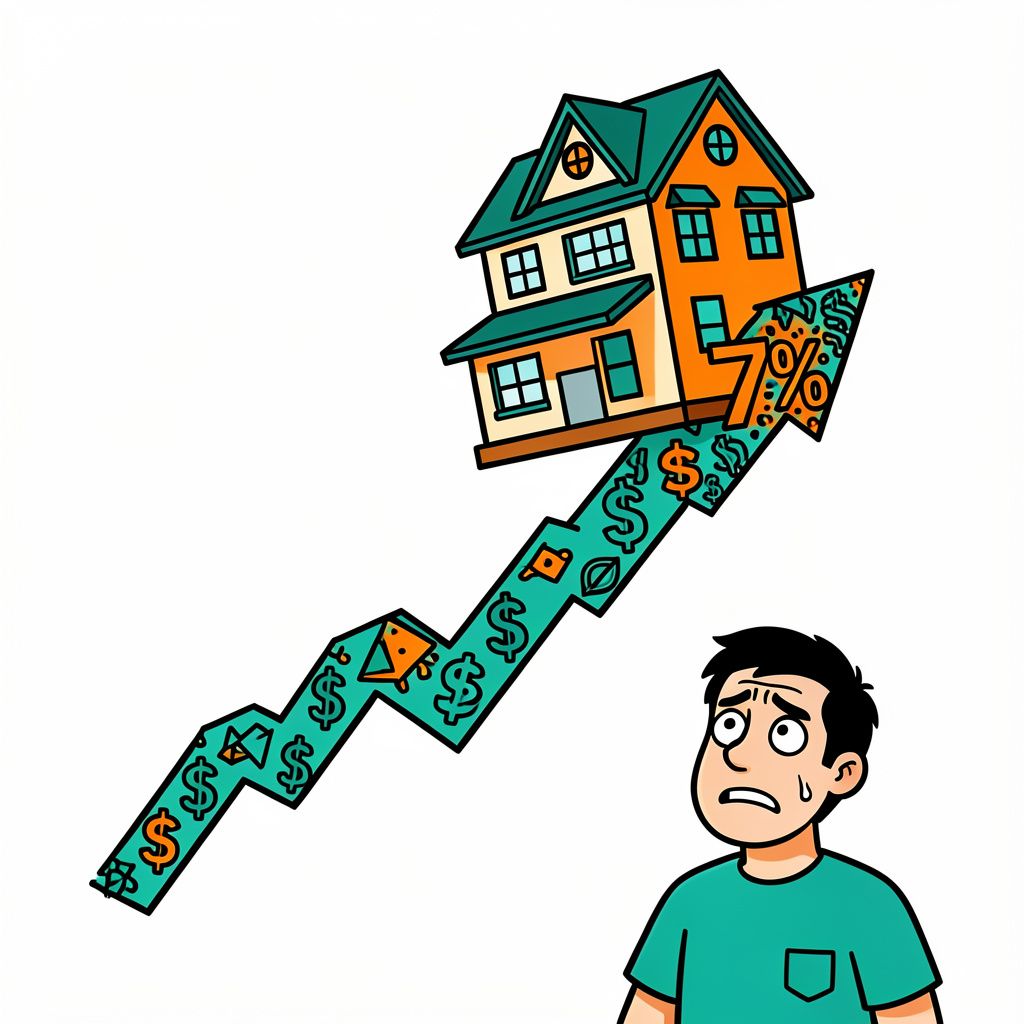
US benchmark mortgage rates surged past 7% to a two-year high, driven by recent central bank rate hikes and energy-fueled inflation stemming from Middle East tensions.
Benchmark Mortgage Rates Surpass Seven Percent Threshold
The benchmark 30-year fixed mortgage rate in the United States has climbed to 7.03 percent, crossing the seven percent threshold for the first time since January 2025 [1]. This sharp increase from the previous week’s 6.95 percent average reflects a weekly increase of 1.151 percent, marking the fifth consecutive weekly rise in mortgage rates [1]. Alternative data from Mortgage News Daily suggests rates may be even higher, reaching 7.26 percent, indicating significant volatility in lending markets [2]. The surge poses renewed headwinds for the American housing market, economic growth, and corporate real estate sentiment as borrowing costs escalate [1].
Market pressures are compounded by the 10-year U.S. Treasury bond yield, which influences mortgage rates, reaching a 19-year high of approximately 5.14 percent on 24 September 2026 [1]. This yield increase of roughly 3 basis points in a single day underscores the intensity of investor caution [1]. U.S. mortgage rates rose above 7% for the first time in over two years, driven by Federal Reserve rate hikes and rising inflation pressures [3]. The timeline of this surge indicates a rapid acceleration in costs for homebuyers entering the market in late September 2026.
Federal Reserve Policy and Inflationary Drivers
The Federal Reserve raised interest rates by 0.25 percentage points on 16 September 2026 to a range of 3.75 percent to 4 percent to combat inflation, which remains above the Fed’s 2 percent target [1]. This monetary policy decision was confirmed by multiple market observers noting the Fed increased the federal funds policy rate by 25 basis points due to persistent inflation [5]. Nearly all policymakers projected at least one more hike this year, signaling a continued restrictive stance through the end of 2026 [5]. The Federal Open Market Committee (FOMC) is scheduled to meet in late October 2026 to discuss further monetary policy, with officials forecasting potential future rate hikes [1].
Inflationary pressures are not limited to monetary policy but are also rooted in broader economic conditions. Bond markets are experiencing pressure from heavy public and private borrowing and uncertainty, keeping long-term government yields elevated [5]. Anna Paulson, President of the Federal Reserve Bank of Philadelphia, stated that if conditions evolve as expected, some modest further tightening may be warranted [1]. This analytical outlook suggests that borrowers should anticipate sustained high rates until inflation metrics align more closely with the central bank’s targets.
Energy Shocks and Housing Market Implications
Energy supply shocks have contributed significantly to the current economic landscape, with the national average diesel price reaching a record exceeding $6.50 per gallon [5]. The 30-year mortgage rate is currently 5.98 percent higher than the pre-war level recorded the week before the U.S.-Israel conflict with Iran began in late February 2026 [1]. Mortgage rates have now risen more than 1 percentage point since late February, when the Iran War pushed global oil prices higher [5]. Diesel prices and mortgage rates are linked by a shared inflationary impulse caused by energy supply shocks, which simultaneously increase transportation and production costs [5].
Higher borrowing costs are already weighing on the housing market, with refinancing and home-purchase applications declining last week [5]. More borrowers are turning to adjustable-rate mortgages, which offer lower initial rates, with these loans accounting for 9.8 percent of mortgage applications last week [5]. Lawrence Yun, Chief Economist at the National Association of Realtors, noted that job additions will be the one factor that can support homebuying despite the 7 percent rate environment [1]. As the economy navigates this period of elevated costs, the interplay between energy prices, monetary policy, and housing demand will remain critical for investors and homeowners alike.