Presidential Intervention Saves Live Nation From Federal Breakup
Washington, Monday, 24 August 2026.
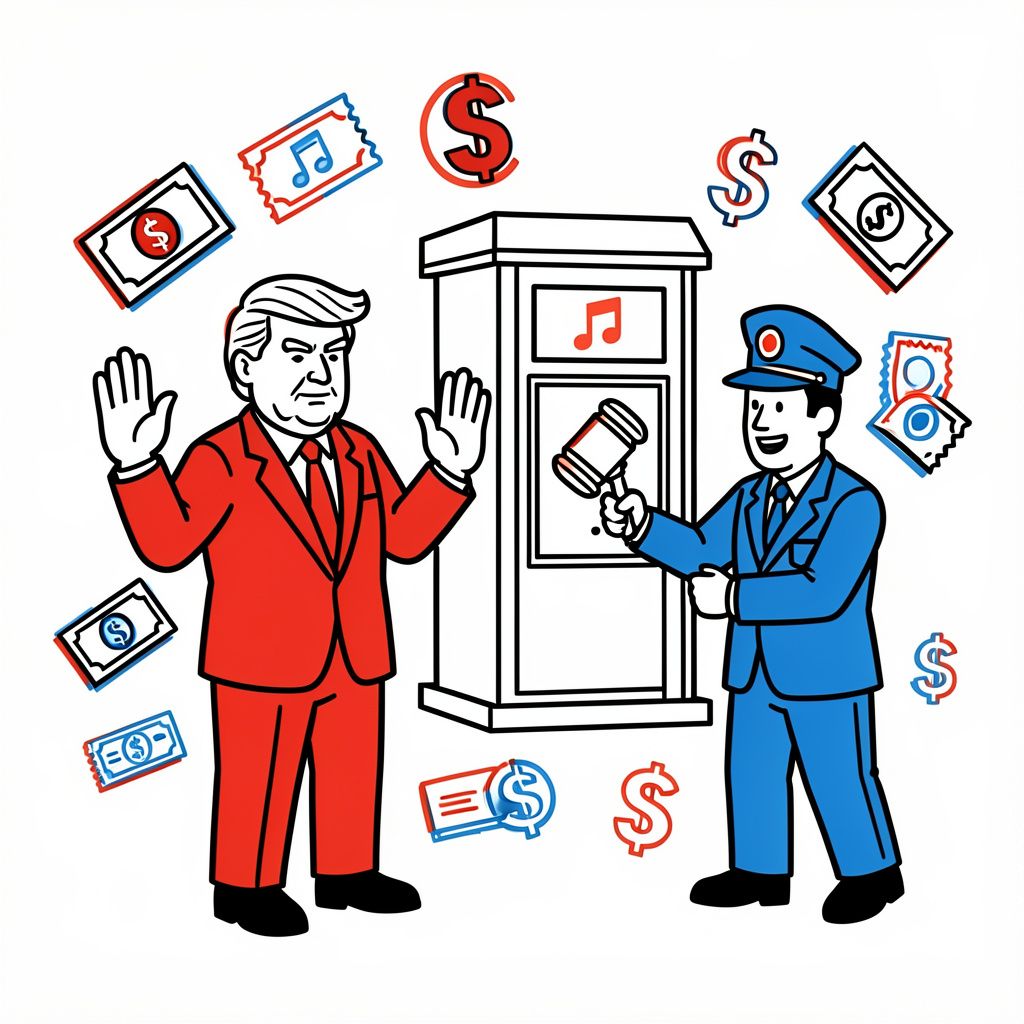
Direct presidential intervention forced federal regulators to settle a landmark antitrust lawsuit against Live Nation, preserving its ownership of Ticketmaster despite strong opposition from state attorneys general.
Executive Intervention and Timeline of Events
The trajectory of the federal antitrust lawsuit against Live Nation Entertainment shifted dramatically following direct involvement from the White House in early 2026. On February 27, 2026, President Donald Trump met with Live Nation CEO Michael Rapino in the Oval Office, where discussions regarding Kennedy Center bookings coincided with inquiries about the pending Department of Justice (DOJ) case [2][4]. Shortly thereafter, President Trump contacted senior DOJ officials with a directive to settle the matter, stating, “Settle it,” according to accounts from officials familiar with the conversations [1][4]. This intervention occurred just days before the antitrust trial was scheduled to begin on March 2, 2026, and followed months of stalled negotiations between regulators and the company [1][3]. A subsequent meeting at the White House on March 5, 2026, attended by then-Attorney General Pam Bondi and Live Nation leadership, finalized the framework for the agreement [2][4]. This sequence of events highlights a distinct departure from traditional DOJ independence, with White House involvement in law-enforcement matters becoming a noted feature of the administration [1].
Settlement Terms and Financial Penalties
The resulting settlement, announced in early March 2026, required Live Nation to pay $280 million in fines to 40 plaintiff states and mandated specific operational changes to address monopoly concerns [3][5]. Under the agreement, Ticketmaster must allow competitors such as SeatGeek and StubHub to list tickets directly on its website, aiming to increase market transparency [3]. Additionally, Live Nation agreed to cap ticketing service fees at 15% and allow promoters to distribute up to 50% of tickets through alternative channels [3]. The company was also required to divest control of up to 13 amphitheaters to remediate its market power [3][5]. Live Nation executives defended the deal, with Executive Vice President Dan Wall stating that the settlement achieved outcomes comparable to what might have been won in court, avoiding years of appeals [2][3]. However, the DOJ Antitrust Division’s removal of chief Gail Slater around this period drew scrutiny regarding the department’s stance on monopolies, though officials claimed the personnel change did not influence the settlement decision [3].
Ongoing Litigation and Regulatory Scrutiny
Despite the federal settlement, legal challenges persisted throughout 2026, with New York Attorney General Letitia James and several other states rejecting the DOJ deal as insufficient [3][4]. While the federal case settled, state-level litigation continued, leading to a jury finding Live Nation liable for operating as a monopoly in April 2026, according to some reports [2]. Conversely, other sources indicate a jury trial ruled on June 3, 2026, creating uncertainty regarding the exact timeline of the verdict [5][alert! ‘Conflicting dates in sources regarding jury verdict: April vs June 2026’]. As of August 2026, the case remains in the remedies phase, with Judge Arun Subramanian reviewing the public interest of the settlement while plaintiff states seek a forced divestiture of Ticketmaster [2]. DOJ staff have privately complained that the administration’s intervention effectively bypassed antitrust enforcement, allowing the company to avoid a structural breakup [4][6]. The situation underscores a complex regulatory landscape where federal settlements may not preclude state-level enforcement actions.