Argentina Reasserts Falkland Islands Claim and Challenges British Oil Projects at United Nations
New York, Thursday, 24 September 2026.
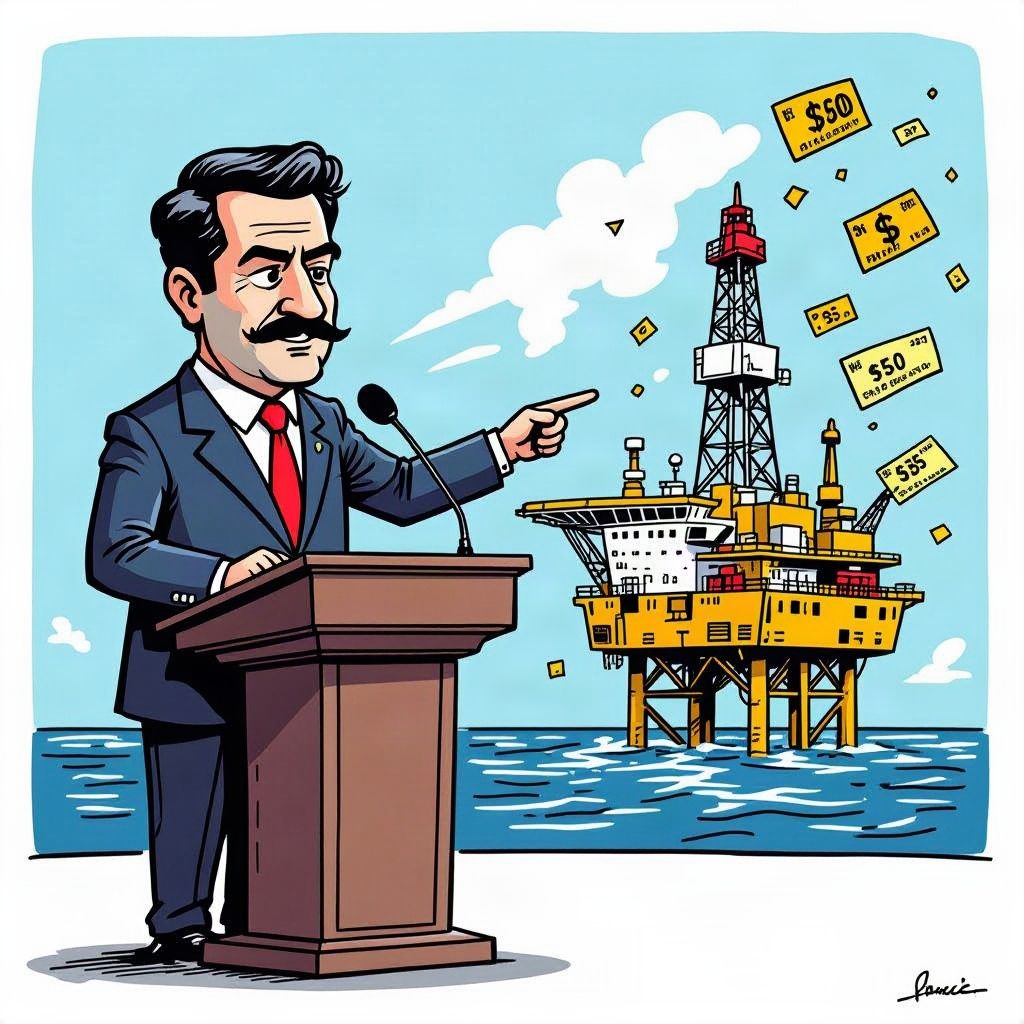
At the United Nations General Assembly, Argentine President Javier Milei renewed sovereignty claims over the Falkland Islands, vowing action against unauthorized British offshore oil exploration in disputed waters.
Milei’s UN Address and Sovereity Claims
On Wednesday, 23 September 2026, Argentine President Javier Milei addressed the 81st United Nations General Assembly in New York, forcefully reiterating Argentina’s historic claim over the Falkland Islands, known in Argentina as the Malvinas [1][2]. During the speech, President Milei characterized the islands as a “national cause,” stating explicitly, “For us, the Malvinas are a national cause. I repeat it, the Malvinas for us are a national cause” [1][2]. He criticized the United Nations as a “useless organization, disguised as bureaucrats,” arguing that the body has failed to enforce its own mandates regarding the territory [1][2]. The President emphasized that Argentina would not wait for the international community to act, signaling a shift towards more direct diplomatic or economic measures [2]. This address comes just one day after the current date, marking a significant escalation in rhetoric 1 day(s) prior to this report [1][2].
Diplomatic Reactions and Historical Context
In response to the heightened tensions, British Prime Minister Andy Burnham declared on Tuesday, 22 September 2026, that the United Kingdom’s position on sovereignty remains “clear” and that London would “stand firm” against threats [2]. The Falkland Islands, an archipelago located approximately 480 km east of the Argentine coast, have been under British administration since 1833 [2]. The local population, numbering approximately 3,500 residents, voted overwhelmingly to remain a British territory in a 2013 referendum [2]. This means the referendum took place 13 years ago, establishing a longstanding precedent for self-determination that the UK continues to cite [2]. Prime Minister Burnham affirmed, “We will defend the right of the Falklands inhabitants to self-determination and to remain British,” reinforcing the diplomatic stalemate [2].
Economic Stakes and Regional Stability
A focal point of the dispute involves the “Sea Lion” oil exploration project, which operates under British licenses in waters claimed by Argentina [1]. President Milei has threatened measures against companies exploiting resources in the zone without Argentine authorization, following a security bill presented by his government during the week of 14 September 2026 [2]. Internationally, the geopolitical dynamic is further complicated by the United States’ position; in August 2026, U.S. President Donald Trump indicated a review of American neutrality on the islands, citing British lack of support in other conflicts [2]. For investors, this escalation introduces sovereign risk factors into the South American market, particularly regarding energy infrastructure and regional stability under Milei’s administration [1][2]. The convergence of territorial disputes and resource competition suggests prolonged volatility for stakeholders monitoring the region [1][2].